
September 10, 2026
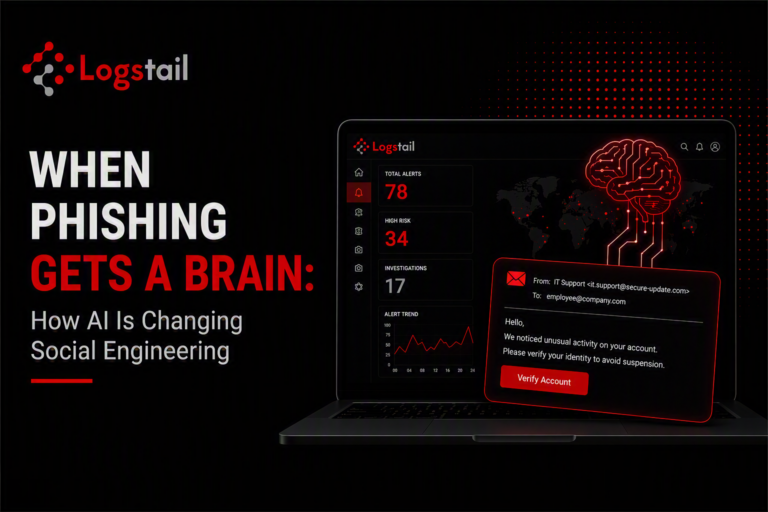
When Phishing Gets a Brain: How AI Is Changing Social Engineering
Introduction
For years, phishing has relied on the same basic formula: create a convincing message, create a sense of urgency, and persuade someone to click. The warning signs were often familiar: strange grammar, generic greetings, suspicious links, unusual requests, or messages that looked as though they had been written by someone who did not understand the language or organization they were targeting.
Artificial intelligence is changing that equation. Generative AI can help attackers create convincing messages in seconds, adapt their language to a specific audience, imitate communication styles, generate content in different languages, and support social engineering campaigns across email, messaging platforms, voice and video.
The result is not simply “better phishing.” It is a shift toward more personalized, scalable and adaptive social engineering.
Microsoft’s 2025 Digital Defense Report, for example, reported that AI-automated phishing emails achieved substantially higher click-through rates than conventional attempts in the data it analyzed. Meanwhile, security research continues to document the expansion of AI-assisted social engineering across text, voice and video.
The important question for defenders is therefore changing. It is no longer enough to ask whether an email looks like phishing. Organizations increasingly need to ask what behavior follows the message, and whether that behavior makes sense.
From Mass Phishing to Personal Manipulation
Traditional phishing campaigns often depended on volume. Attackers could send thousands or millions of messages and rely on a small percentage of recipients interacting with them.
AI changes the economics. Instead of producing one generic phishing email, an attacker can generate many variations tailored to different recipients. A finance employee might receive a message about an invoice, an IT administrator might receive a message about an expired security certificate, a manager might receive an urgent request supposedly coming from an executive, while a developer might receive a message referencing a repository, project or software service they actually use.
The underlying attack may be similar, but the story surrounding it can be different for every target. This is where AI becomes particularly useful to social engineering: the technology does not necessarily need to discover a new vulnerability; it can make the human vulnerability easier to exploit.
Why AI Makes Social Engineering More Convincing
Social engineering has always depended on understanding human behavior. Attackers exploit urgency, authority, fear, curiosity, trust and familiarity. AI makes it easier to combine these psychological techniques with information gathered about the target.
Public professional profiles, company websites, social media posts, previous communications and exposed information can all provide clues about how someone communicates and what they are likely to trust. An attacker can then use AI to transform those clues into a convincing narrative.
For example, “Your account will be disabled unless you complete this verification” is relatively generic. A more targeted attack could reference a real internal project, a familiar application, a known colleague or an event occurring within the organization.
The difference is important. The attacker is no longer simply trying to make the victim believe that a message is legitimate; they are trying to make the message feel expected. That is a much more powerful form of deception.
AI Removes One of Phishing’s Oldest Weaknesses
One of the most obvious signs of phishing has traditionally been poor writing. Attackers operating across different languages and regions could struggle with grammar, vocabulary and cultural context.
Generative AI significantly reduces that barrier. Modern language models can produce fluent text, adapt tone and generate different versions of the same message. Security research has highlighted this development as an important part of the modern social-engineering landscape.
This does not mean that perfect grammar makes a message malicious. It means that poor grammar is no longer a reliable reason to dismiss it.
The traditional checklist is therefore becoming weaker. Questions such as “Does it contain spelling mistakes?”, “Does it sound awkward?”, or “Does it look machine-translated?” still have value, but they cannot be the foundation of phishing detection anymore.
The Attack Does Not Have to Start With Email
Another major change is the expansion of social engineering beyond traditional email. Attackers can use multiple communication channels to build trust. An initial message might arrive through email, while a follow-up could appear in a collaboration platform. A phone call could provide additional credibility, or a QR code could redirect the victim to a login page.
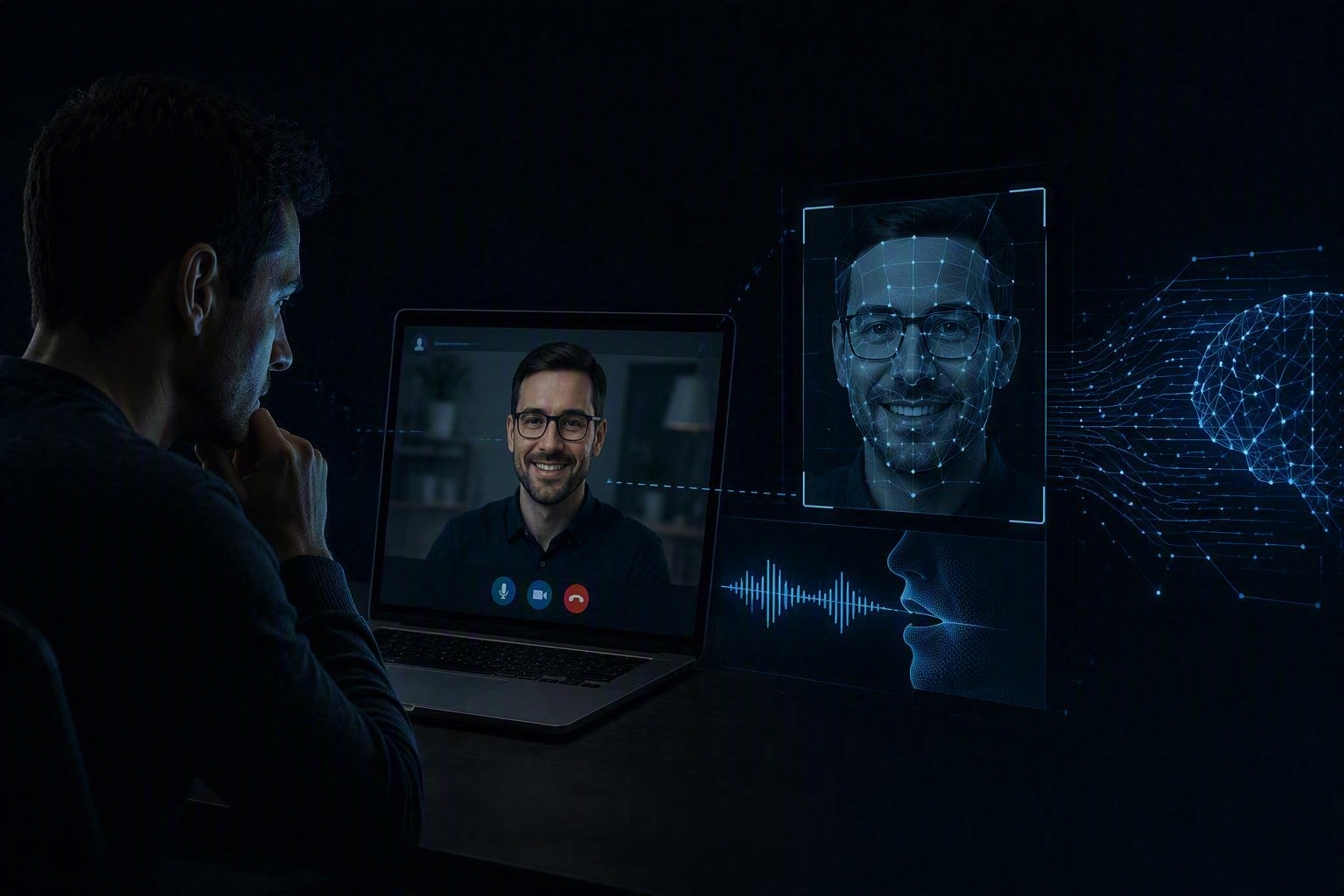
AI-generated audio and video add another layer to this problem. Instead of simply pretending to be someone through text, attackers can increasingly attempt to reproduce the person’s voice or appearance.
The objective remains the same: make the victim believe they are interacting with someone they trust. Only the medium has changed.
Deepfakes Make “I Know This Person” Less Reliable
Consider a simple scenario: an employee receives a voice message that appears to come from their manager. The message sounds familiar, the request is urgent, and the employee already knows that the manager is traveling and might reasonably need something handled remotely.
There may be no obvious technical indicator that the employee can recognize because the attack relies primarily on trust.
This is why AI-powered social engineering is particularly concerning. Traditional cybersecurity controls often focus on malicious files, suspicious URLs, malware signatures or abnormal network activity. But a voice message does not need to contain malware, and a convincing conversation does not need to exploit a software vulnerability. The attack may simply convince someone to perform a legitimate action, and that action can become the initial access point.
The New Phishing Problem: Context
The most dangerous AI-assisted phishing messages may not contain obvious technical indicators.
They may contain:
- A legitimate-looking sender address
- A legitimate cloud service
- A familiar company name
- A realistic writing style
- A believable business reason
- A legitimate login page or authentication flow
- A request that is technically possible and operationally normal
The malicious element may exist almost entirely in the context.
For example, the action itself may be legitimate:
“Approve this login.”
“Review this document.”
“Authorize this application.”
“Reset this password.”
“Confirm this payment.”
“Join this meeting.”
The problem is why the action was requested, who initiated it, where it came from and what happened immediately afterward.
This is where security monitoring becomes increasingly important.
When the Message Looks Normal, Watch What Happens Next
A phishing email can be difficult to identify from its content alone, but the activity following the email may produce multiple signals. A user clicks a link, a new authentication session appears, the login originates from an unusual location, a new device is registered, an OAuth application is authorized, the user accesses resources they do not normally use, multiple authentication failures occur, a mailbox rule is created, large volumes of data are accessed, or an endpoint begins making unusual outbound connections.
Individually, some of these events may look harmless. Together, they can tell a very different story.
This is why modern detection cannot rely exclusively on identifying malicious messages. It needs to connect the events that happen after the user interacts with the message.
From Phishing Detection to Behavioral Detection
This represents an important change in the role of security monitoring.
Instead of asking only:
“Is this email malicious?”
security teams can also ask:
“Does this user’s behavior after receiving or interacting with the message match their normal behavior?”
This approach creates opportunities for SIEM platforms to identify attack patterns that are difficult to recognize from a single event.
For example:
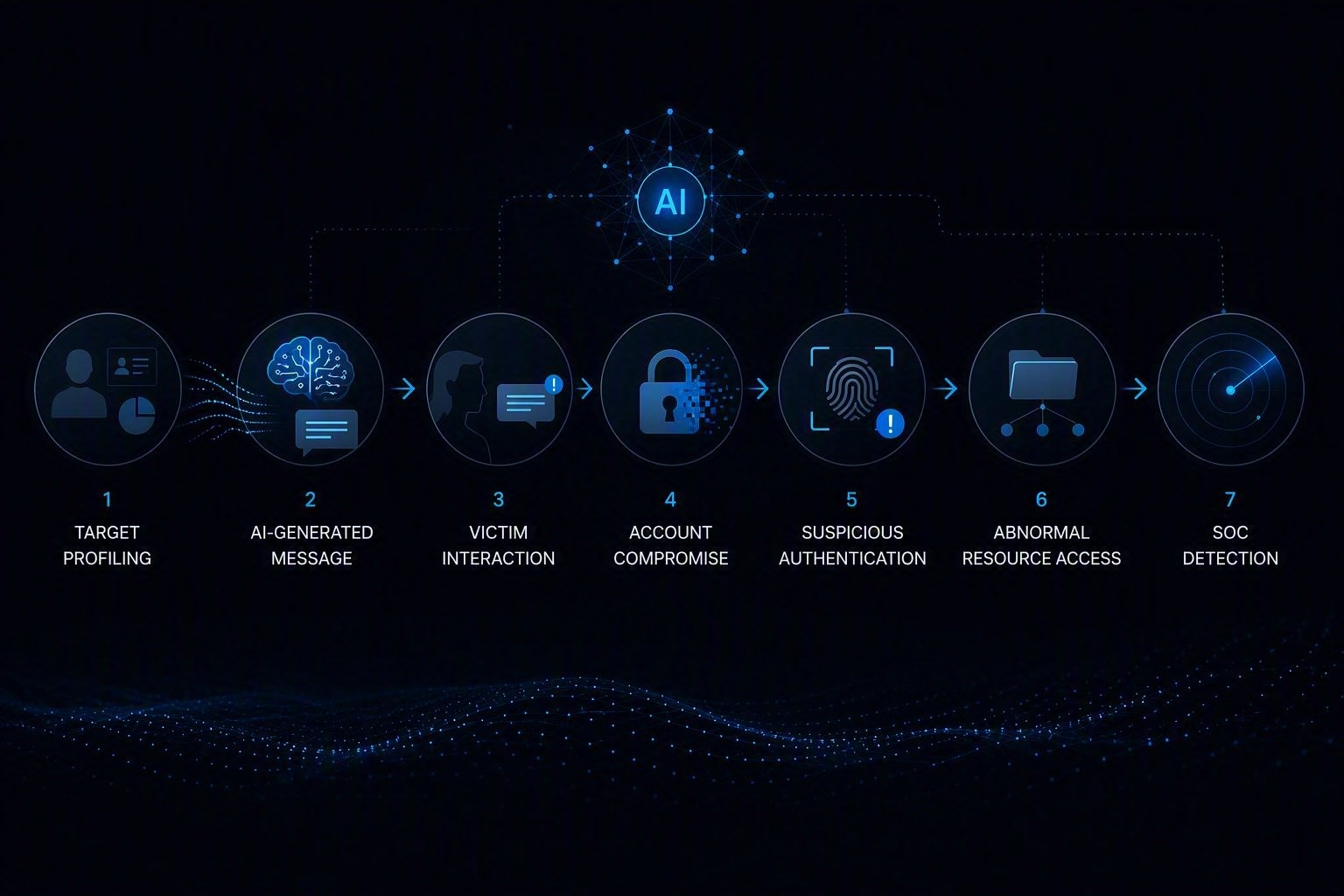
Email interaction → unusual authentication → new device → suspicious application authorization → abnormal data access
Each individual event may not be enough to trigger a high-confidence detection.
The sequence can be much more meaningful.
This is where correlation becomes critical.
How Logstail Fits Into the Picture
AI may be making social engineering more convincing, but it does not eliminate the traces that attacks leave behind. Once a victim interacts with a phishing campaign, the resulting activity can generate telemetry across identity systems, endpoints, cloud platforms, network infrastructure and applications.
This is where a SIEM and centralized monitoring approach can provide additional visibility. With Logstail, security teams can bring security-relevant logs and events together, correlate activity and investigate suspicious behavior from a centralized monitoring environment.
The goal is not simply to detect the original phishing message. It is to help identify the attack chain that follows it.
For example, a SOC analyst may investigate a sequence involving:
Suspicious authentication → unusual source → new device → privilege-related activity → abnormal resource access
That sequence provides considerably more context than any individual alert. This is particularly important as social engineering becomes more sophisticated. If the attacker can make the initial message look legitimate, defenders need to become better at identifying what happens after the victim interacts with it.
Logstail’s broader security monitoring approach fits this model: collect the signals, correlate them, reduce noise and give analysts the context required to investigate suspicious activity. This is also consistent with Logstail’s existing focus on phishing detection, SOC monitoring and security-event correlation.
A Realistic AI-Driven Attack Chain
Consider a simplified scenario.
Step 1: Target Selection
The attacker identifies an employee who has access to sensitive business systems.
Step 2: Information Gathering
Public information is collected about the employee, their role, the organization and the technologies it uses.
Step 3: AI-Assisted Content Generation
AI is used to create a convincing message that matches the employee’s role and communication environment.
Step 4: Social Engineering
The employee receives an urgent request that appears legitimate.
Step 5: Interaction
The employee clicks a link or follows instructions provided in the message.
Step 6: Credential or Session Compromise
The attacker attempts to obtain credentials, tokens or access through the interaction.
Step 7: Post-Compromise Activity
The attacker accesses cloud resources, email, applications or internal systems.
Step 8: Expansion
Additional accounts, systems or data may become targets.
Notice something important.
The AI does not have to compromise the system directly.
It can help the attacker convince a legitimate user to open the door.
Why MFA Is Important — But Not the Whole Answer
Multi-factor authentication remains an important security control, but social engineering attacks increasingly attempt to manipulate the authentication process itself. Security researchers have documented phishing campaigns designed to steal credentials and bypass or abuse MFA workflows, including adversary-in-the-middle techniques and device-code phishing.
This creates an important distinction. MFA can help answer:
“Is this user really authenticating?”
Security monitoring also needs to help answer:
“Is this authentication happening in a way that makes sense?”
A legitimate user logging in from a new device at an unusual time, followed immediately by suspicious application authorization and abnormal resource access, deserves more attention than an isolated successful login.
Security is increasingly about context, not just individual controls.
What Security Teams Should Watch For
As AI-assisted social engineering becomes more convincing, defenders should focus on behavioral indicators.
Useful signals include:
Unusual Authentication Activity
Look for unexpected locations, devices, impossible travel patterns, repeated authentication failures or unusual authentication methods.
New Application or OAuth Authorizations
A compromised account may be used to authorize an application that provides the attacker with persistent access.
Abnormal Account Behavior
Monitor unusual mailbox activity, unexpected forwarding rules, privilege changes and access to resources that the user does not normally interact with.
Suspicious Endpoint Activity
After a phishing interaction, an endpoint may begin communicating with unusual destinations, launching unexpected processes or accessing credentials.
Data Access Anomalies
Large downloads, unusual file access or unexpected activity against sensitive systems can provide evidence that an initial compromise has progressed.
Correlated Events
Most importantly, connect these signals. A single suspicious login may be explainable. A suspicious login followed by a new device, application authorization and abnormal data access is much harder to dismiss.
AI Is Also Changing the Defender’s Side
There is another side to this story. AI is not exclusively an offensive technology; security teams can also use AI to improve detection, investigation and response.
AI-assisted security operations can help analysts summarize large volumes of alerts, identify relationships between events, prioritize suspicious activity, investigate attack patterns, extract useful context from logs, reduce repetitive investigation tasks and assist analysts during incident response.
The key is not to replace security analysts with AI. It is to give analysts better context and reduce the amount of time spent manually connecting information.
This becomes increasingly important as attackers use automation to increase the scale and quality of their campaigns.
The Human Layer Still Matters
Technology alone cannot solve social engineering. Employees remain an important part of the security boundary, but security awareness training also needs to evolve.
Telling employees to “look for spelling mistakes” is no longer enough. Modern awareness should teach users to question unexpected urgency, unusual requests, changes in normal communication patterns, requests for credentials or authentication, unusual payment or access requests, messages involving unfamiliar applications, and requests asking users to bypass established procedures.
Most importantly, employees should know that a message looking professional does not make it trustworthy.
Verification should happen through an independent channel whenever something feels unusual. If a manager sends an unexpected payment request, call the manager. If IT asks for an unusual authentication action, verify it through the organization’s normal support process. If a colleague suddenly asks for sensitive information, confirm the request separately.
The goal is to introduce friction at exactly the point where an attacker expects automatic trust.
The Future of Social Engineering Is Adaptive
The biggest change brought by AI may not be better phishing emails. It may be adaptive social engineering.
Imagine a campaign where the attacker changes the message depending on the victim’s response. If the victim ignores the first message, another approach is attempted. If the victim asks a question, the attacker responds. If the victim appears suspicious, the narrative changes. If the victim clicks, the next stage begins.
This moves social engineering closer to a conversation rather than a static phishing message. The attacker is no longer simply sending a lure; they are potentially managing an interaction.
That makes traditional, one-dimensional detection increasingly difficult.
What Organizations Can Do Now
Organizations do not need to wait for fully autonomous attacks to appear.
Several practical controls can already reduce the risk.
1. Strengthen Identity Security
Use phishing-resistant authentication where possible and monitor authentication anomalies.
2. Monitor Cloud Activity
Identity compromise often becomes visible through unusual cloud access, application authorization or account behavior.
3. Centralize Security Telemetry
Bring identity, endpoint, network and application events together so analysts can see relationships between events.
4. Improve Correlation
Do not investigate every alert in isolation. Look for sequences and behavioral patterns.
5. Train Employees for Modern Social Engineering
Awareness programs should include AI-generated messages, impersonation, deepfakes, QR phishing, device-code phishing and other modern techniques.
6. Reduce Alert Noise
A SOC overwhelmed by low-value alerts can easily miss the small sequence of events that indicates a real compromise.
7. Build an Incident Response Process
When suspicious activity is identified, teams need clear procedures for isolating accounts, revoking sessions, investigating endpoints and determining whether data was accessed.
Final Thoughts
Artificial intelligence is not inventing social engineering. It is making it faster, cheaper, more convincing and easier to personalize.
The most dangerous phishing message of the future may not look suspicious at all. It may contain perfect grammar, use the right terminology, reference a real project, appear to come from someone you know, or even arrive through a communication channel you normally trust.
That is why organizations need to move beyond the question of whether a message “looks like phishing.”
The stronger question is:
What happened after the user trusted it?
When phishing gets a brain, defenders need more than better awareness training. They need visibility, context, correlation and the ability to connect seemingly unrelated events into a meaningful attack story.
This is where modern security monitoring becomes critical.
The message may be convincing.
The behavior that follows it can still give the attacker away.