November 6, 2026
ARTEX: The Rise of Autonomous AI-Powered Cyberattacks and the New Era of Machine-Speed Intrusions
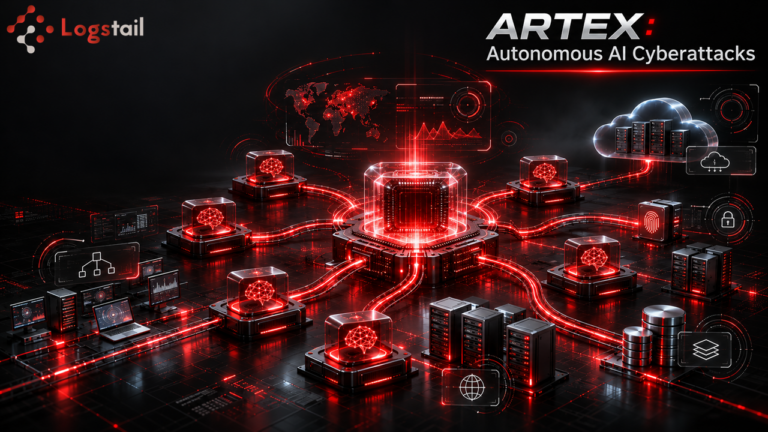
The integration of artificial intelligence into offensive cybersecurity is changing how threat actors compromise enterprise environments. Autonomous AI agents can perform reconnaissance, evaluate vulnerabilities, and coordinate attacks with less human involvement. ARTEX, an AI-powered penetration-testing framework, demonstrates how these capabilities can accelerate cyberattacks across cloud infrastructure, identity systems, and corporate networks. Recent threat intelligence research has associated ARTEX with malicious campaigns targeting enterprise environments. These developments create new challenges for security teams that rely on traditional detection and response processes. As AI-assisted attacks become faster and more adaptive, organizations must improve their ability to identify suspicious behavior and respond effectively.
The Rise of Agentic AI in Cyberattacks
Artificial intelligence is introducing a new operational model into offensive cybersecurity. Traditional attack automation relies on predefined scripts that execute specific instructions. These tools can scan networks, test credentials, and identify exposed services, but human operators generally interpret the results. Agentic AI takes this process further by allowing autonomous systems to evaluate information and determine subsequent actions. Instead of following a fixed sequence, AI agents can modify their approach based on the environment they encounter.
This capability becomes particularly important during complex intrusions. An autonomous framework may discover an exposed service, analyze its configuration, and identify additional resources worth investigating. If an operation fails, the system can evaluate the error and attempt another approach. Such adaptive behavior can reduce the time required to progress between attack stages. It also allows malicious operators to coordinate more activity without manually supervising every action.
ARTEX represents this emerging category of offensive technology. Although designed to support penetration testing, its capabilities can also be misused by threat actors. The framework combines AI-driven reasoning with established security tools to automate reconnaissance and post-compromise operations. Its significance lies in the coordination of existing attack techniques rather than the discovery of entirely new vulnerabilities. For defenders, this changes the operational challenge from detecting individual attacks to identifying rapidly developing attack sequences.
What Is ARTEX and How Does It Work?
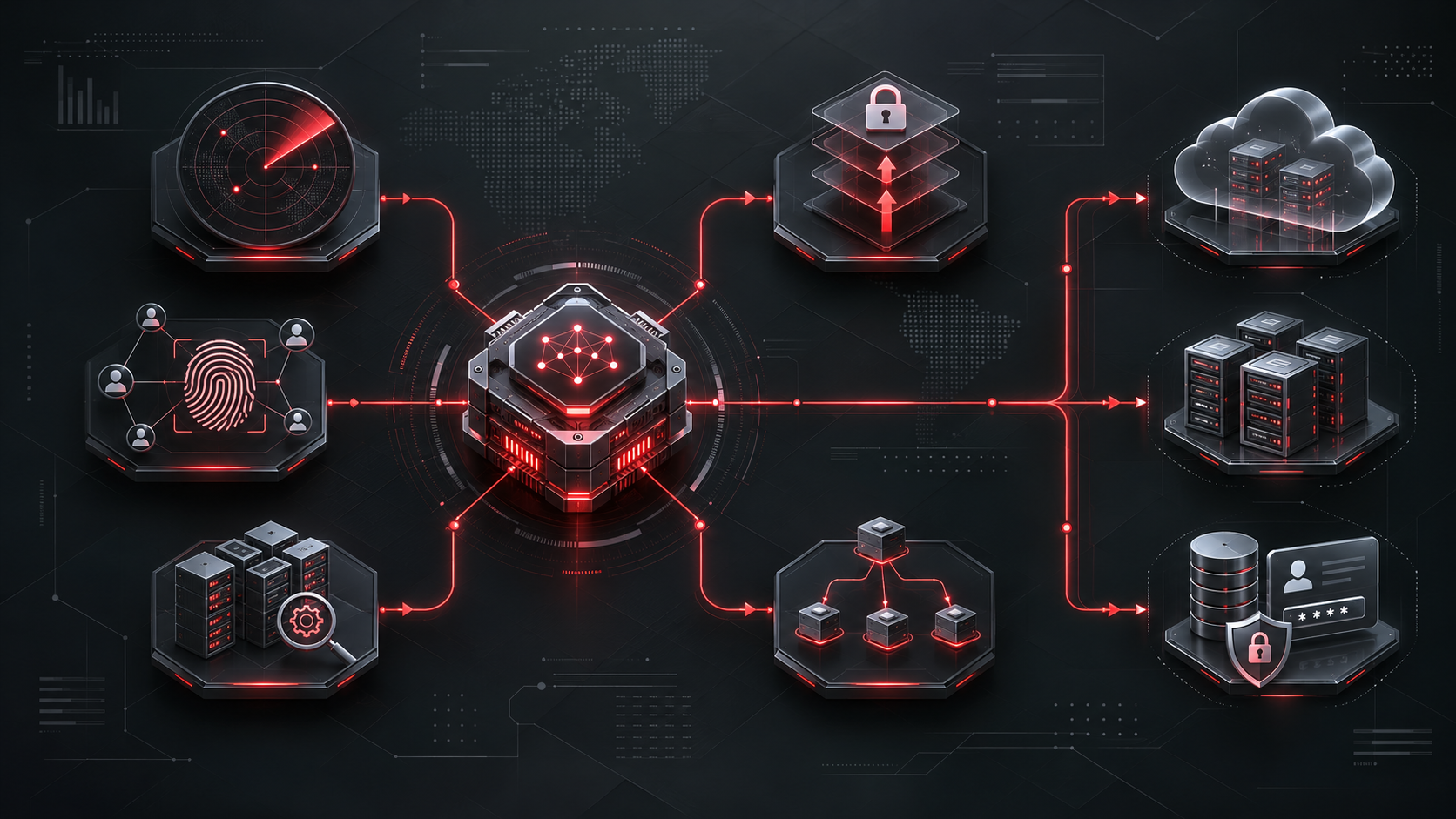
ARTEX is an autonomous, multi-agent offensive security framework designed to automate penetration-testing workflows. According to Google Threat Intelligence Group and Mandiant research, the framework uses a Go-based backend and a Next.js management interface. Its architecture includes specialized agents that coordinate different security assessment tasks. Large language models provide reasoning capabilities, allowing the framework to interpret tool output and select subsequent operations.
Autonomous Agents and Attack Coordination
The framework separates high-level objectives from individual technical actions. An operator can define a goal while autonomous agents handle supporting tasks. These activities may include collecting infrastructure information, evaluating credentials, checking permissions, and investigating accessible systems. Each operation generates information that can influence the next stage. This creates a continuous feedback loop between reconnaissance, analysis, and execution.
A major advantage of this architecture is its ability to maintain context throughout an operation. Traditional penetration testers manually track discovered assets, credentials, and access permissions. ARTEX can use previously collected information to guide subsequent actions. For example, identifying a cloud application credential may lead to further investigation of its permissions. The framework can then evaluate whether those permissions provide access to additional resources.
The original ARTEX repository was reportedly removed in October 2026 following malicious adoption. However, copies and derivative implementations can continue circulating after a repository disappears. This highlights a broader challenge surrounding publicly available offensive security frameworks. Once powerful automation capabilities become accessible, restricting their future use becomes increasingly difficult.
ARTEX in Real-World Cyberattacks
The malicious adoption of ARTEX has attracted attention from several cybersecurity research organizations. Microsoft Threat Intelligence, Wiz Research, and Google Threat Intelligence Group have investigated activity involving autonomous offensive frameworks. Their findings demonstrate how AI-assisted tooling can support reconnaissance, identity attacks, and post-compromise operations. These campaigns also illustrate the growing importance of cloud identities and application trust relationships.
Storm-0940 and Cloud Supply-Chain Attacks
Microsoft reported that Storm-0940, a China-state-aligned threat actor, incorporated ARTEX into offensive operations during 2026. The actor used automated capabilities to support attacks against organizations across multiple industries. Microsoft also associated Storm-0940 with a supply-chain compromise involving a multi-tenant ConnectWise application. The activity highlighted the risks created when third-party applications hold extensive permissions across customer environments.
Cloud applications frequently receive authorization to access organizational resources through OAuth permissions and service principals. These integrations support legitimate business operations but may create valuable opportunities for attackers. If an application credential becomes compromised, an adversary could potentially access downstream resources through existing trust relationships. The resulting activity may involve cloud API requests rather than conventional interactive logins. This makes application identities particularly important during incident investigations.
Additional ARTEX-Associated Activity
Wiz Research documented ARTEX-associated operations targeting identity systems and software vendors. Observed behavior included application reconnaissance, repeated authentication attempts, and testing of accessible API endpoints. Researchers also identified changes in attacker infrastructure following defensive blocking attempts. These activities illustrate how automated frameworks can support persistent investigation of targeted environments.
The broader significance of these findings extends beyond one threat actor. Agentic offensive frameworks can appeal to different adversaries because they reduce repetitive technical work. Their capabilities may support financially motivated intrusions, espionage operations, and other malicious objectives. Security teams should therefore treat ARTEX as an example of a wider technological shift rather than a threat limited to one campaign.
How ARTEX Accelerates Identity and Cloud Attacks
Identity infrastructure is a particularly attractive target for autonomous offensive frameworks. Authentication systems provide immediate feedback through login failures, access denials, and successful authorization responses. AI-driven tooling can evaluate these results and adapt subsequent operations. ARTEX-associated investigations have documented activity involving password spraying, cloud permission enumeration, and attempts to expand access through compromised identities.
Password Spraying and Authentication Abuse
Password spraying involves testing commonly used passwords against multiple accounts. Unlike attacks that repeatedly target one identity, password spraying distributes authentication attempts across many users. This can complicate detection when monitoring systems rely on individual account thresholds. Automated frameworks can increase the scale of these attempts while adjusting their behavior based on authentication responses.
ARTEX-associated password-spraying activity has been observed against identity platforms including Microsoft Entra ID and Okta. Researchers documented repeated authentication attempts, consistent request patterns, and changes in attacker infrastructure. These signals become more significant when combined with successful logins or unusual administrative activity. However, failed authentication attempts alone do not prove that an attacker gained access.
Cloud Permission Enumeration
Cloud environments expose extensive management capabilities through APIs. These interfaces allow authorized identities to manage storage, compute resources, applications, and security configurations. When attackers compromise cloud credentials, they may attempt to identify accessible resources and evaluate privilege boundaries. ARTEX can accelerate these operations by coordinating permission checks and interpreting their results.
Service principals and workload identities deserve particular attention because they often operate without direct user interaction. These identities may also possess extensive permissions required for automation. Weak credential management and excessive privileges can increase their exposure to compromise. Organizations should restrict sensitive permissions, monitor unexpected identity activity, and review long-lived application credentials.
Lateral Movement and Post-Compromise Operations
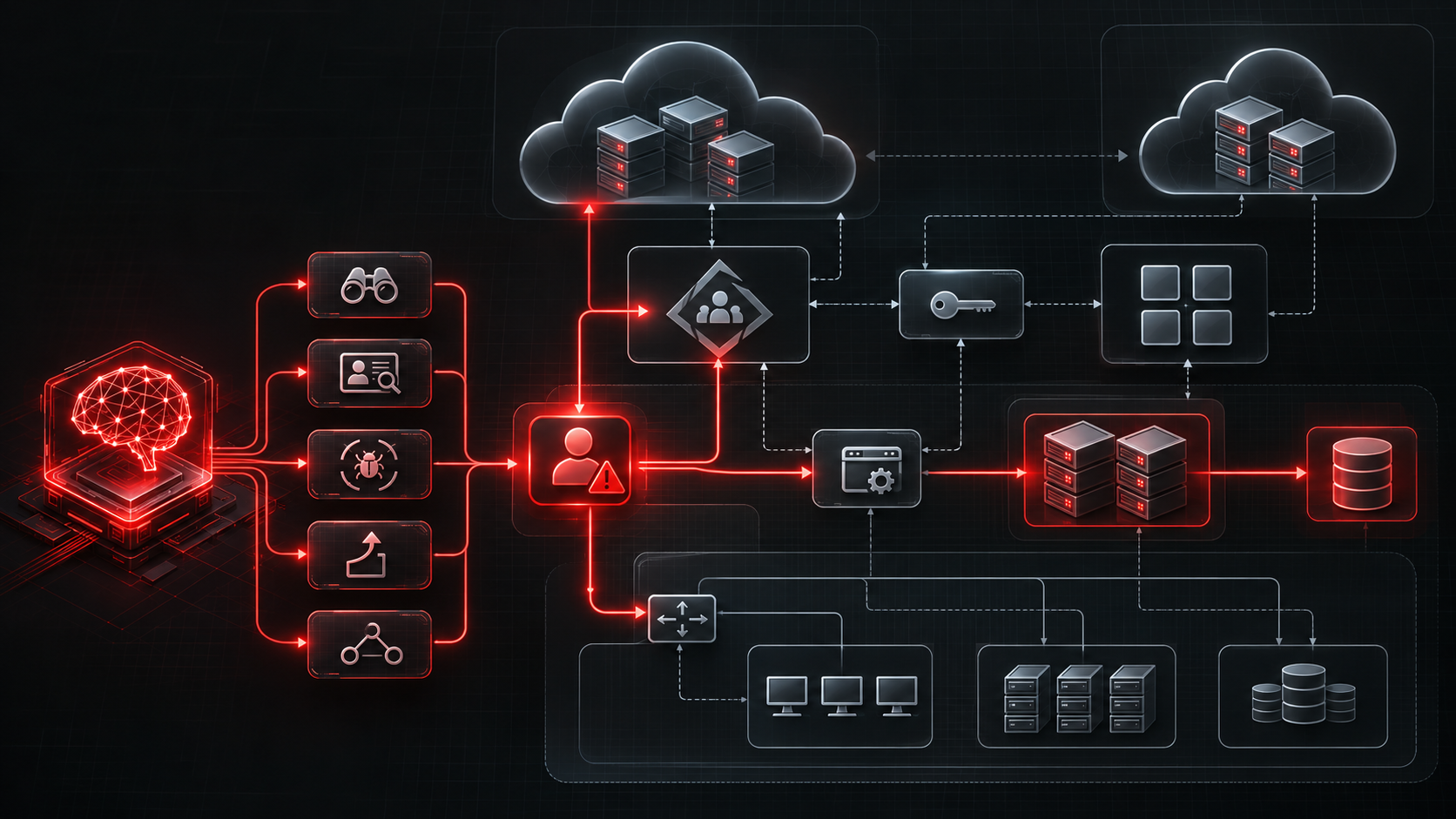
After obtaining initial access, attackers frequently attempt to expand their control within an organization. This process may involve discovering internal systems, accessing credentials, and identifying privileged accounts. ARTEX can assist with these activities by coordinating reconnaissance and analyzing the results of previous operations. Its autonomous execution model can reduce the manual effort required to investigate different attack paths.
Research into ARTEX-associated intrusions has described activity involving Active Directory reconnaissance and credential-related techniques. These included Kerberoasting and DCSync-related operations. Kerberoasting targets service-ticket material that may expose weak service account passwords. DCSync abuse involves unauthorized directory replication requests made using sufficiently privileged access. Both techniques can create serious risks when an attacker has already established a foothold.
Autonomous frameworks may also rely on legitimate administrative tools rather than deploying recognizable malware. PowerShell, remote management interfaces, and cloud administration utilities can support both authorized operations and malicious activity. This overlap makes isolated event detection less reliable. A suspicious command becomes more meaningful when linked to abnormal authentication, unexpected privilege changes, or unusual network connections.
Post-compromise activity may also involve accessing databases, cloud storage, and sensitive business applications. Some ARTEX-associated investigations documented attempts to interact with legitimate application functionality. These activities reinforce the need to monitor privileged operations and unusual access patterns. Defenders must understand how activity progresses across systems rather than relying exclusively on individual endpoint alerts.
Why ARTEX Challenges Traditional Security Operations
The most important defensive challenge introduced by agentic offensive frameworks is their execution speed. Security operations centers typically depend on automated alerts followed by analyst investigation. Security teams must review evidence, validate suspicious behavior, and determine appropriate containment actions. These processes support accurate decisions but can introduce delays during fast-moving intrusions.
Google Threat Intelligence Group and Mandiant documented ARTEX execution bursts lasting only a few seconds during investigated incidents. These short bursts occurred within broader attack timelines and should not be confused with complete intrusions. Nevertheless, they demonstrate how quickly autonomous tooling can perform related operations. An attacker may complete several reconnaissance or permission-evaluation steps before a security analyst finishes investigating the initial event.
Fragmented security visibility makes this challenge more difficult. An identity provider may record authentication failures while a cloud platform detects unusual management activity. At the same time, an endpoint security solution may observe suspicious command execution. If these events remain isolated, analysts may overlook their relationship. Effective defense requires security teams to correlate events across different systems and recognize the progression of a potential intrusion.
Detecting ARTEX Attacks with Logstail SIEM
Detecting ARTEX-associated attacks requires behavioral analysis rather than dependence on static signatures. Threat actors can modify execution patterns, change infrastructure, and use legitimate administrative tools. A single IP address or process name may therefore provide limited detection coverage. Security teams should focus on patterns involving authentication abuse, privilege changes, cloud activity, and suspicious lateral movement.
Logstail SIEM can support this approach by providing a centralized environment for analyzing security telemetry. With the relevant data sources integrated, organizations can investigate authentication events, application activity, cloud audit logs, and endpoint security alerts together. This helps analysts identify relationships between events that might appear harmless individually. A failed login, an unexpected API request, and a permission change may form a more meaningful security signal when they occur within the same attack sequence.
Behavioral Detection and Threat Hunting
Consider a scenario involving automated password spraying against corporate accounts. After obtaining valid credentials, an attacker begins enumerating cloud permissions and accessing internal services. A correlation-based detection strategy can help connect these activities through shared identities, timestamps, and infrastructure details. Security analysts can then assess whether the events indicate an ongoing intrusion.
Logstail SIEM can also support threat hunting organized around the MITRE ATT&CK framework. Relevant techniques include Password Spraying (T1110.003), Valid Accounts (T1078), Cloud Infrastructure Discovery (T1580), and Account Manipulation (T1098). Detection engineers can use these techniques to define monitoring priorities and evaluate coverage. The effectiveness of each detection depends on available telemetry, reliable correlation logic, and an understanding of legitimate operational behavior.
Behavioral monitoring offers an important advantage against autonomous offensive tooling. Even when attackers change frameworks or infrastructure, their objectives often require recognizable activities. Credential abuse, unauthorized permission changes, and unusual resource access remain important security signals. Identifying these behaviors can provide broader protection than searching exclusively for ARTEX-specific indicators.
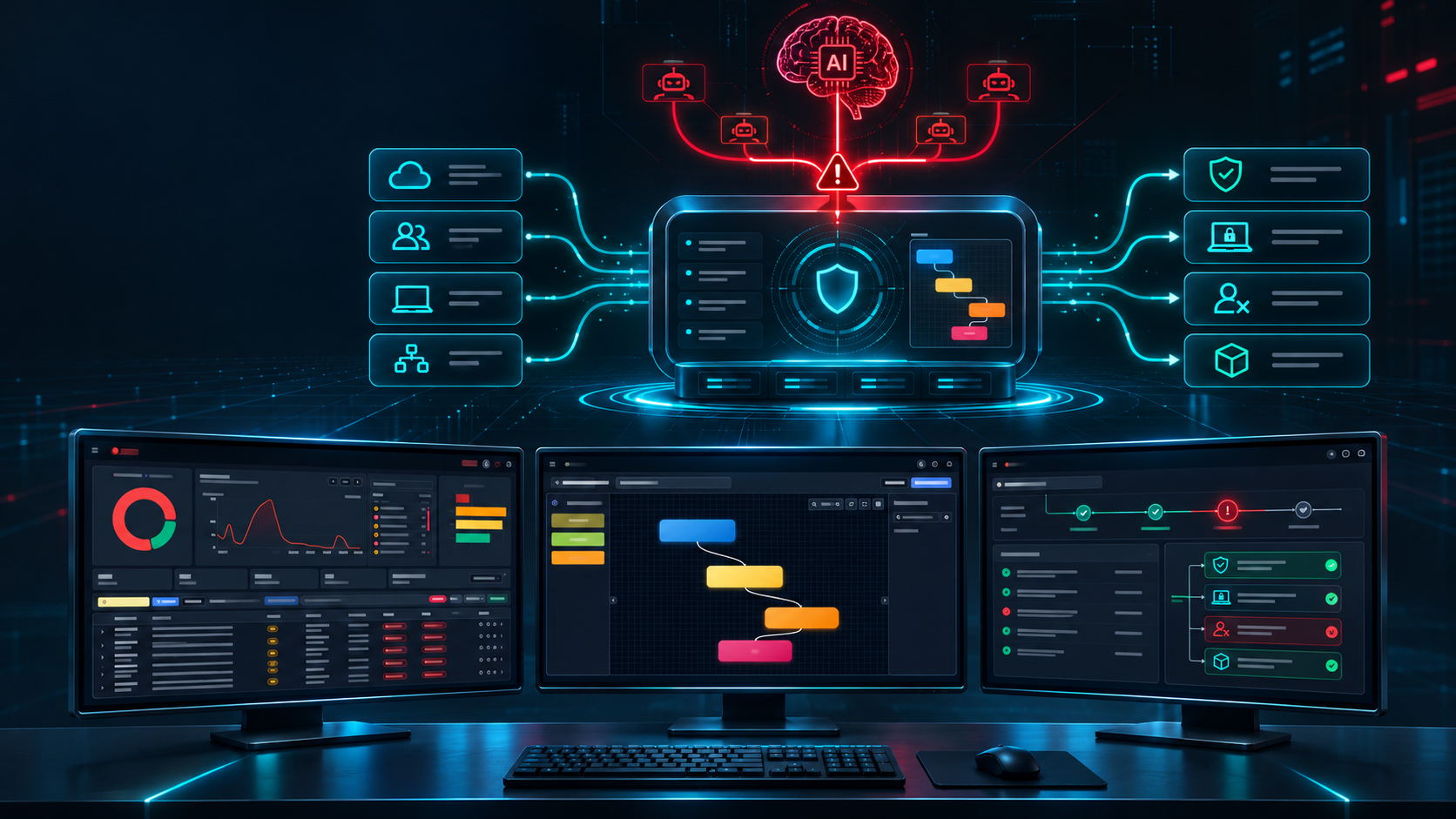
Automated Incident Response with Logstail SOAR
Detection is only one part of defending against machine-speed cyberattacks. Organizations must also respond before attackers expand access or compromise sensitive resources. Traditional incident response often involves repetitive tasks, including gathering logs, validating identities, and coordinating containment. These activities consume valuable analyst time, particularly when multiple security systems are involved.
Logstail SOAR can support a coordinated response strategy by connecting validated security detections with structured incident workflows. Depending on the available integrations, these workflows can enrich alerts, collect investigation context, and notify responsible security teams. Organizations can also design containment procedures around their authorization policies and operational requirements. This helps standardize incident handling and reduce unnecessary manual work.
Responding to Autonomous Threats
Consider an automated intrusion involving a compromised cloud identity. Logstail SIEM may identify unusual authentication patterns followed by suspicious permission enumeration. A connected SOAR workflow could gather additional context and escalate the incident for investigation. Where supported and authorized, containment actions might include revoking active sessions, disabling compromised credentials, or restricting suspicious access.
Automated response should always include appropriate safeguards. Not every unusual event represents malicious behavior, and legitimate automation can resemble offensive activity. High-confidence detections may justify faster containment, while ambiguous cases may require analyst approval. The objective is to improve response speed without creating unnecessary operational disruption.
Together, Logstail SIEM & SOAR can form part of a security operations strategy that connects monitoring with coordinated response. The SIEM component supports centralized visibility and behavioral investigation. SOAR processes can help translate validated findings into consistent response actions. This approach becomes increasingly valuable as autonomous offensive frameworks compress the time between initial access and potential impact.
Conclusion: Defending Against AI-Powered Cyberattacks
ARTEX demonstrates how agentic AI is changing the speed and coordination of modern cyberattacks. Autonomous frameworks can accelerate reconnaissance, identity attacks, cloud permission enumeration, and post-compromise activity. Although these operations rely on familiar adversarial techniques, AI-driven orchestration reduces the manual effort required to execute them. Recent threat intelligence findings show why organizations must prepare for faster and more adaptive intrusion workflows.
Defending against these threats requires strong identity security, least-privilege access, centralized monitoring, and effective incident response. Security teams should prioritize suspicious behavioral sequences rather than depending exclusively on static indicators. Correlating identity, cloud, application, and endpoint telemetry can reveal attack activity that isolated alerts might miss.
Logstail SIEM & SOAR can support this defensive approach by combining security visibility, behavioral detection, and structured incident response workflows. As AI-powered offensive frameworks continue to evolve, organizations must reduce the gap between attacker execution speed and defender response capability. Strong preventive controls and coordinated security operations remain essential for maintaining resilience.