
July 23, 2026
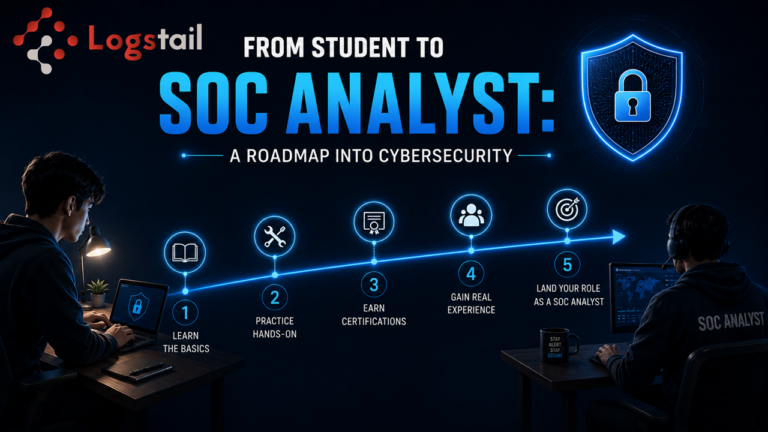
From Student to SOC Analyst: A Roadmap Into Cybersecurity
Starting a Career in Cybersecurity
Cybersecurity is growing rapidly, and organizations need skilled Security Operations Center (SOC) Analysts more than ever.
However, many students and career changers face the same challenge: Where should I start?
With so many certifications, tools, and career paths available, entering cybersecurity can feel overwhelming. The key is having a clear learning path that combines technical knowledge, industry certifications, and hands-on experience.
Becoming a SOC Analyst is not about knowing everything immediately. It is about building the right skills, practicing consistently, and understanding how cybersecurity teams operate in real environments.
This article explores the journey from student to SOC Analyst and explains how Logstail Academy and the Logstail Platform support the development of the next generation of cybersecurity professionals.
Building the Right Cybersecurity Foundation
Every successful cybersecurity career begins with strong fundamentals.
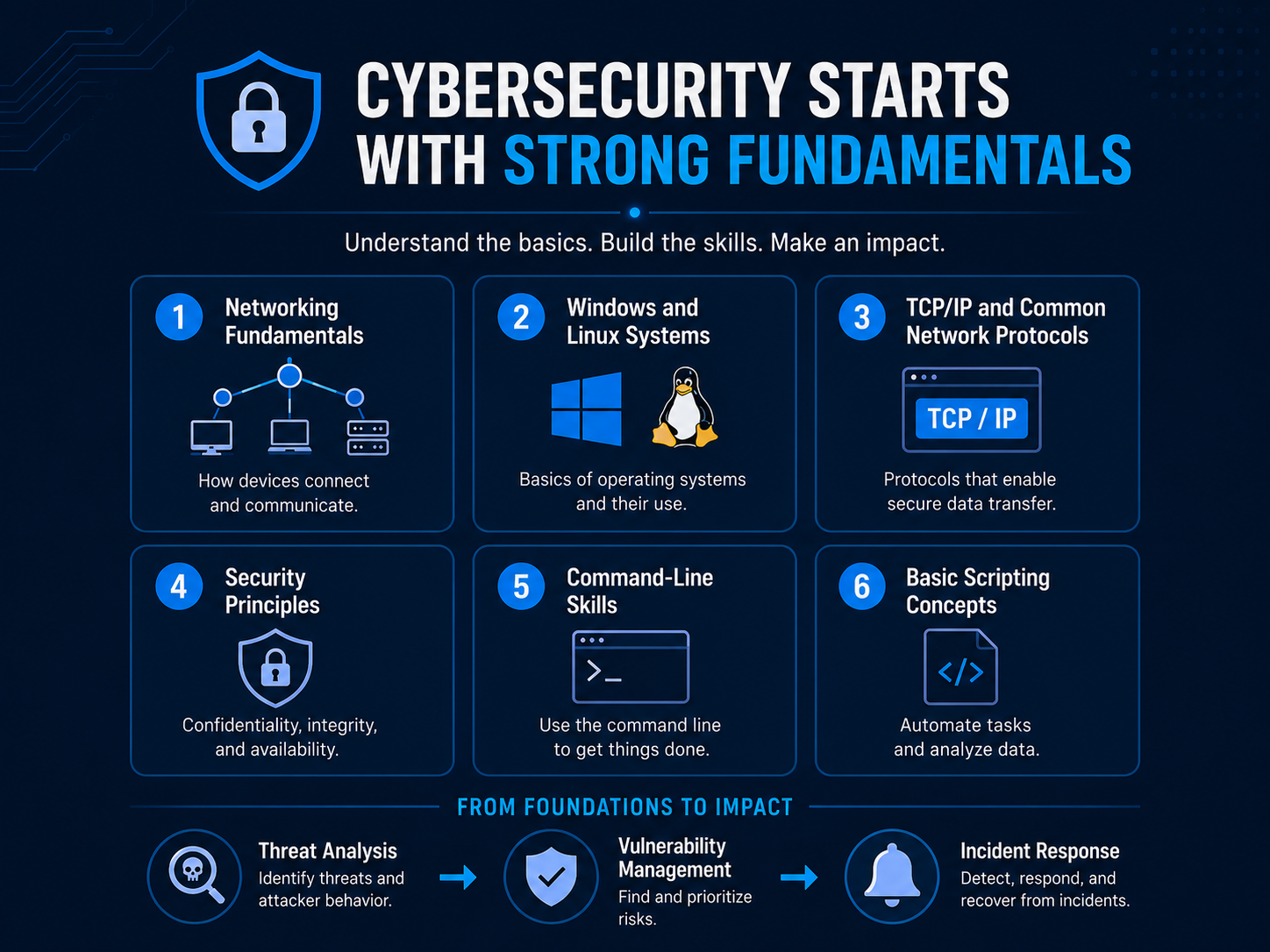
Before investigating threats or responding to incidents, analysts need to understand how systems, networks, and applications work. This knowledge allows them to recognize unusual behavior and identify potential security risks.
Important foundational skills include:
- Networking fundamentals
- Windows and Linux systems
- TCP/IP and common network protocols
- Security principles
- Command-line skills
- Basic scripting concepts
These fundamentals create the foundation for more advanced security responsibilities, such as threat analysis, vulnerability management, and incident response.
The Importance of Cybersecurity Certifications
Certifications play an important role in cybersecurity careers. They provide structured learning paths, validate technical knowledge, and help demonstrate competence to employers. While hands-on experience is essential, certifications can strengthen a candidate’s credibility and improve opportunities for career advancement.
For professionals aiming to become SOC Analysts, the CompTIA Cybersecurity Analyst (CySA+) certification is highly valuable because it focuses on practical defensive security skills rather than offensive penetration testing. The certification emphasizes the ability to detect, analyze, and respond to cyber threats using real-world security tools and techniques, making it well suited to the responsibilities of a Security Operations Center (SOC).
CySA+ covers areas that directly relate to the daily responsibilities of security analysts, including:
- Threat intelligence
- Vulnerability management
- Security monitoring
- Incident response
- Digital forensics
- Risk assessment
- Cloud security
- Infrastructure protection
In addition to these topics, the certification develops skills in analyzing network traffic, interpreting security logs, identifying indicators of compromise (IOCs), and prioritizing vulnerabilities based on business risk. Candidates also gain an understanding of security frameworks, compliance requirements, and the use of Security Information and Event Management (SIEM) platforms to investigate and respond to security incidents.
These skills reflect the real challenges security teams face when defending organizations against modern cyber threats. As a result, earning the CySA+ certification demonstrates that a professional has the knowledge and practical ability to contribute effectively to threat detection, incident handling, and the overall security posture of an organization.
Developing SOC Analyst Skills with Logstail Academy
The Cyber Security Analyst (CySA+) learning path from Logstail Academy is designed to help learners prepare for the certification exam while developing practical skills needed in cybersecurity roles.
With more than 30 hours of advanced, hands-on training, the course follows the responsibilities of a modern cybersecurity analyst.
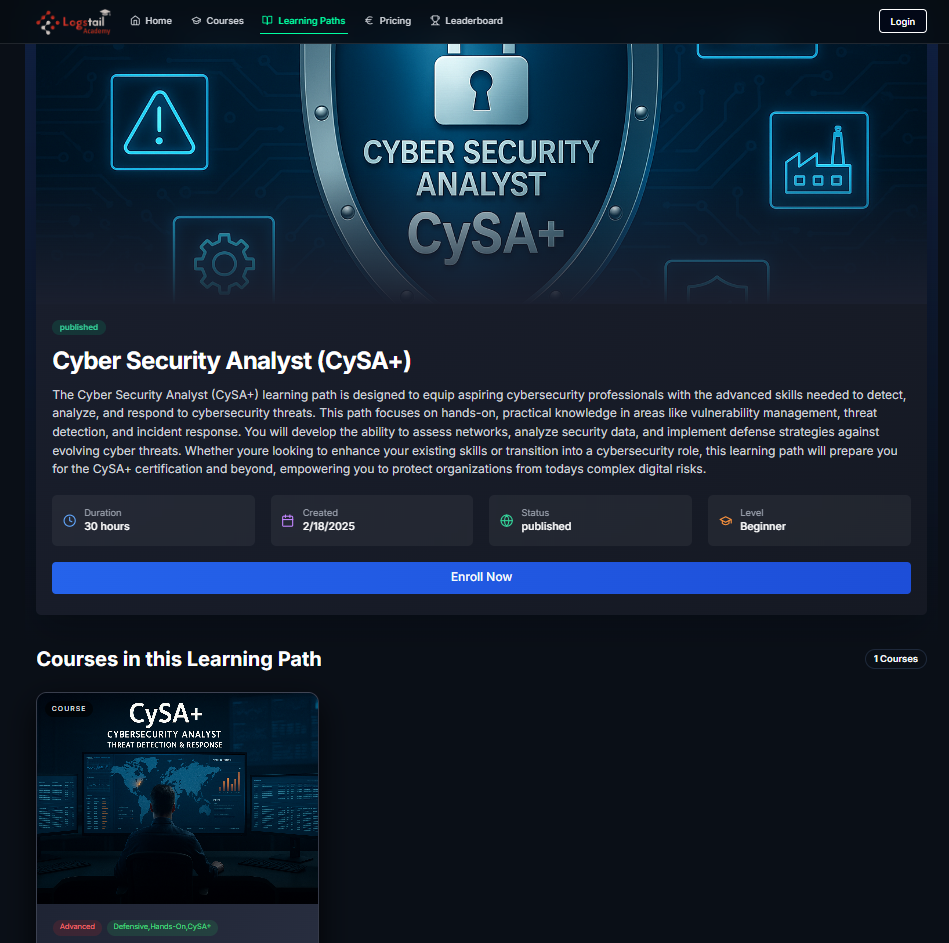
The course combines technical concepts with practical exercises. Students learn how to analyze threats, assess risks, investigate incidents, and apply defensive security techniques.
Instead of only studying theory, learners develop the problem-solving mindset required in real Security Operations Centers.
Why Hands-On Experience Matters
Certifications are important, but practical experience is what helps cybersecurity professionals grow.
Employers increasingly look for candidates who can demonstrate that they understand security processes and can apply their knowledge in real situations.
Hands-on practice helps students develop confidence with:
- Investigating security events
- Understanding vulnerabilities
- Analyzing suspicious activity
- Performing security assessments
- Responding to incidents
At Logstail Academy , learners gain practical experience through virtual machine (VM) labs that simulate real-world environments. Instead of simply reading about cybersecurity concepts, students interact with Windows and Linux systems, analyse logs, investigate alerts, practise command-line techniques, and work through realistic security scenarios in a safe, isolated environment.
These VM-based labs allow learners to experiment, make mistakes, and build confidence without affecting production systems. By working through guided exercises and practical challenges, students develop the technical skills and problem-solving mindset expected of entry-level cybersecurity professionals.
This hands-on approach bridges the gap between theory and practice, helping learners apply what they’ve studied in situations that closely resemble the day-to-day work of a Security Operations Centre (SOC). As a result, students are better prepared for the challenges they’ll face as SOC Analysts and can demonstrate practical experience alongside their cybersecurity knowledge.
Understanding Modern Security Operations
The Role of SIEM and Security Platforms
Modern Security Operations Centers (SOCs) rely on security platforms to collect data, monitor environments, investigate alerts, and respond to threats. These tools provide visibility across networks, systems, applications, and cloud environments, enabling continuous monitoring and informed decision-making. Since modern IT environments generate millions of security events every day, manually reviewing this data is impossible. Security platforms automate the collection, correlation, and analysis of security data, allowing analysts to focus on genuine threats rather than routine events.
The core technology in a SOC is the Security Information and Event Management (SIEM) platform. A SIEM collects logs from sources such as firewalls, servers, endpoints, network devices, cloud services, and security applications. It normalizes and correlates this data to identify suspicious activity, providing a centralized view of an organization’s security posture. Many organizations also integrate Security Orchestration, Automation, and Response (SOAR) solutions to automate tasks such as alert triage, malware containment, and incident response, improving efficiency and reducing response times.
In addition to threat detection, security platforms support compliance and forensic investigations by maintaining detailed security logs. They also increasingly use artificial intelligence and machine learning to improve threat detection, reduce false positives, and identify emerging attack patterns more effectively.
The Logstail Platform
The Logstail Platform is a professional Security Information and Event Management (SIEM) and Security Operations solution designed for organizations.
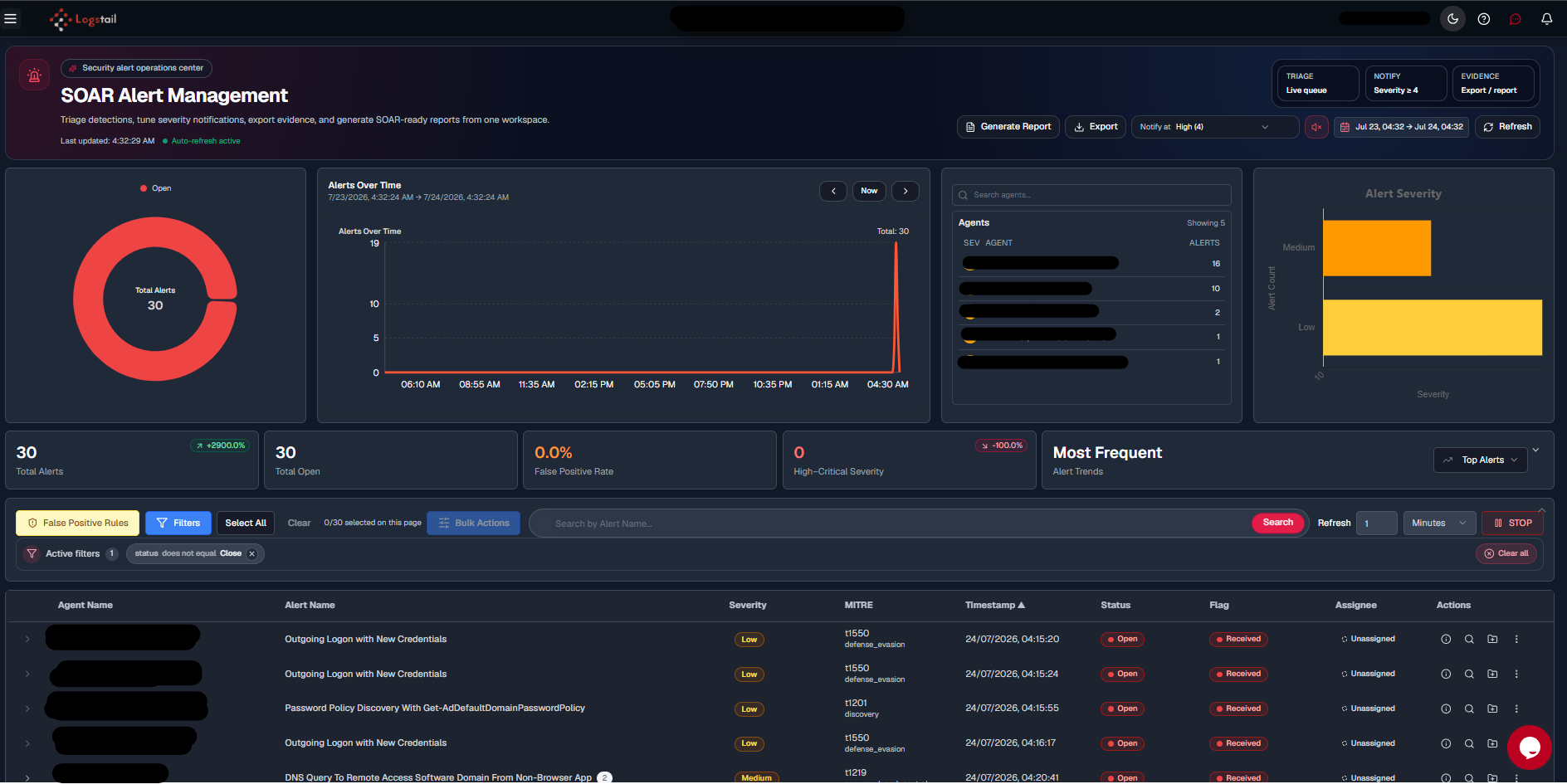
It provides security teams with capabilities such as:
- Analytics and dashboards
- Log analysis
- Security monitoring
- Alert management
- Case management
- SOAR automation
- Notification workflows
- Reporting and insights
- Infrastructure monitoring
The platform helps security teams centralize information, investigate incidents, automate repetitive tasks, and improve their overall security operations.
While Logstail Academy focuses on developing cybersecurity knowledge and skills, the Logstail Platform supports the professional workflows used by security teams every day.
Understanding these tools gives aspiring SOC Analysts valuable insight into how cybersecurity operations work in real organizations.
Certifications and Real-World Skills Work Together
A successful cybersecurity career requires more than a certification alone.
Certifications such as CySA+ demonstrate that a candidate understands important security concepts and best practices. Practical training demonstrates that they can apply those concepts when facing real challenges.
The combination of structured education, hands-on practice, and familiarity with professional security platforms creates a stronger foundation for anyone entering the cybersecurity field.
Logstail Academy helps learners develop the skills needed to begin their journey. The Logstail Platform represents the type of technology professionals use to monitor, investigate, and protect modern environments.
Start Your Journey Toward Becoming a SOC Analyst
Building a cybersecurity career takes dedication, continuous learning, and practical experience.
The path from student to SOC Analyst becomes clearer when you combine:
- A strong technical foundation
- Industry certifications like CySA+
- Hands-on cybersecurity training
- Understanding of professional SOC tools
Cybersecurity is constantly evolving, and the best analysts continue learning throughout their careers.
Whether you are starting from the beginning or preparing for your next certification, Logstail Academy provides the training and practical knowledge needed to develop your cybersecurity skills and move closer to a career in Security Operations.