August 10, 2026
How Long Should Security Logs Be Retained? A Guide to Compliance, Storage, and Security Requirements
Introduction
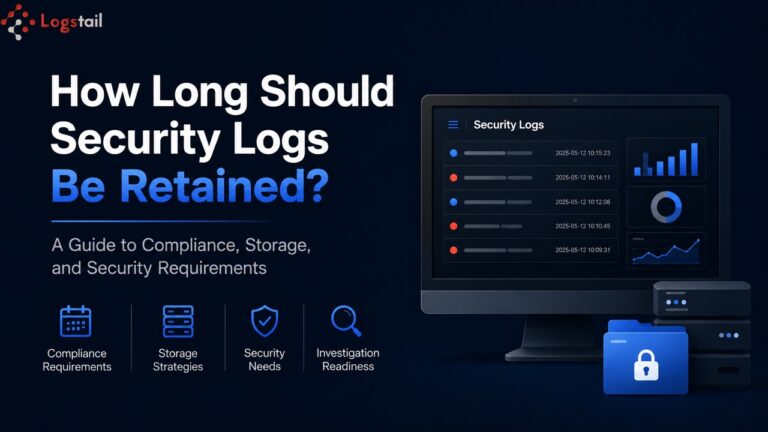
Security logs are one of the most valuable sources of information during a cybersecurity investigation, compliance audit, or security review. They provide evidence of user activity, system changes, suspicious behavior, and potential attacks. However, organizations often struggle with one important question: How long should security logs be kept?
Delete logs too early, and you may lose critical evidence needed for investigations or compliance audits. Keep everything forever, and storage costs and management complexity can quickly increase. The right approach requires balancing regulatory requirements, security needs, and efficient storage strategies.
Why Security Log Retention Matters
Logs are not just technical records; they serve several important purposes in maintaining the security and integrity of a system. They help organizations investigate security incidents, detect suspicious activity, support compliance audits, and provide valuable forensic evidence when analyzing security events. In addition, logs allow organizations to track user and administrator actions and understand how systems and configurations have changed over time. When an attack occurs, organizations often discover that the most important evidence is not the newest log data but historical activity that shows how an attacker entered and moved through the environment.
Legal and Compliance Requirements
There is no universal retention period that applies to every organization. Different industries and regulations have different expectations, and organizations may also have contractual, business, or internal security requirements that influence how long logs should be stored.
Organizations should therefore identify which regulations apply to their environment and determine how those requirements affect different categories of security data. A retention policy should clearly define which logs are collected, how long they are retained, where they are stored, who can access them, and when they should be deleted.
The organization should also consider the purpose of each type of log. Security logs that are essential for incident investigation may need to be retained longer than low-value operational logs, while logs associated with critical systems or privileged accounts may require additional protection and longer retention.
NIS2 and Security Log Retention
The NIS2 Directive emphasizes cybersecurity risk management, incident handling, and the ability to monitor and respond to security events. Organizations affected by NIS2 need to demonstrate that they have appropriate security measures and monitoring capabilities in place and can provide evidence during investigations.
Effective log retention helps organizations investigate incidents, identify attack timelines, demonstrate security controls, and support incident reporting and response activities.
However, NIS2 should not be interpreted as establishing one universal retention period for all security logs. The appropriate retention period depends on the organization’s risk profile, the type of information being collected, the systems involved, applicable national requirements, and any additional sector-specific obligations.
A common practice is to retain important security logs for 6–12 months or longer, depending on organizational risk and industry requirements. The specific period should be documented and justified rather than selected simply because it is commonly used.
For organizations operating in higher-risk environments, longer retention may be appropriate, particularly when incidents may not be detected immediately or when historical data is important for forensic investigations. You can learn more about NIS2 in the blog post How Logstail Helps You Meet NIS2.
ISO 27001 Requirements
ISO 27001 does not define one specific number of days that logs must be stored. Instead, it requires organizations to establish appropriate logging and monitoring processes that define which events should be logged, how logs should be protected, how long they should be retained, and who should have access to them.
Organizations should define retention periods based on business risks, regulatory requirements, operational needs, and the importance of the systems generating the logs. For example, logs related to privileged administrator activity may require longer retention because they can provide important evidence during security investigations, while security events generated by critical systems may have greater forensic value than routine operational events.
Organizations should also ensure that retained logs are protected against unauthorized modification or deletion. If logs can easily be altered by unauthorized users, their value as evidence during an investigation or audit may be significantly reduced.
GDPR Considerations
GDPR does not specify a fixed security log retention period either. Organizations must follow the principle of data minimization and storage limitation, meaning personal data should not be stored longer than necessary for the purpose for which it was collected.
Security logs can contain personal data such as usernames, IP addresses, email addresses, device identifiers, authentication information, timestamps, and other information that may be associated with an identifiable individual.
Organizations should therefore define retention policies that explain what data is collected, why it is needed, how long it is stored, who can access it, how it is protected, and when it should be deleted.
The fact that logs are being collected for security purposes does not automatically mean that every type of information needs to be retained indefinitely. Organizations should regularly review their logging requirements and ensure that the information being retained remains relevant to its purpose.
Common Security Log Retention Periods
While requirements vary, many organizations use approaches like:
| Log Type | Typical Retention Approach |
|---|---|
| Authentication logs | 6–12 months |
| Firewall/network logs | 6–12 months |
| Security alerts | 12+ months |
| Audit logs | 1+ year depending on requirements |
| Critical system logs | Longer retention based on risk |
These periods should be considered general examples rather than universal legal requirements. The appropriate retention period depends on the organization’s environment, security risks, applicable regulations, and the value of the information contained in each type of log.
Authentication logs can help identify unauthorized access, compromised accounts, and unusual login activity. Firewall and network logs can provide important information about connections between internal and external systems, while security alerts provide a historical record of detected threats and security events.
Audit logs are also important because they can provide evidence of administrative actions, system changes, and access to sensitive resources. Critical system logs may require longer retention because compromise of these systems can have a significant impact on the organization.
Hot Storage vs Cold Storage
Keeping every log immediately available can become expensive, especially for organizations that generate large amounts of security data every day. This is why organizations often divide storage into different categories based on how frequently the data needs to be accessed.
Hot Storage
Hot storage contains recent logs that require fast and immediate access. It is primarily used for real-time monitoring, threat detection, security investigations, and day-to-day security operations.
For example, an organization may keep the last 30–90 days of logs in hot storage so that they are readily available for immediate searching and analysis.
Hot storage is particularly useful during active security incidents, when security teams need to quickly search recent events, correlate activity across multiple systems, and investigate alerts. Because hot storage is optimized for fast access and frequent searches, it is generally more expensive than long-term archival storage.
Cold Storage
Cold storage contains older logs that are retained primarily for compliance and investigation purposes. These logs may be used during audits, historical investigations, or to meet regulatory and organizational retention requirements.
For example, an organization may archive logs older than 90 days in cold storage for long-term retention while keeping them available when needed.
Cold storage is generally less expensive than hot storage but may take longer to access or search. This makes it suitable for information that is important to retain but does not need to be accessed every day.
This approach allows organizations to maintain compliance and preserve historical security evidence without paying the cost of keeping every log in high-performance storage.
Data Lake Management for Long-Term Log Retention
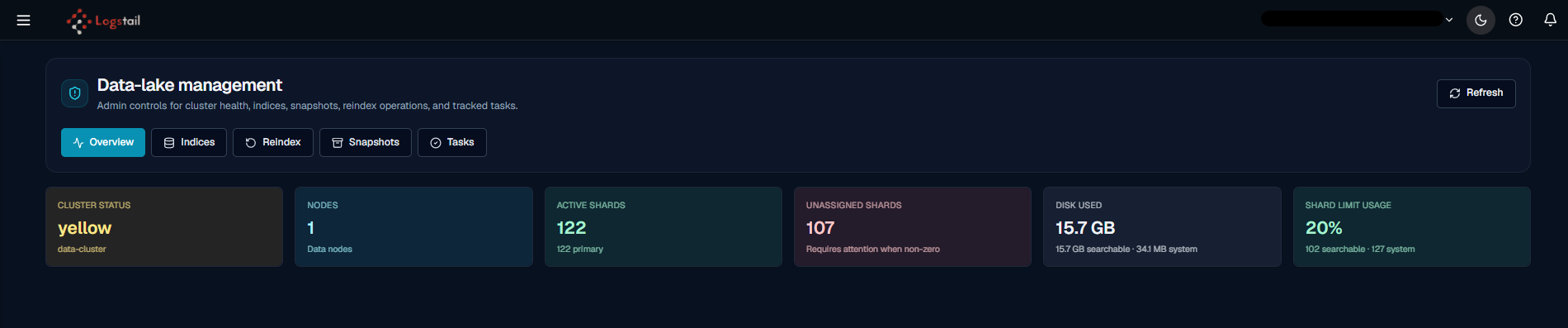
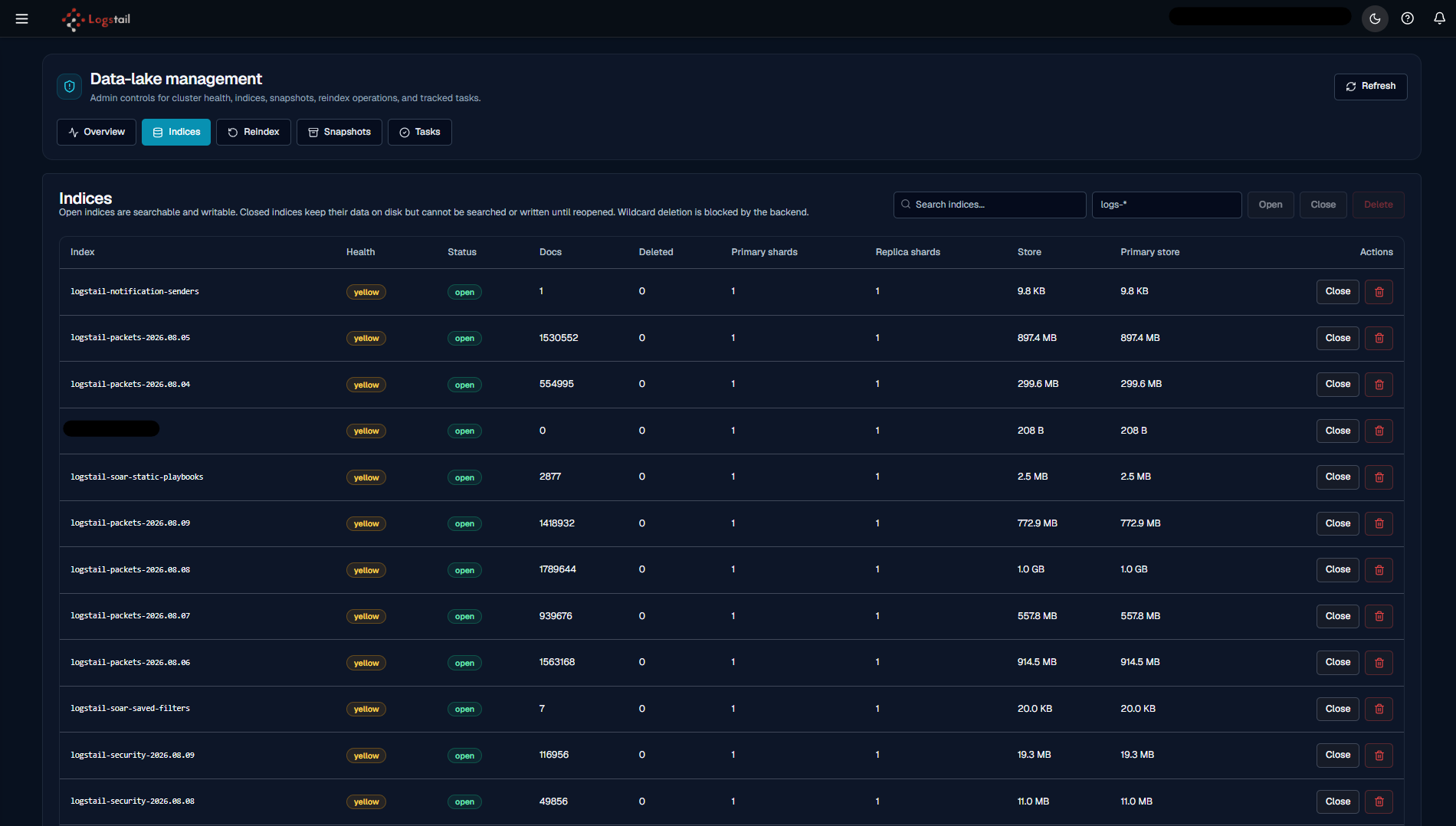
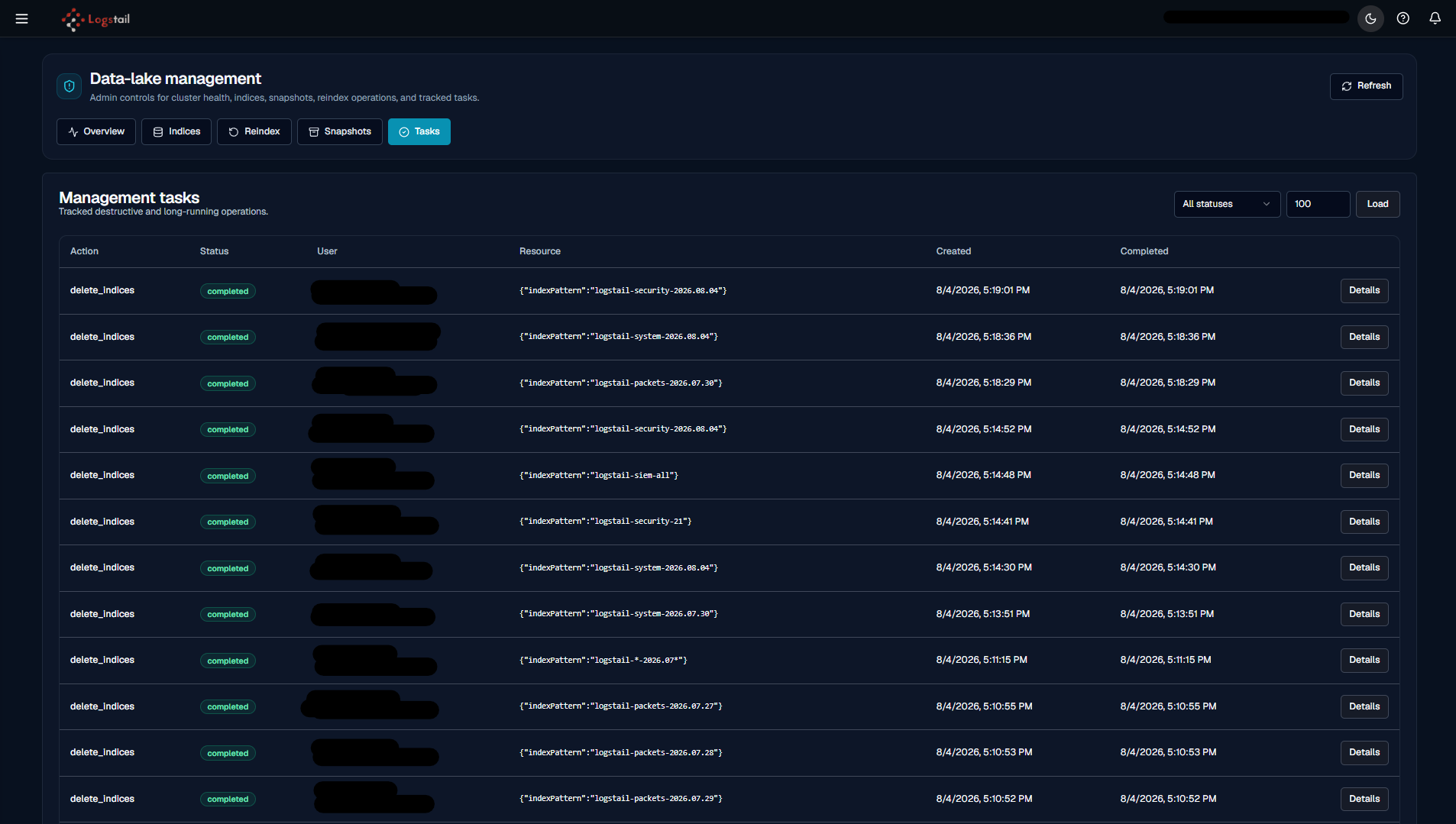
As log volumes continue to grow, organizations need an efficient way to store and manage large amounts of historical security data without compromising accessibility or performance. Logstail’s Data Lake Management capabilities provide security teams with centralized tools to monitor storage usage, manage log indices, track snapshots, and support long-term retention strategies across the environment.
The Data Lake Management dashboard provides administrators with a centralized view of key storage and infrastructure metrics, including disk utilization, active shards, indices, snapshots, and cluster status. This visibility helps teams understand how log data is distributed across the environment and make informed decisions about storage capacity, data organization, and hot and cold storage strategies.
The Challenges of Manual Log Retention
Without centralized log management, organizations often struggle to maintain consistent retention policies and may face issues such as missing historical data, excessive storage costs, and difficulties during security investigations.
Logs may exist in different systems, each with different retention settings, making it difficult to maintain a complete security history. For example, a firewall may retain logs for one period, a server for another, and a cloud platform may use completely different retention settings. This creates gaps in historical visibility and makes it more difficult for security teams to reconstruct an incident.
Manual management also increases the risk of configuration errors. A retention setting may be changed on one system but not another, or logs may be deleted earlier than intended because of limited storage capacity.
As organizations add more servers, endpoints, applications, cloud services, and security tools, the amount of generated log data increases. Managing retention individually across every system therefore becomes increasingly complex and time-consuming.
How Logstail Helps with Security Log Retention
Effective retention requires more than simply storing logs. Organizations need a platform that helps collect, organize, search, and manage security data efficiently throughout its lifecycle.
Logstail’s platform helps organizations manage the complete log lifecycle by providing centralized log collection, monitoring, analysis, and retention management.
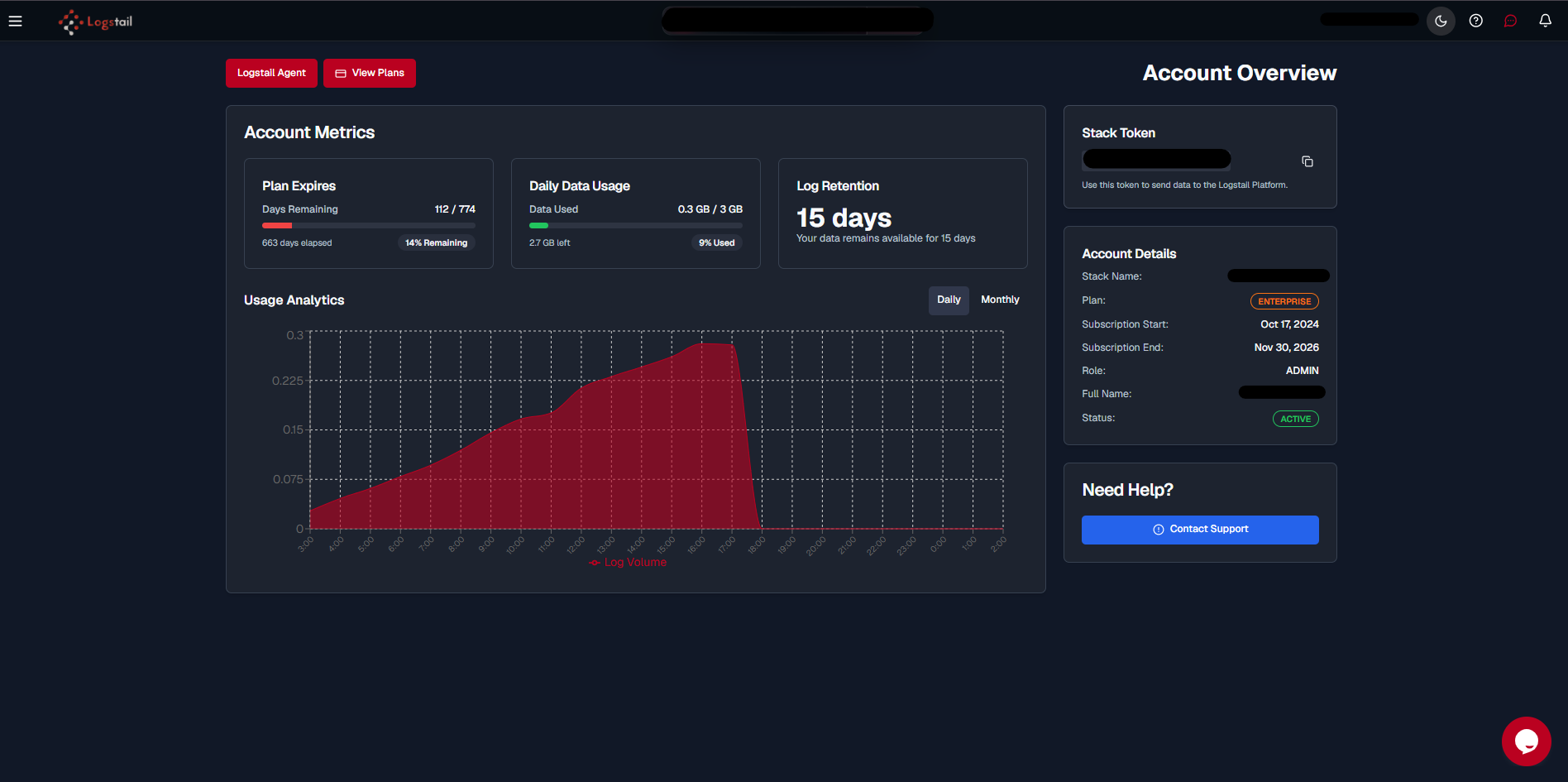
With Logstail, organizations can collect logs from multiple security sources into a single platform, maintain consistent retention policies across systems, and quickly search historical events during security investigations.
Centralizing logs also gives security teams greater visibility into activity across different parts of the environment. Instead of manually checking individual systems, teams can access security information from multiple sources through a centralized platform.
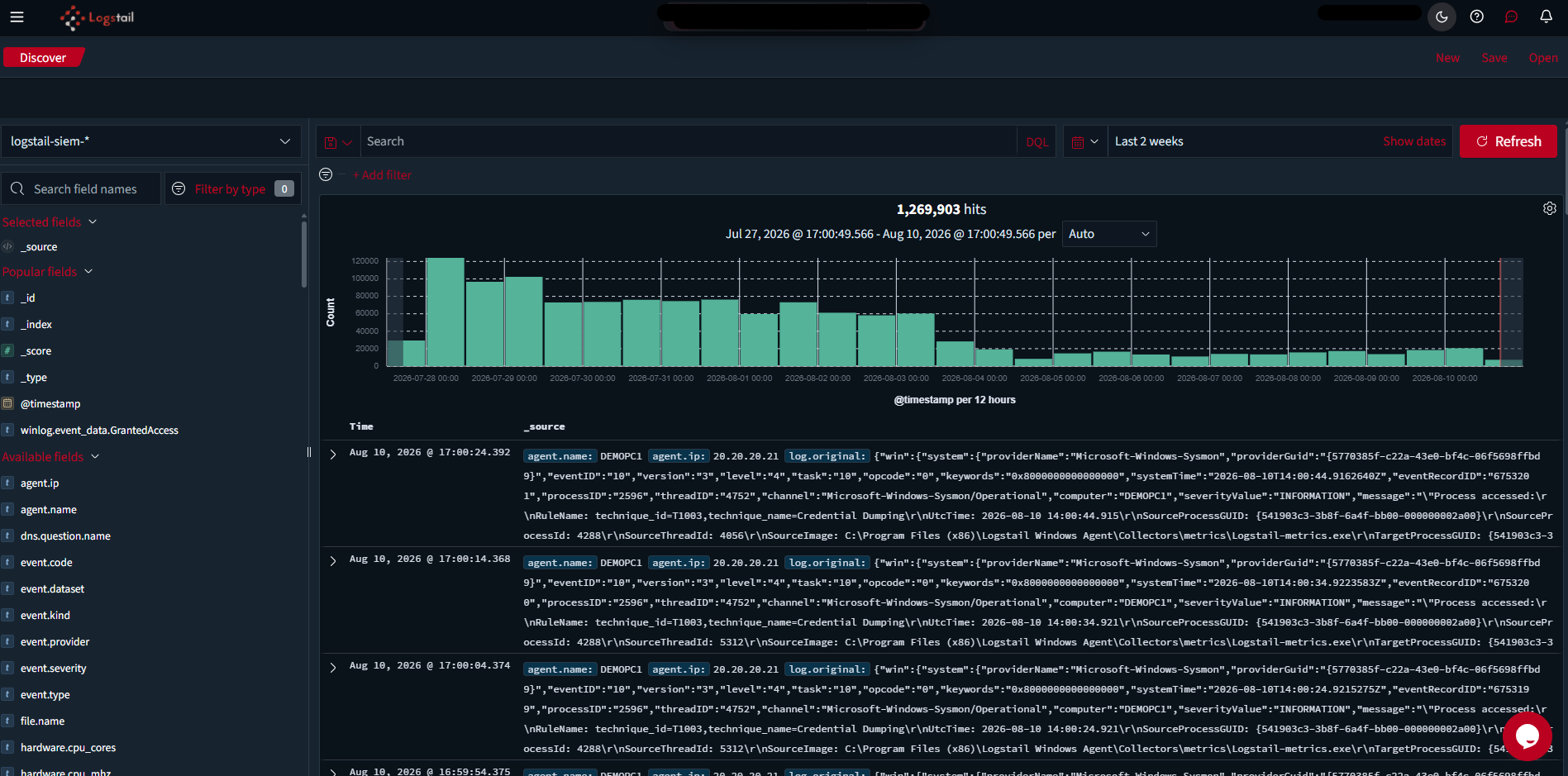
This can be particularly valuable during security incidents, when investigators need to quickly correlate events and understand what happened across the environment.
Logstail can also help organizations apply a more structured approach to retention by separating recently generated, frequently accessed logs from older historical data that can be retained using more efficient storage strategies.
By making security records easier to access and manage, centralized log management can also support organizations during compliance audits and security reviews.
By combining centralized logging with flexible retention strategies, Logstail helps organizations keep the right data for the right amount of time.
Conclusion
Security log retention is not about keeping logs forever—it is about keeping the right logs for the right period. Organizations must balance compliance requirements, security investigations, privacy considerations, and storage costs. A well-designed retention strategy ensures that important security evidence is available when needed while avoiding unnecessary storage overhead.
With centralized log management from Logstail, organizations can simplify retention policies, improve visibility, support compliance efforts, and turn security logs into valuable intelligence for protecting their environment.
By combining centralized logging with flexible retention strategies, organizations can maintain access to important historical security information while using storage resources efficiently.
Ultimately, effective log retention is about ensuring that when a security incident happens, the evidence needed to understand what happened is still there.