July 30, 2026
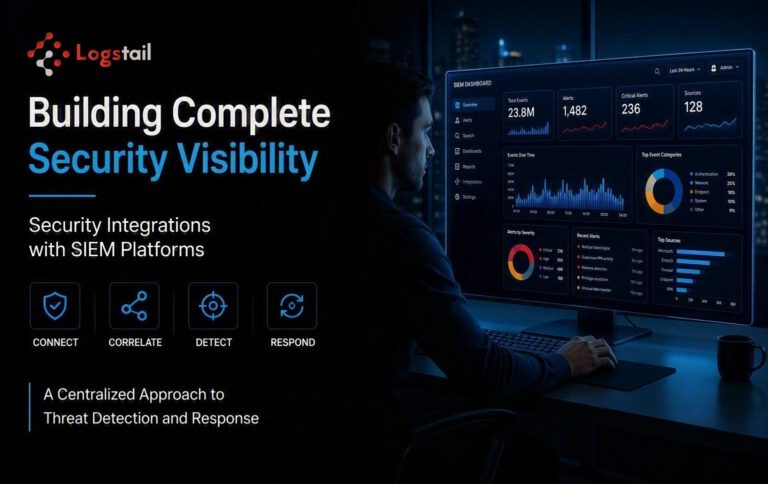
Integrations with Logstail SIEM: Building Complete Security Visibility
Introduction
Modern organizations generate massive amounts of security data every day. Authentication events, endpoint alerts, firewall logs, cloud activity, application events, and network traffic are all valuable sources of information for detecting threats and maintaining visibility across the environment.
The challenge is that these security events are often spread across multiple platforms. Authentication logs may exist in Microsoft Entra ID, endpoint activity in an EDR solution, network events in firewalls, and application logs within cloud environments. Without proper integration, security teams are forced to investigate incidents across multiple tools, increasing response times and creating visibility gaps.
This is where SIEM integrations become essential.
By integrating security tools and data sources into a centralized platform, organizations can improve threat detection, simplify investigations, and strengthen their overall security posture. In this article, we explore why SIEM integrations matter, the challenges organizations face, and how Logstail SIEM and Logstail SOAR help security teams achieve complete security visibility.
What Are SIEM Integrations?
SIEM integrations are the connections between a Security Information and Event Management (SIEM) platform and various data sources across an organization’s infrastructure.
These integrations allow security teams to collect, normalize, analyze, and correlate security events from multiple systems within a centralized environment.
Examples of common SIEM integrations include:
- Microsoft 365
- Microsoft Entra ID
- Active Directory
- Windows Servers
- Linux Systems
- Firewalls
- Endpoint Security Solutions
- Cloud Platforms
- Network Devices
- VPN Solutions
By bringing these sources together, organizations gain a unified view of their security environment and can identify threats that might otherwise remain undetected.
Why SIEM Integrations Matter
Security threats rarely leave evidence in a single system.
An attacker may compromise a user account through Microsoft 365, access internal resources through a VPN connection, and execute malicious activity on an endpoint. If these events remain isolated within individual systems, identifying the complete attack chain becomes significantly more difficult.
SIEM integrations help solve this problem by centralizing security telemetry and providing context across multiple data sources.
Centralized Visibility
One of the biggest advantages of SIEM integrations is visibility.
Instead of switching between multiple platforms, analysts can access logs and security events from a centralized location.
This allows security teams to:
- Improve operational efficiency
- Eliminate visibility gaps
- Gain a broader understanding of security events
Faster Threat Detection
Threats often generate indicators across multiple systems.
A suspicious login attempt, unusual endpoint activity, and abnormal network communication may appear unrelated when viewed separately. However, when correlated within a SIEM platform, they can reveal an active security incident.
Integrated security monitoring enables analysts to detect threats faster and respond before they escalate.
Improved Incident Response
The faster security teams can access relevant information, the faster they can investigate and contain incidents.
By integrating multiple security technologies into a single platform, analysts can quickly review events, gather context, and determine the appropriate response actions.
This significantly reduces investigation time and improves overall incident response effectiveness.
Security Integrations Supported by Logstail
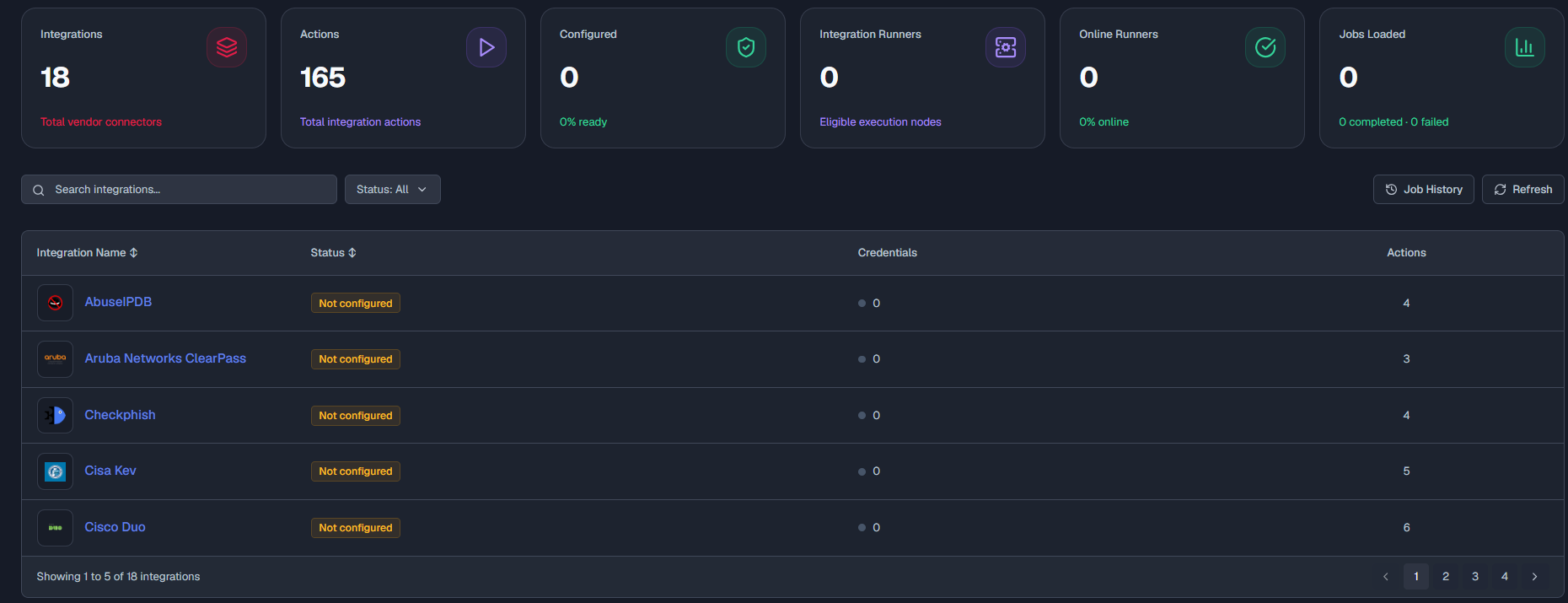
Organizations often connect multiple technologies to maximize visibility, improve threat detection, and enrich investigations. Logstail supports integrations across identity providers, firewalls, authentication platforms, and threat intelligence services, helping security teams centralize monitoring and investigation workflows.
Identity and Productivity Platforms
Microsoft 365 generates valuable security events related to authentication, user activity, administrative actions, and email security. Monitoring this activity helps organizations identify suspicious behavior and unauthorized access attempts.
Firewall Integrations
Logstail supports integrations with firewall technologies such as FortiGate, Palo Alto Networks PAN-OS, Cisco Firepower, and other security platforms. These integrations provide visibility into network activity, blocked connections, policy violations, and suspicious communication patterns.
Authentication and MFA Integrations
Platforms such as Cisco Duo provide additional visibility into authentication activity while enabling analysts to access authentication-related functionality directly through Logstail SOAR.
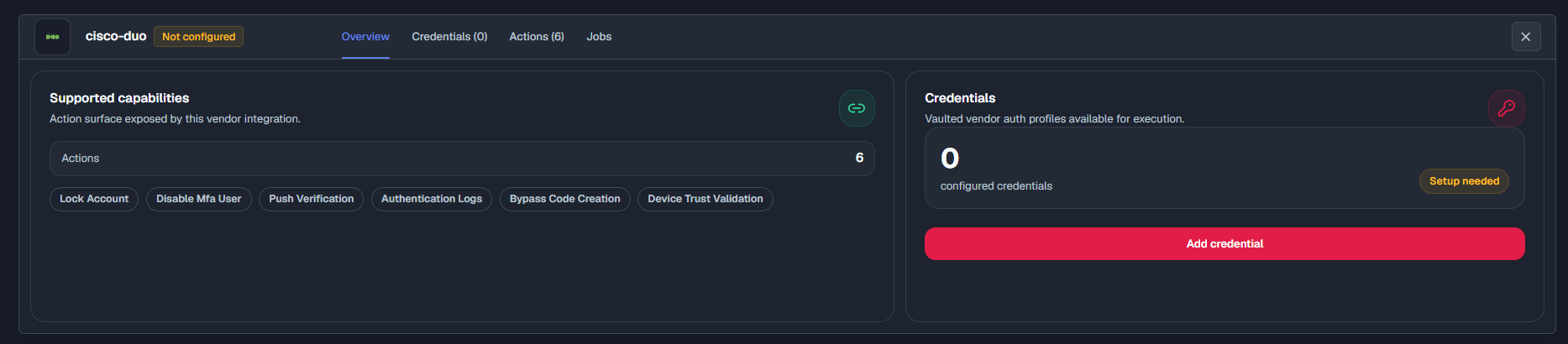
Security teams can leverage these integration capabilities during investigations without switching between multiple management consoles, improving both operational efficiency and response times.
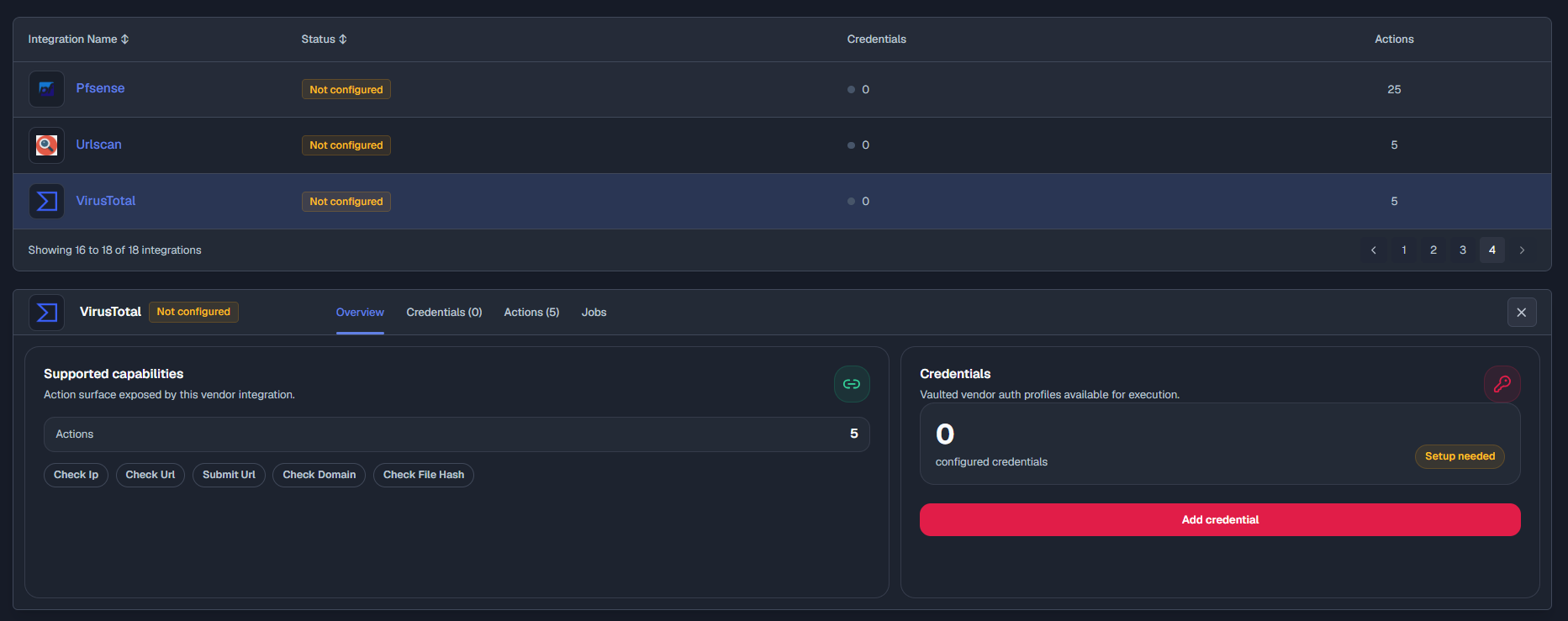
Threat Intelligence Integrations
Threat intelligence integrations help analysts enrich investigations and gain additional context around suspicious indicators.
Examples include:
- AbuseIPDB
- VirusTotal
- MalwareBazaar
- Urlscan
- CheckPhish
- CISA KEV
What Can SIEM Integrations Do?
Integrations provide more than simple log collection.
When properly configured, they enable powerful security capabilities that support both detection and response.
Log Collection and Normalization
Security data often arrives in different formats depending on the source.
SIEM integrations help collect and normalize logs so analysts can search, analyze, and investigate events more efficiently.
Event Correlation
One of the most powerful SIEM capabilities is event correlation.
Correlation allows security teams to connect activities occurring across multiple systems and identify suspicious behavior that may not be obvious when viewed independently.
For example:
- Failed logins from Entra ID
- VPN authentication attempts
- Endpoint alerts
When combined, these events may indicate a coordinated attack against a user account.
Alert Generation
Integrated data sources improve the accuracy of security alerts.
Instead of relying on individual events, organizations can generate alerts based on correlated activity across multiple systems.
This helps reduce false positives and improves detection quality.
Investigating security incidents requires context.
With integrated data sources, analysts can quickly review:
- Authentication activity
- Network communication
- Endpoint telemetry
- Security alerts
This centralized visibility helps accelerate investigations and improve decision-making.
Common SIEM Integration Challenges and How Logstail Helps Address Them
While integrations provide significant benefits, organizations must also be prepared to address common challenges.
Managing Growing Data Volumes
As organizations integrate additional security technologies, the amount of generated security data grows rapidly. Security teams must maintain visibility across authentication logs, network activity, endpoint telemetry, and cloud services without increasing operational complexity.
Logstail helps organizations centralize security monitoring by bringing together data from multiple integrated sources, allowing analysts to investigate events from a unified platform.
Maintaining Visibility Across Diverse Technologies
Modern environments typically include a mix of identity providers, firewalls, cloud services, endpoint protection platforms, and threat intelligence sources. Maintaining consistent visibility across these technologies can become challenging when security data is distributed across multiple interfaces.
Logstail simplifies this process by providing centralized access to integrated security data, helping analysts maintain visibility across their entire environment.
Reducing Alert Fatigue
Large volumes of security events can overwhelm analysts, particularly when alerts lack context or require investigation across multiple tools.
By combining data from multiple integrations, Logstail helps security teams gain additional context during investigations, allowing them to prioritize security events more effectively and improve response efficiency.
Simplifying Integration Management
Managing multiple security integrations individually can increase administrative overhead and operational complexity.
Through Logstail SOAR Integrations, organizations can manage integrations, credentials, and integration-specific actions from a centralized interface, helping streamline day-to-day security operations and reducing the need to switch between multiple platforms.
How Logstail Simplifies Security Integrations
Logstail SIEM helps organizations build centralized security visibility through flexible integration capabilities and security monitoring features.
By connecting multiple log sources into a single platform, security teams can:
- Centralize security monitoring
- Collect logs from diverse environments
- Improve threat detection
- Correlate events across systems
- Generate meaningful alerts
- Accelerate investigations
- Strengthen incident response processes
Rather than managing isolated security tools, analysts gain a unified view of activity across the entire environment.
Beyond simple log ingestion, Logstail enables organizations to operationalize their security integrations through a centralized platform. Security teams can securely manage credentials, execute integration-specific actions, enrich investigations with external intelligence sources, and maintain visibility across multiple technologies from a single location. This reduces operational complexity and helps analysts focus on identifying and responding to threats rather than managing disconnected tools.
Real-World Example
Key Takeaways
SIEM integrations are the foundation of effective security monitoring.
Without integrations, organizations struggle with fragmented visibility, slower investigations, and missed threats.
By connecting identity systems, endpoints, firewalls, cloud services, and other security technologies into a centralized platform, organizations gain the visibility required to detect and respond to threats more effectively.
Logstail SOAR helps security teams simplify this process by providing centralized monitoring, event correlation, alerting, alerting, and investigation capabilities that support modern security operations.
Ready to Build Centralized Security Visibility?
Discover how Logstail SOAR and Logstail SIEM help organizations integrate critical security technologies, centralize monitoring, enrich investigations, and accelerate threat detection across the entire environment.