September 18, 2026
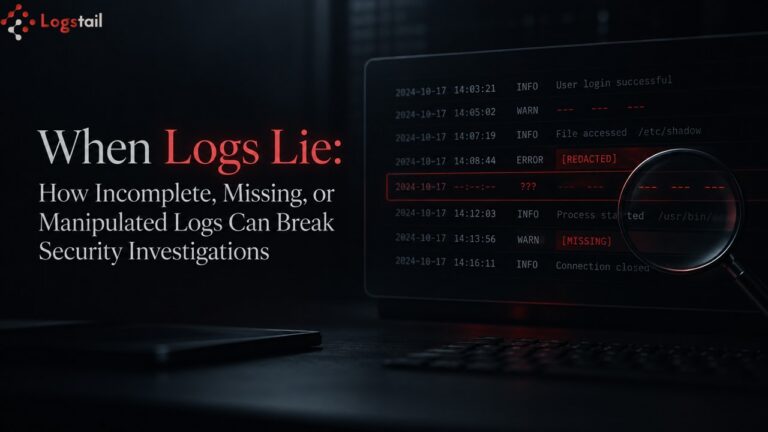
When Logs Lie: How Incomplete, Missing, or Manipulated Logs Can Break Security Investigations
Introduction
When a cybersecurity incident occurs, logs are often one of the first places security teams look for answers. Logs can show who accessed a system, what they did, when it happened, and which systems they used. This information can help security teams reconstruct an attack. However, one important question often gets overlooked: Can you trust the logs you are investigating?
Organizations can collect millions of log events every day. Yet, more data does not always mean better visibility. Missing events, incorrect timestamps, configuration errors, short retention periods, and deliberate log manipulation can all create gaps in the evidence. These gaps can make it difficult to determine what really happened during an attack.
Effective log management is therefore about more than collecting data. Security teams also need to make sure their logs are complete, available, consistent, and trustworthy.
When Logs Go Missing
One of the most common problems during an investigation is discovering that important events were never recorded. A system may not generate the required logs. An endpoint may stop sending data to the central logging platform. In other cases, a logging agent may fail. Different systems also produce different types of telemetry. These systems include network devices, cloud services, applications, databases, and endpoints. A gap in any one of these sources can affect an investigation.
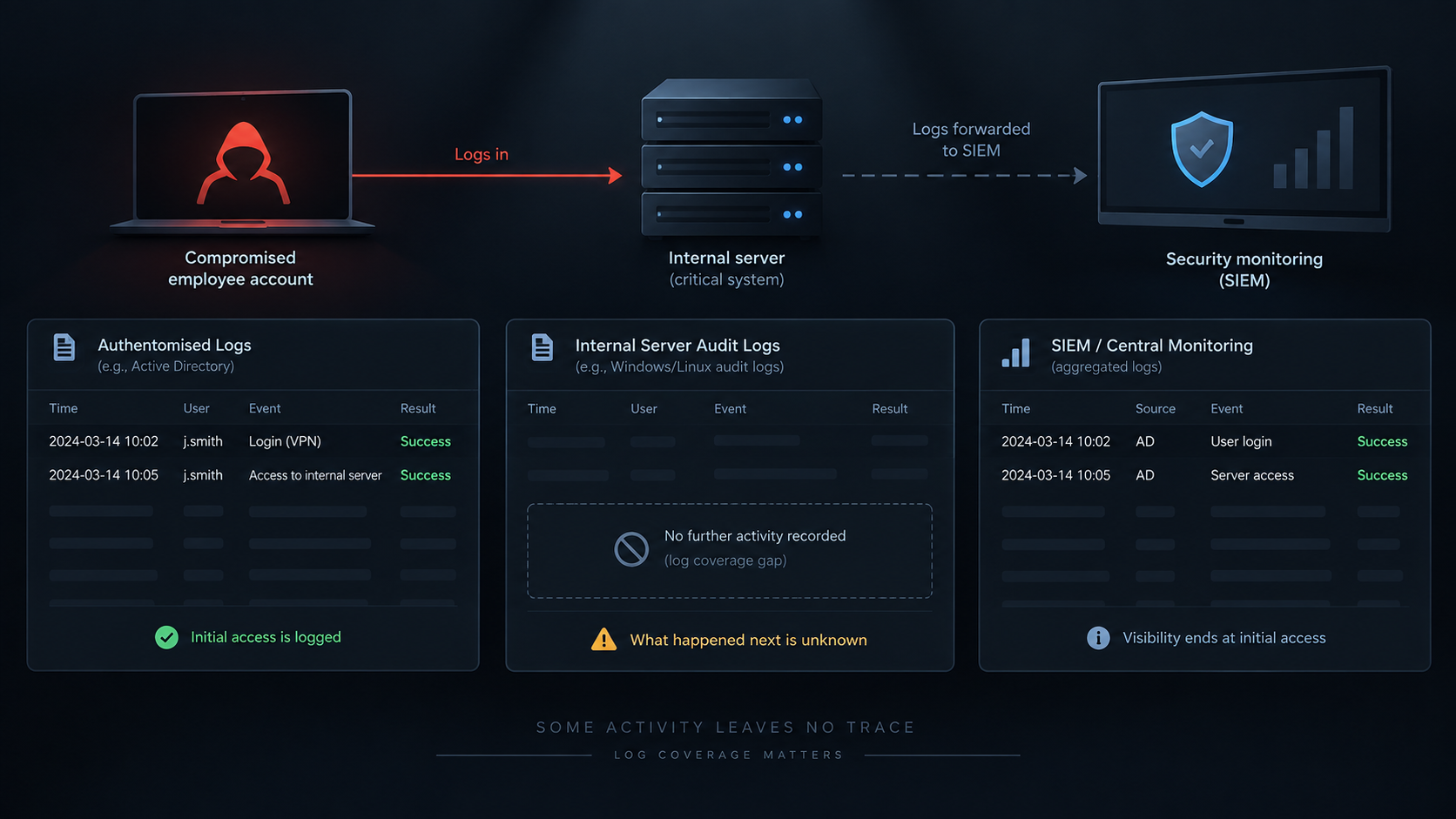
For example, an attacker might compromise an employee account and access an internal server. The authentication logs may show the initial login, but the server audit logs may contain no record of the attacker’s actions. The security team can confirm that the account accessed the server. However, they may not know what happened next. This is why log coverage matters. Organizations need to know which systems generate logs and which events those logs contain. They also need to verify that the data reaches their central monitoring platform.
The Problem With Incorrect Timestamps
Time plays a critical role in security investigations. Teams often need to reconstruct an attack in chronological order. They may need to determine when an attacker first gained access, moved to another system, escalated privileges, or began suspicious activity. Inconsistent timestamps can make this process much harder.
For example, an endpoint might record an event at 10:15, while a firewall records the same activity at 10:12 because the systems are not properly synchronized. Individually, both logs may appear legitimate. Together, however, they can create a misleading timeline. Reliable time synchronization and consistent timestamp handling are therefore essential for effective security monitoring.
When Logs Are Overwritten
Log retention presents another challenge. Security teams may not investigate an incident immediately. An attacker could remain undetected for days, weeks, or even months before someone identifies suspicious activity. If an organization retains logs for only a short period, the evidence needed to investigate the initial compromise may already have disappeared.
Investigators may then have detailed information about the final stages of an incident but little or no visibility into how the attacker initially entered the environment. Retention policies should reflect the organization’s operational, security, and regulatory requirements. Critical logs should remain available for an appropriate period and should be protected from accidental or unauthorized deletion.
When Attackers Try to Hide Their Tracks
Organizations sometimes respond to security challenges by collecting more and more data. Simply collecting everything, however, does not automatically create better security visibility. If logs are inconsistent, poorly structured, duplicated, incomplete, or difficult to correlate, security teams may still struggle to understand what is happening.
Authentication activity might exist in one system, firewall activity in another, endpoint events in a third, and cloud activity somewhere else. Without effective correlation, these events may appear unrelated even when they belong to the same incident. The goal should therefore be meaningful visibility, not simply maximum data volume.
More Logs Do Not Always Mean Better Visibility
Organizations sometimes respond to security challenges by collecting more and more data. However, simply collecting everything does not automatically create better security visibility. If logs are inconsistent, poorly structured, duplicated, incomplete, or difficult to correlate, security teams may still struggle to understand what is happening.
For example, authentication activity might exist in one system, firewall activity in another, endpoint events in a third, and cloud activity somewhere else. Without effective correlation, these events may appear unrelated even though they are part of the same incident. The goal should therefore be meaningful visibility, not simply maximum data volume.
Correlation Helps Connect the Dots
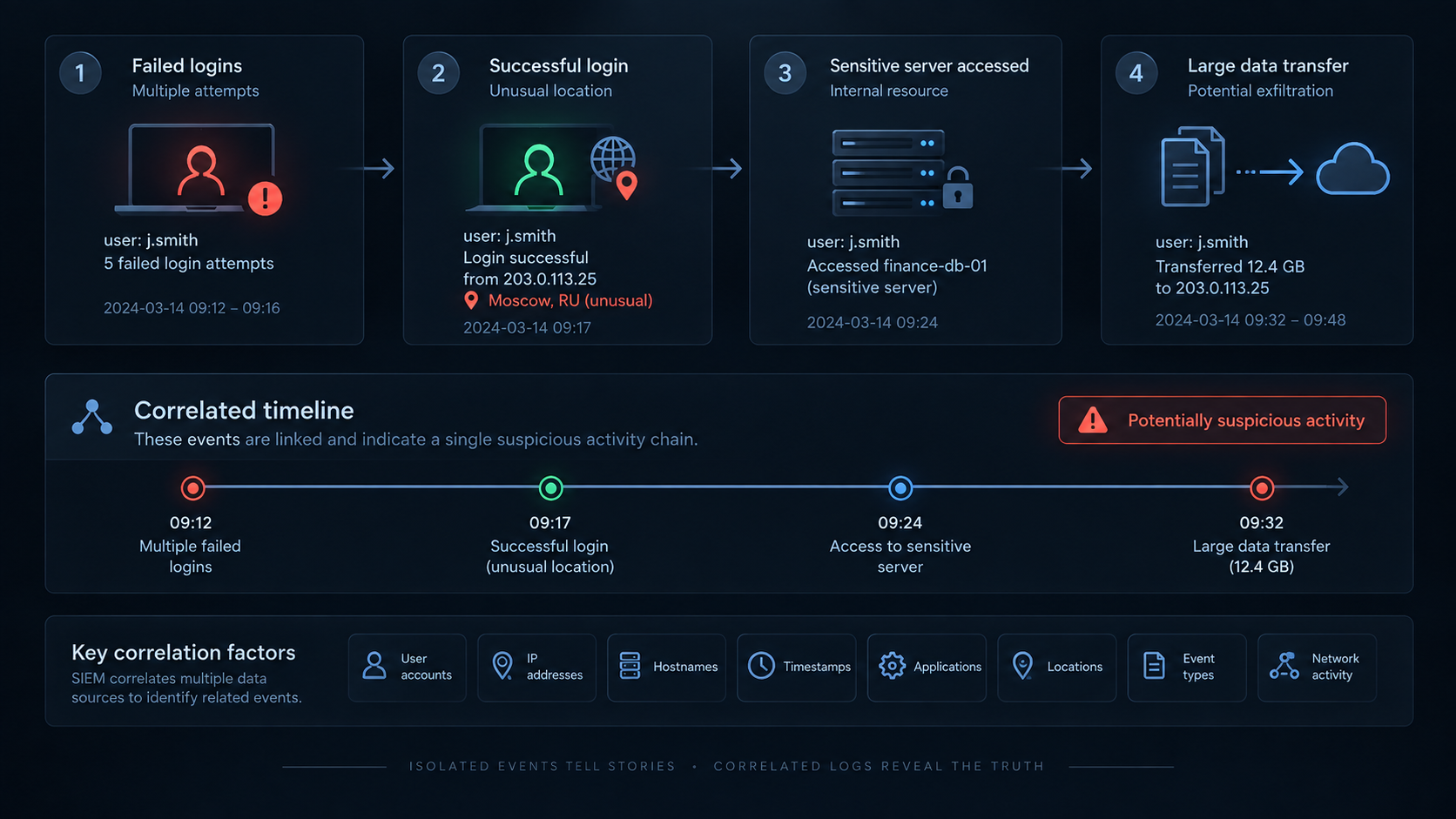
A single log event rarely tells the entire story. Consider a situation where a user account generates several failed login attempts, followed by a successful login from an unusual location. Shortly afterward, the same account accesses a sensitive server and begins transferring a large amount of data.
Looking at each event separately might not immediately reveal the full picture. When security teams correlate the events, however, they can identify relationships that are much harder to see in isolation. Useful correlation factors include:
-
User accounts
-
IP addresses
-
Hostnames
-
Timestamps
-
Applications
-
Locations
-
Event types
-
Network activity
This contextual view can help transform isolated log entries into a timeline that is easier to investigate.
Log Integrity Matters
For logs to serve as reliable evidence, organizations also need to protect their integrity. Security teams should be able to determine whether logs have been altered, deleted, or otherwise compromised. This becomes particularly important when organizations use logs for incident response, forensic investigations, audits, or compliance.
Protecting log integrity requires multiple layers of security. These can include:
-
Appropriate access controls
-
Secure log transmission
-
Centralized storage
-
Defined retention policies
-
Monitoring of the logging infrastructure
-
Restrictions on who can modify or delete logs
Organizations should also treat logging infrastructure as a security-critical environment. If an attacker compromises the systems responsible for collecting and storing security data, the organization may lose valuable evidence during future investigations.
What Happens When Logs Are Incomplete?
Incomplete logs can affect almost every stage of incident response. During detection, missing events may prevent suspicious behavior from generating an alert. During investigation, missing information can make it difficult to determine what an attacker did. During containment, security teams may struggle to identify all affected systems. The problem can continue during recovery. Without sufficient historical information, teams may have difficulty determining whether an attacker still has access. Finally, during post-incident analysis, missing evidence can prevent organizations from understanding the full attack path and identifying weaknesses that need attention.
In other words, a logging problem can quickly become an incident-response problem.
How Organizations Can Improve Log Reliability
Improving log reliability requires more than simply installing a log collection agent. Organizations should first identify which systems and applications are critical to their environment and determine which security events need to be monitored. They should then establish processes to verify that logs are actually being collected. A logging system that silently stops receiving data can create a dangerous false sense of visibility. Organizations should also consider:
-
Centralized collection: Store important logs in a central location rather than relying exclusively on local systems.
-
Time synchronization: Ensure systems use consistent and reliable time sources.
-
Appropriate retention: Keep logs available long enough to support investigations and organizational requirements.
-
Access controls: Restrict who can access, modify, or delete security logs.
-
Log monitoring: Monitor the health of the logging infrastructure itself.
-
Correlation: Connect events from different systems to identify relationships and attack patterns.
-
Data integrity: Implement safeguards that help detect unauthorized changes or deletion.
-
Regular testing: Periodically verify that expected events are being generated, collected, and retained.
How Logstail Helps
When logs become the foundation of an investigation, organizations need more than a place to store them. They need to know that the relevant data is being collected, that it can be searched and correlated, and that suspicious activity can be investigated quickly.
Logstail brings these capabilities together through centralized log management, endpoint and telemetry collection, analytics, dashboards, detection, alert management, and response workflows. The platform can collect data from different environments, normalize it for analysis, provide dashboards for monitoring and validation, and give security teams tools to investigate events and manage alerts.
This is particularly relevant when dealing with incomplete or potentially compromised logs. By moving beyond individual systems and bringing security telemetry into a centralized platform, organizations can reduce their dependence on a single local log source when investigating an incident.
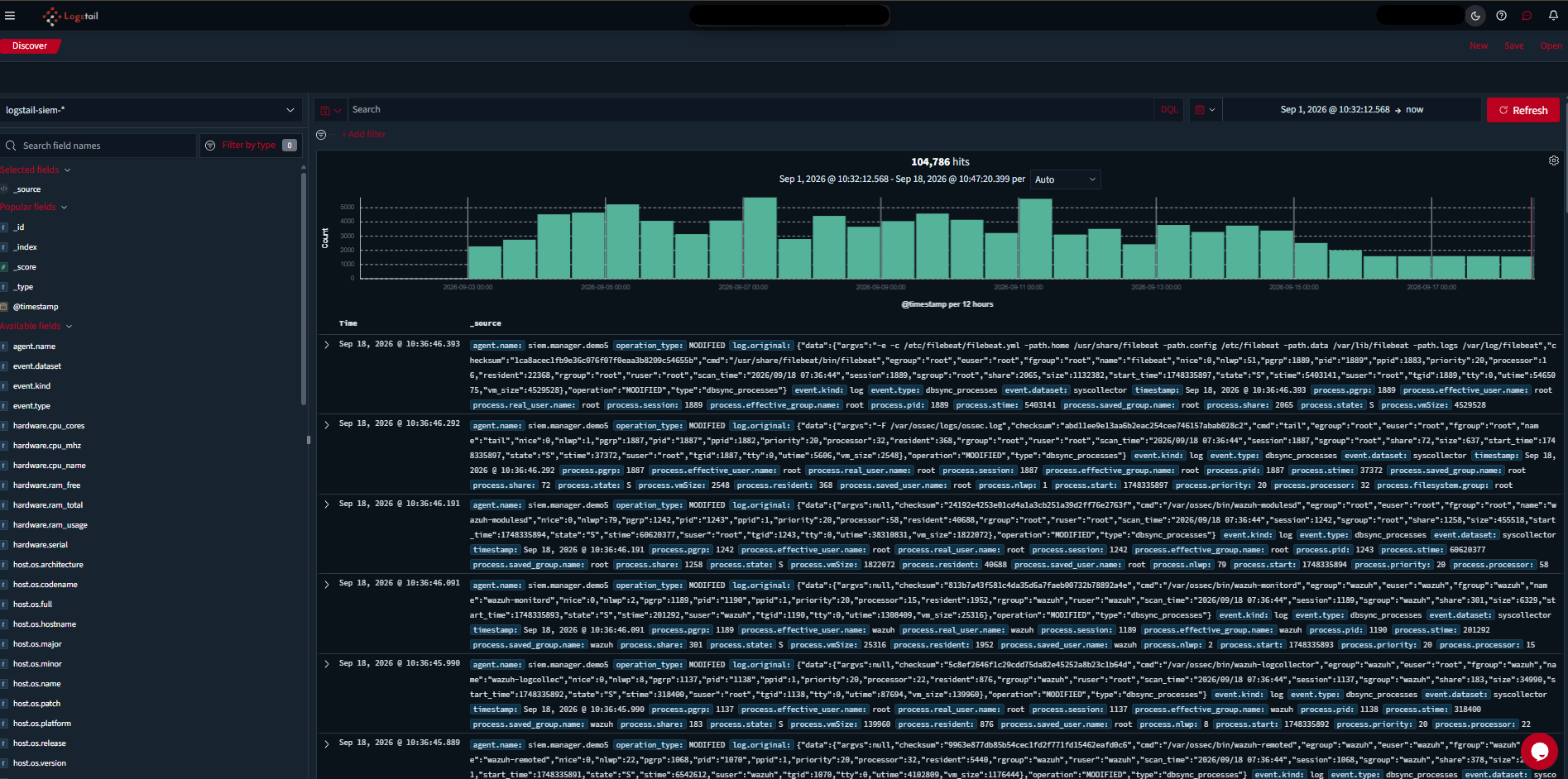
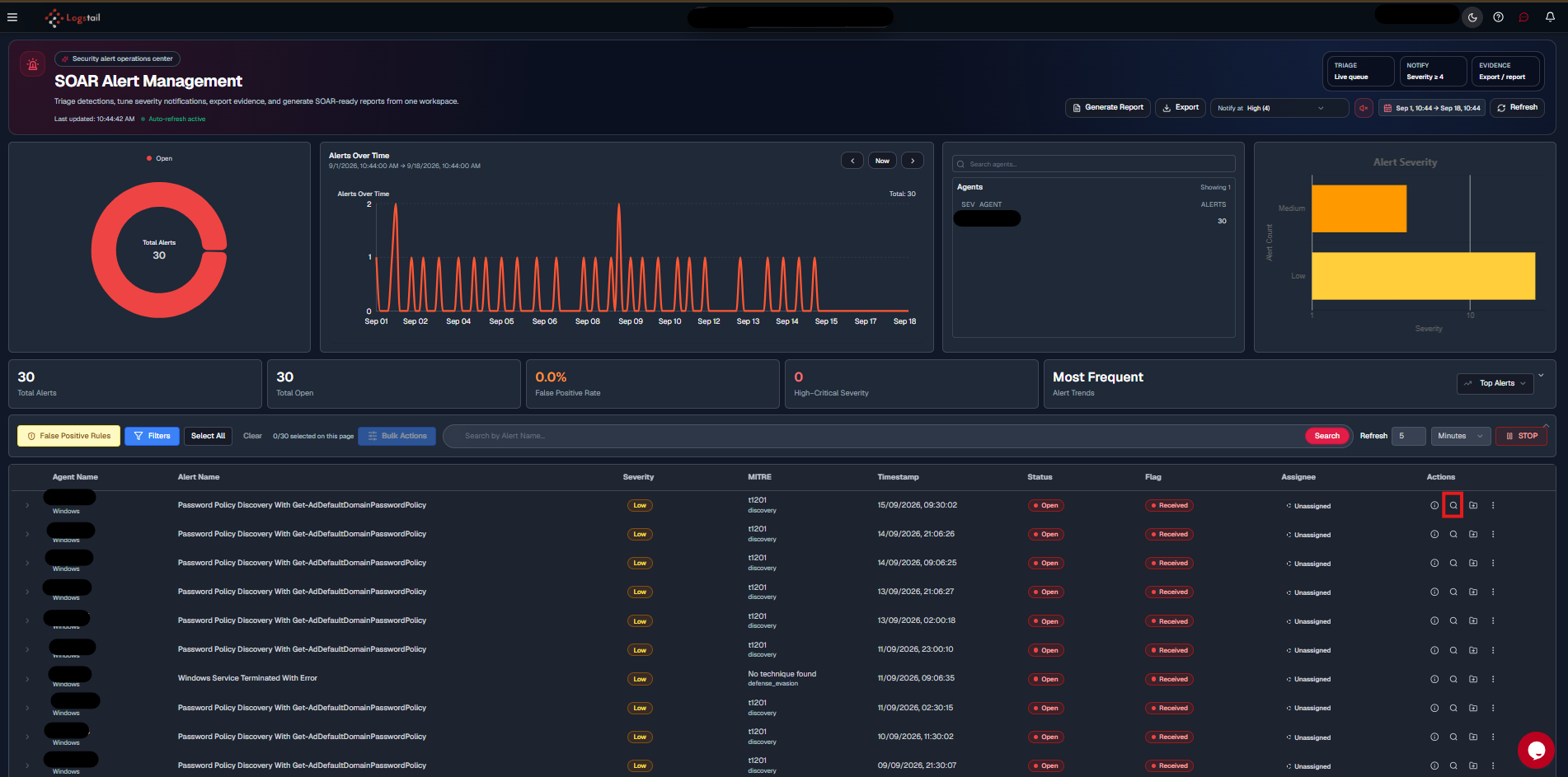
Logstail also connects detection with investigation and response. Its alert management capabilities allow teams to review, filter, prioritize, assign, and investigate alerts, while cases, playbooks, and integrations can support the response process. If the user investigates an alert and presses on the magnifying glass, as shown in the image below, they will be redirected to the specific log of the alert.
Beyond the technology itself, effective security investigations also depend on the people analyzing the data. Logstail Academy supports this human element by providing cybersecurity courses, practical training, quizzes, and hands-on labs that help security professionals develop skills in areas such as SIEM, threat detection, security monitoring, and incident response. By combining practical training with the capabilities of the Logstail platform, security teams can strengthen their ability to understand security events, identify suspicious activity, and respond effectively.
Ultimately, the objective is not simply to collect more logs. It is to create reliable security visibility — visibility that allows teams to identify gaps, connect events, investigate incidents, and respond with greater confidence. Because when an investigation begins, the worst time to discover that your logs are missing is when you need them most.
Conclusion
Logs are among the most valuable sources of information during a cybersecurity investigation, but they are not automatically reliable simply because they exist. Missing events, incorrect timestamps, short retention periods, configuration problems, and deliberate manipulation can all create gaps in an organization’s understanding of an incident. These gaps can make it harder to determine how an attacker gained access, what systems were affected, what actions were performed, and whether the threat has been fully contained.
Effective security monitoring therefore requires more than collecting large volumes of data. Organizations need to ensure that their logs are complete, consistent, protected, available, and properly correlated. Platforms such as Logstail’s can help organizations achieve greater visibility by centralizing security data, correlating events, monitoring telemetry, and providing the tools needed to investigate suspicious activity. When an incident occurs, security teams should not have to ask, “What information are we missing?” They should already have confidence that the information they are seeing provides a trustworthy picture of what happened.