September 15, 2026
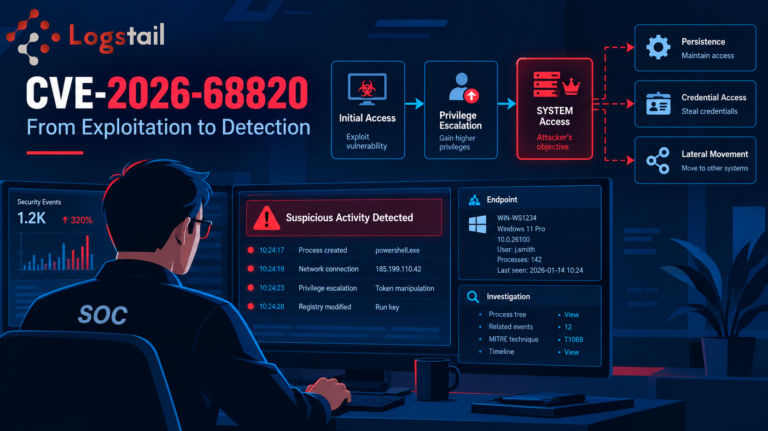
CVE-2026-68820: From Exploitation to Detection
Inside CVE-2026-68820: Detection, Mitigation, and Response for Security Teams
In August 2026, Microsoft patched CVE-2026-68820, an actively exploited Windows zero-day affecting the Windows Ancillary Function Driver for WinSock (afd.sys). The vulnerability allows attackers to elevate privileges to SYSTEM level, making it especially dangerous when combined with phishing attacks, malware infections, or stolen credentials. Microsoft confirmed active exploitation in the wild, and CISA added the vulnerability to its Known Exploited Vulnerabilities (KEV) catalog shortly after disclosure. For security teams, CVE-2026-68820 serves as a reminder that patching is only one part of the response process. Understanding how attackers weaponize privilege escalation vulnerabilities, the indicators they generate, and how to detect post-exploitation activity is equally important.
What Is CVE-2026-68820?
CVE-2026-68820 is a use-after-free vulnerability in the Windows Ancillary Function Driver for WinSock (afd.sys), a kernel-level component responsible for Windows networking functionality. Successful exploitation allows an attacker to elevate privileges from a standard user context to SYSTEM privileges, effectively granting full control over the affected device. Unlike remote code execution vulnerabilities, CVE-2026-68820 is not typically the initial entry point into an environment. Instead, it is used after attackers have already established a foothold on a system. This makes it particularly useful in multi-stage intrusions where attackers aim to increase privileges before moving laterally or deploying malware.
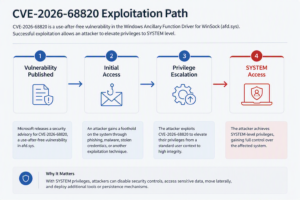
Why Security Teams Should Care
Privilege escalation vulnerabilities often become the turning point in an attack.
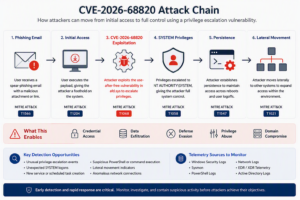
A typical attack chain may look like:
- Phishing email delivered
- Malicious attachment opened
- Initial user-level access obtained
- CVE-2026-68820 exploited
- SYSTEM-level privileges acquired
- Persistence established
- Lateral movement begins
- Sensitive data accessed
Without privilege escalation, attackers may be restricted by the permissions of the compromised user account. Once SYSTEM privileges are obtained, security controls, scheduled tasks, services, and authentication mechanisms become significantly easier to manipulate.
Why Security Teams Should Care
Researchers linked exploitation of CVE-2026-68820 to activity associated with the Lazarus Group. Reporting indicates the vulnerability was used as part of broader campaigns targeting defense-sector organizations. The campaigns reportedly involved malware deployment, persistence mechanisms, and backdoor installations following successful privilege escalation. While not every organization is likely to face nation-state actors, history has shown that exploitation techniques often spread beyond their original campaigns and become available to a wider range of threat actors. Because Microsoft confirmed active exploitation, organizations should prioritize remediation and monitoring efforts surrounding this vulnerability. One of the most common misconceptions about vulnerabilities is that exploitation immediately results in a breach. In reality, vulnerabilities like CVE-2026-68820 usually support an existing intrusion.
Attackers might first gain access through:
- Phishing campaigns
- Credential theft
- Browser exploitation
- Trojanized software
- Previously compromised accounts
After gaining an initial foothold, the privilege escalation vulnerability becomes a force multiplier.
Once exploited, attackers may:
- Create new administrator accounts
- Install persistence mechanisms
- Disable security tools
- Dump credentials
- Modify services
- Schedule malicious tasks
- Move laterally to additional systems
This makes privilege escalation detection an important component of defense strategies.
What Should Security Teams Monitor?
One challenge associated with privilege escalation attacks is that the resulting activity often resembles legitimate administrative operations.
Security teams should pay particular attention to:
- Unexpected privilege escalation events
- New administrator account creation
- Administrative group membership changes
- Service creation activity
- Scheduled task creation
- Unexpected PowerShell execution
- Security tool tampering
- Authentication anomalies
- Lateral movement indicators
- Unusual endpoint activity
Many of the indicators discussed in our article about early signs of a cyber attack may also appear during privilege escalation activity and should be investigated carefully when they occur together. Multiple low-severity events viewed independently may appear harmless. However, when combined into an attack timeline, they often reveal a more serious security incident.
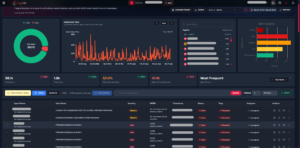
Detecting CVE-2026-68820 Activity with Logstail SIEM
Visibility is a critical requirement for detecting privilege escalation activity.
Using Logstail SIEM, organizations can centralize telemetry from:
- Windows endpoints
- Active Directory
- Identity providers
- Cloud platforms
- Security products
- Vulnerability scanners
Rather than investigating isolated alerts, analysts can correlate authentication activity, privilege changes, endpoint telemetry, and administrative events into a single investigation.
This helps security teams:
- Detect suspicious privilege escalation activity
- Identify post-exploitation behavior
- Understand attack progression
- Reduce investigation time
- Prioritize high-risk incidents
Reproducing the Vulnerability Safely
One of the comments raised during approval was whether the vulnerability could be reproduced. When public Proofs of Concept (PoCs) become available, controlled reproduction can provide significant value for security teams. Testing should only occur within isolated laboratory environments and never against production systems.
Security teams can use controlled testing to:
- Understand exploitation behavior
- Validate detection rules
- Review generated telemetry
- Tune SIEM correlation logic
- Improve incident response workflows
- Verify monitoring coverage
The primary goal is not exploitation itself but understanding what evidence is generated before, during, and after exploitation. This insight can significantly improve detection capabilities.
Patching Does Not Automatically Remove the Threat
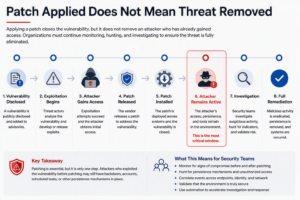
One of the most overlooked aspects of vulnerability management is the assumption that patching immediately removes all risk. It does not. Applying the patch removes the vulnerable condition, but it does not necessarily remove an attacker who already exploited the system.
If exploitation occurred prior to remediation, attackers may have already:
- Created persistence mechanisms
- Added administrator accounts
- Installed malware
- Modified configurations
- Stolen credentials
- Established remote access
For this reason, organizations should increase monitoring following the deployment of patches for actively exploited vulnerabilities. Security teams should actively hunt for indicators of compromise and investigate any signs of post-exploitation behavior.
Patch and Mitigation Recommendations
Organizations should prioritize deployment of Microsoft’s August 2026 security updates as quickly as possible. Since CVE-2026-68820 was added to CISA’s Known Exploited Vulnerabilities catalog, remediation should be considered a high priority.
Recommended actions include:
- Deploy Microsoft security updates immediately
- Verify successful patch installation
- Review administrative account activity
- Investigate privilege escalation events
- Audit newly created accounts
- Review authentication logs
- Search for persistence mechanisms
- Increase monitoring after patch deployment
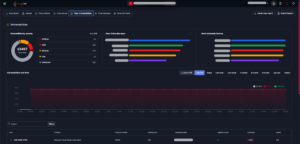
Successful patching should be followed by validation, investigation, and monitoring to ensure attackers have not already established a presence within the environment.
Accelerating Response with Logstail SOAR
Detection is only the beginning. Using Logstail SOAR, organizations can automate investigation and response workflows once suspicious activity is detected.
Automated actions may include:
- Creating incident tickets
- Notifying security teams
- Triggering investigations
- Escalating incidents
- Isolating affected endpoints
- Initiating containment workflows
Automation helps reduce response times and improves consistency during security incidents.
Organizations that already monitor authentication, endpoint, and administrative activity can strengthen their visibility by correlating identity-related events across multiple systems. Similar detection and investigation techniques are discussed in our article about detecting and responding to PowerShell-based attacks, where seemingly routine activity can reveal signs of compromise.
Conclusion
CVE-2026-68820 demonstrates how a privilege escalation vulnerability can transform a limited compromise into a SYSTEM-level intrusion. While timely patching remains essential, effective remediation requires more than installing updates. Organizations should also focus on visibility, investigation, threat hunting, and post-patch monitoring to ensure attackers have not already established persistence. The Logstail Security Suite, including Logstail SIEM and Logstail SOAR, helps security teams detect suspicious activity, investigate exploitation attempts, and respond faster to emerging threats.