August 1, 2026
Why Privileged Accounts Are a Prime Target for Attackers
The Hidden Risks of Privileged Accounts
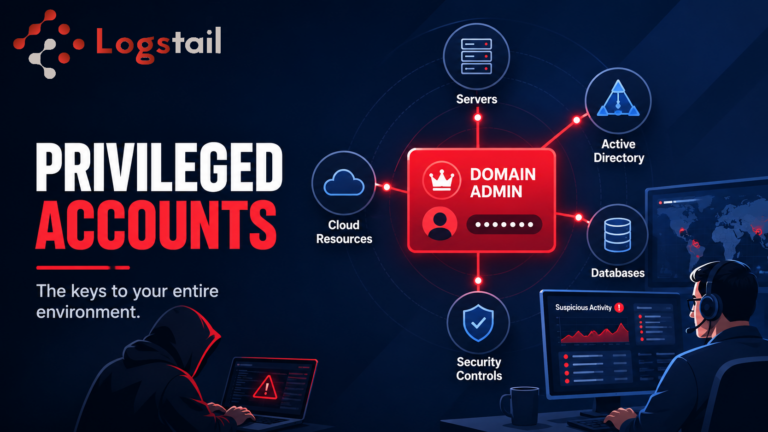
Privileged accounts are among the most valuable assets within any organization and one of the primary targets for attackers. Whether it is a domain administrator, cloud administrator, service account, or privileged user, these accounts provide the access attackers need to move quickly through an environment and achieve their objectives. Once compromised, a privileged account can allow attackers to disable security controls, access sensitive data, move laterally across systems, and gain control over critical infrastructure. For security teams, protecting and monitoring privileged accounts is one of the most important components of a strong security strategy.
What Are Privileged Accounts?
Privileged accounts are accounts that possess elevated permissions beyond those of standard users.
Examples include:
- Domain Administrators
- Local Administrators
- Cloud Administrators
- Service Accounts
- Database Administrators
- Emergency or Break-Glass Accounts
These accounts often have access to sensitive systems, critical business applications, security controls, and large volumes of organizational data. Because of this elevated access, they are among the most attractive targets for attackers.
Why Attackers Target Privileged Accounts
Compromising a privileged account dramatically changes what an attacker can do inside an environment. Instead of attacking systems individually, attackers can use privileged access to:
- Access sensitive information
- Modify permissions
- Create additional accounts
- Disable security controls
- Move laterally across the environment
- Establish persistence
- Deploy ransomware
- Exfiltrate data
In many incidents, the compromise of a privileged account becomes the turning point that allows attackers to expand their reach and increase the impact of an intrusion.
How Privileged Accounts Are Commonly Compromised
Credential Theft
Phishing attacks, password spraying, credential dumping, and leaked passwords remain common entry points for attackers. Once privileged credentials are obtained, attackers can often access systems using legitimate authentication methods, making detection more difficult. Attackers frequently combine stolen credentials with legitimate administrative tools to blend into normal activity and avoid immediate detection. As discussed in our article about how attackers abuse legitimate tools to evade detection, these techniques can make malicious activity significantly harder to identify. In many cases, attackers do not need to exploit a vulnerability after obtaining privileged credentials. A successful login using valid administrator credentials can appear identical to normal administrative activity. This makes visibility into authentication patterns, access behavior, and privilege usage essential for security teams attempting to identify suspicious activity. Using Logstail SIEM, organizations can centralize authentication events from Active Directory, cloud platforms, VPN solutions, and other identity providers, helping analysts identify unusual, privileged account activity across multiple systems.
Excessive Permissions
Many organizations grant broader administrative permissions than necessary. When an overprivileged account is compromised, attackers immediately gain access to systems and data that should have been restricted. Applying the principle of least privilege significantly reduces the potential impact of account compromise.
Service Account Abuse
Service accounts often operate with elevated permissions and long-lived credentials. Because these accounts are frequently overlooked during security reviews, they can become ideal targets for attackers seeking persistence. Monitoring service account activity helps organizations detect unusual authentication patterns, unexpected usage, and potential abuse before attackers gain deeper access.
Dormant Administrative Accounts
Old administrative accounts that remain active after projects, role changes, or employee departures create unnecessary risk. Attackers actively look for forgotten privileged accounts because they are often less monitored than actively used administrator accounts.
Indicators of Privileged Account Abuse
Privileged account activity is not inherently suspicious. However, certain behaviors should trigger additional investigation.
Security teams should monitor for:
- New administrator account creation
- Administrative group membership changes
- Unexpected privilege assignments
- Failed privileged login attempts
- Privileged logins outside normal working hours
- Administrative access from unusual locations
- Service account logins from unexpected systems
- Sudden increases in privileged activity
While these events may have legitimate explanations, they often become stronger indicators when combined with other suspicious activity.
Many of the indicators discussed in our article about early signs of a cyber attack can also appear during privileged account abuse and should be investigated carefully, particularly when multiple indicators occur within the same timeline. For example, a new administrator account followed by unusual login behavior, authentication failures, or privilege assignments deserves significantly more attention than any of those events viewed independently. This is where event correlation becomes particularly valuable. By correlating identity, authentication, endpoint, and administrative events, security teams can uncover suspicious behavior that might otherwise remain hidden within normal operational activity. Organizations using Logstail SIEM can create detection rules and correlation logic that help identify unusual, privileged account behavior before it develops into a larger security incident.
Why Continuous Monitoring of Privileged accounts matters
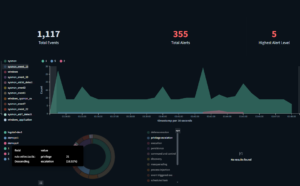
Many organizations only investigate privileged account activity after an incident has occurred. Unfortunately, by that point attackers may have already established persistence and expanded access across multiple systems. Continuous monitoring allows security teams to identify suspicious activity as it happens rather than after significant damage has already occurred.
Security teams should maintain visibility into:
- Authentication activity
- Privilege changes
- Administrative actions
- Service account usage
- Access patterns
- Identity-related anomalies
Collecting this information is only part of the challenge. Understanding which activities are abnormal and require investigation is equally important. Modern environments often contain hundreds or even thousands of privileged accounts across on-premises infrastructure, cloud environments, databases, and business applications. Monitoring these accounts manually becomes increasingly difficult as organizations grow. Continuous visibility helps security teams establish normal behavior patterns and quickly identify deviations. Solutions such as Logstail SIEM help organizations collect, normalize, and analyze privileged account activity, giving analysts a clearer picture of how administrative access is being used across the environment. The Logstail SIEM also helps security teams centralize identity-related telemetry from Active Directory, endpoints, servers, cloud platforms, and other critical systems into a single platform. This provides the visibility needed to track privileged account activity across the environment and investigate suspicious behavior more efficiently.
How Logstail Helps Protect Privileged Accounts
Protecting privileged accounts requires visibility across identity systems, endpoints, cloud environments, and administrative infrastructure.
Using Logstail SIEM, organizations can monitor:
- Privileged logins
- Authentication anomalies
- Administrative changes
- Group membership modifications
- Service account activity
- Privilege assignments
Rather than investigating isolated events, analysts can view privileged account activity within a broader security context. Organizations that already monitor authentication, endpoint, and administrative activity can strengthen their visibility by correlating identity-related events with broader threat detection workflows. Similar approaches are discussed in our article about detecting and responding to PowerShell-based attacks. Threat detection workflows across the environment. This enables security teams to detect suspicious behavior earlier, reduce investigation time, prioritize high-risk activity, and build a more complete picture of identity-related threats. Instead of manually reviewing logs across multiple platforms, analysts can investigate privileged account activity from a centralized view and quickly understand how related events connect to one another.
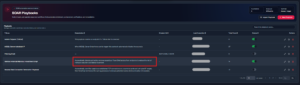
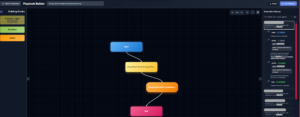
When suspicious privileged account activity is detected, automated playbooks can:
- Disable compromised accounts
- Notify security teams
- Create incident tickets
- Trigger containment actions
- Initiate investigation workflows
As a result, security teams can respond more quickly and reduce the risk of attackers maintaining privileged access.
Best Practices for Privileged Account Security
Organizations looking to reduce the risk associated with privileged accounts should:
- Apply the principle of least privilege
- Review administrative permissions regularly
- Continuously monitor privileged account activity
- Remove unused administrative accounts
- Secure service accounts
- Enforce strong authentication policies
- Enable multi-factor authentication (MFA)
- Investigate privilege changes promptly
Combining these practices with effective security monitoring significantly reduces the likelihood of privileged account abuse going unnoticed.
Conclusion
Privileged accounts are among the most valuable assets within any organization. When attackers gain access to these accounts, they often gain the ability to move quickly, expand access, and increase the impact of an intrusion. Because of this, continuous monitoring of privileged activity should be a core component of every security strategy. Organizations looking to strengthen privileged account security should combine strong access controls with continuous monitoring and response capabilities. The Logstail Security Suite helps security teams gain visibility into privileged activity, investigate suspicious behavior, and automate response actions when indicators of compromise are detected. Solutions such as Logstail SIEM and Logstail SOAR help security teams gain visibility into privileged account activity, detect suspicious behavior earlier, and respond more effectively to emerging threats. Organizations that invest in privileged account monitoring are far better positioned to stop attackers before elevated access turns into a major security incident.