
November 10, 2026
How Security Teams Prioritize Incidents When Everything Looks Urgent
Why Incident Prioritization Matters in Modern SOC Operations
Why Not Every High-Severity Alert Is High Risk
A common misconception is that alert severity and business risk are always the same thing. In reality, a high-severity alert does not automatically indicate a high-impact incident. Many alerts are generated because specific behaviors match predefined detection logic or exceed established thresholds. While these alerts may be technically accurate, additional investigation is often required before determining their true significance.
Security teams frequently encounter alerts involving:
- Administrative account activity
- PowerShell execution
- External network connections
- Failed authentication attempts
- Remote access activity
Some of these alerts may represent legitimate business operations, while others may indicate the early stages of a compromise. For example, PowerShell execution on its own may simply represent routine administration. However, PowerShell execution combined with privilege escalation activity and suspicious outbound connections presents a very different risk profile. Similarly, a failed login alert may have little significance when it originates from a user mistyping a password. The same alert targeting a privileged administrative account or occurring across multiple systems may require immediate investigation. This is where analysts move beyond the alert itself and evaluate the broader context. Effective prioritization focuses on understanding risk rather than reacting solely to severity ratings.
How Security Teams Prioritize Incidents
When evaluating alerts, analysts rarely rely on a single factor. Instead, they assess multiple indicators that help determine the urgency of an investigation and the potential impact to the organization.
Common prioritization factors include:
- Asset criticality
- User privilege level
- Business impact
- Detection confidence
- Threat intelligence context
- Related security events
A failed login attempt involving a standard user workstation may require minimal attention. The same activity targeting a domain administrator account or a production server may require immediate escalation. Likewise, an endpoint alert affecting a test environment will often be treated differently from an alert involving systems that support business-critical services. Analysts frequently combine these factors rather than evaluating them independently. Understanding the relationship between the affected user, the targeted asset, the detection itself, and any supporting evidence allows security teams to make more informed decisions regarding investigation priorities. Modern SOC operations depend on context-rich investigations that help analysts understand the potential impact of an incident before committing valuable investigative resources.
Why Context Is Critical During Triage
Most security incidents do not reveal themselves through a single alert. Instead, analysts often investigate combinations of activities that, when viewed together, reveal the progression of an attack. A single event may appear harmless, but the surrounding activity can significantly change its importance.
For example, analysts may observe:
- Failed authentication attempts
- Successful logins from unusual locations
- Privilege changes
- PowerShell execution
- Unusual outbound network activity
Viewed individually, each event may appear relatively low risk. When correlated into a timeline, however, these activities may reveal a coordinated attack. This challenge becomes even more difficult in environments that generate thousands of events every hour. Analysts rarely have the time to investigate every alert in detail. Instead, they must identify which combinations of events represent genuine security risks and which activities are simply part of normal operations. This is one of the reasons organizations frequently miss the early signs of a cyber attack, where seemingly unrelated activities only become meaningful once analysts understand how they are connected. Effective triage relies on transforming individual alerts into a broader story. The faster analysts can establish those relationships, the faster they can determine whether an incident requires escalation.
Improving Incident Prioritization with Logstail SIEM
Effective prioritization requires visibility across multiple systems and data sources.
Using Logstail SIEM, organizations can centralize telemetry from:
- Endpoints
- Active Directory
- Identity providers
- Cloud services
- Network devices
- Security products
Bringing these data sources together provides analysts with a broader view of activity occurring throughout the environment.
By collecting and correlating security events from multiple technologies, analysts can identify suspicious patterns that may not be visible when reviewing individual alerts separately. Context from authentication activity, endpoint telemetry, administrative actions, cloud activity, and network communications can help explain why an alert was generated and whether it deserves further investigation. For example, a failed login alert may initially appear low priority. However, if the same account later authenticates successfully, performs administrative actions, accesses sensitive resources, and generates additional detections, the overall risk profile changes dramatically. Correlation helps analysts understand these relationships and prioritize investigations accordingly. Without proper visibility, these connections can remain hidden across multiple systems, which is why many organizations invest in SIEM integrations and centralized security visibility to improve investigative efficiency.
Rather than focusing exclusively on alert counts, analysts can evaluate:
- Authentication behavior
- Endpoint activity
- Administrative actions
- Network communications
- Threat intelligence context
This additional visibility helps security teams identify incidents that present a greater operational or business risk. Organizations that improve security visibility through SIEM integrations often find it easier to distinguish routine operational activity from behavior that deserves immediate investigation.
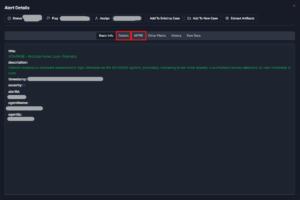
Caption: Logstail SIEM helps analysts enrich alerts with contextual information and prioritize investigations more effectively.
Reducing Investigation Time with Logstail SOAR
Prioritization is only the first step. Once an incident has been identified as high priority, security teams must investigate and respond quickly. Manual workflows can significantly slow investigations, particularly when analysts are managing multiple incidents simultaneously. Repeating the same administrative tasks across every investigation reduces efficiency and increases response times. Using Logstail SOAR, organizations can automate repetitive processes and ensure that high-priority incidents receive rapid attention.
- Creating incident tickets
- Assigning cases automatically
- Escalating critical incidents
- Notifying response teams
- Triggering containment actions
- Initiating investigation workflows
Automation becomes particularly valuable during periods of high alert volume, where analysts must balance multiple investigations and maintain consistent response procedures across the organization. By reducing manual effort, security teams can focus more on analysis, validation, containment, and decision-making rather than administrative tasks.
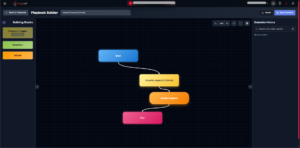
Caption: Logstail SOAR helps organizations automate investigation and response actions for high-priority incidents.
Common Prioritization Mistakes
Even experienced security teams can struggle with prioritization.
Some of the most common mistakes include:
- Treating every alert as equally important
- Relying exclusively on alert severity
- Ignoring asset criticality
- Failing to correlate related events
- Investigating isolated alerts without sufficient context
Building a Risk-Based Approach to Incident Response
Organizations that prioritize incidents effectively tend to focus on risk rather than alert volume.
A risk-based approach combines several factors, including:
- Technical severity
- Business impact
- Asset importance
- User privilege
- Environmental context
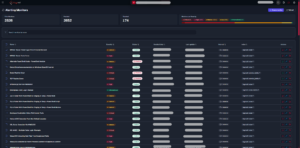
Rather than asking whether an alert is severe, analysts ask whether the activity poses a meaningful risk to the organization and whether immediate action is required. This approach allows security teams to allocate resources more efficiently, reduce investigation delays, and improve response outcomes. As modern environments become increasingly complex and alert volumes continue to rise, prioritization will remain one of the most important skills in effective security operations.
Conclusion
Security teams cannot investigate everything at once. The ability to prioritize incidents effectively is essential for reducing investigation delays, focusing resources on meaningful threats, and improving response outcomes. While many alerts appear urgent when they are first generated, understanding context and risk helps analysts determine which incidents deserve immediate attention. Organizations that combine visibility, correlation, enrichment, and automation are better positioned to identify high-risk activity before it disrupts business operations. With centralized visibility, event correlation, investigation support, and workflow automation, the Logstail Security Suite helps organizations prioritize incidents more effectively, improve investigation efficiency, and respond faster to security threats.