October 6, 2026
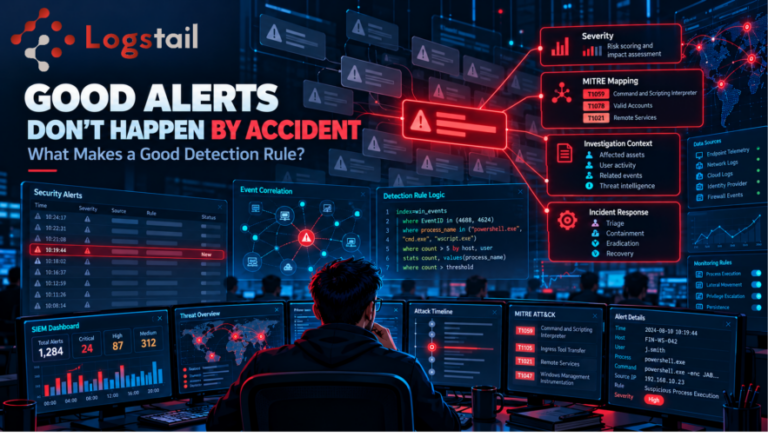
Good Alerts Don’t Happen by Accident: What Makes a Good Detection Rule?
Why Good Detection Rules Matter
Detection rules are one of the most important components of modern security operations. Every day, Security Operations Center (SOC) teams depend on detection rules to identify suspicious activity, prioritize investigations, and respond to potential threats. However, generating alerts alone does not automatically improve security. The quality of those alerts often determines whether analysts can quickly identify meaningful threats or become overwhelmed by noise. Modern organizations produce enormous volumes of telemetry from endpoints, identity providers, cloud services, firewalls, network devices, and countless other sources. Without effective detection logic, analysts can find themselves reviewing thousands of events that provide little security value. Over time, this can lead to alert fatigue, slower investigations, and missed opportunities to identify genuine threats. The most effective detection rules do more than simply identify that an event has occurred. They provide analysts with meaningful context and help distinguish activity that deserves investigation from activity that can safely be ignored. In many cases, the difference between an efficient SOC and an overwhelmed SOC comes down to the quality of the detections supporting day-to-day operations.
The Purpose of a Detection Rule
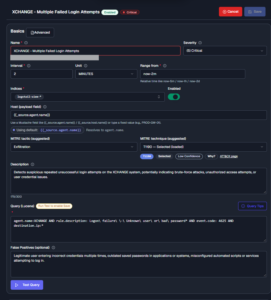
Strong detection rules support security teams by:
- Highlighting activity that may require investigation
- Providing earlier visibility into suspicious behavior
- Reducing time spent reviewing irrelevant events
- Supporting incident response and escalation decisions
When implemented correctly, detection rules transform large volumes of telemetry into actionable information. Analysts spend less time sorting through noise and more time investigating activity that matters. Organizations frequently measure security success based on the number of alerts generated. However, a more useful measurement is how often those alerts contribute to meaningful investigations and support effective incident response.
Why Some Alerts Create More Problems Than They Solve
One of the biggest challenges faced by modern SOC teams is alert fatigue. Many security tools generate alerts based on individual events without considering the broader context surrounding the activity. While these alerts may be technically accurate, they are not always operationally useful.
For example, many organizations regularly generate alerts related to:
- Failed login attempts
- PowerShell execution
- Administrative actions
- Service creation events
- Outbound network activity
None of these activities automatically indicate malicious behavior. In fact, they often occur during normal business operations. The problem becomes more significant when hundreds or thousands of similar alerts require review every day. Analysts must spend valuable time examining benign activity, reducing the amount of attention available for genuine threats. Attackers understand this challenge. Rather than generating obvious indicators of compromise, they often rely on behavior that blends into normal operations. This is one of the reasons organizations frequently miss the early signs of a cyber attack, where seemingly harmless events only become meaningful when viewed as part of a broader attack timeline. Events that appear harmless individually may become far more significant when analyzed alongside related activity occurring elsewhere in the environment. As a result, poorly designed detection rules can unintentionally hide important threats within large volumes of noise.
Characteristics of a Good Detection Rule
Not all detection rules provide the same value. Effective detections share several common characteristics that make them useful during real-world investigations.
A good detection rule should be:
- Relevant to the environment it protects
- Actionable for the analyst reviewing the alert
- Supported by meaningful context
- Consistent and reliable over time
- Continuously reviewed and improved
Context is particularly important. A useful alert should help analysts answer questions such as:
- What happened?
- Where did it happen?
- Which account performed the activity?
- Which system was affected?
- Why was the activity considered suspicious?
The ability to answer these questions quickly often determines whether an investigation can move forward efficiently. The best detections are not necessarily the most complex. In many cases, effective detections help analysts identify suspicious activity long before a major incident occurs, similar to how attackers often leave early warning indicators throughout the attack lifecycle.
Why Context Matters More Than Volume
Many organizations assume that better security comes from generating more alerts. In reality, context is often more valuable than alert volume. Most security incidents do not begin with a single high-severity alert. Instead, they develop through a series of activities that appear relatively harmless when viewed independently.
An analyst might observe:
- Failed authentication attempts
- PowerShell execution
- New administrator account creation
- Scheduled task creation
- Unusual network activity
Viewed separately, each event may appear relatively low risk. However, when correlated into a timeline, those events may reveal the progression of a larger attack. This is why event correlation plays such an important role in modern security operations. Without centralized visibility, relationships between events can remain hidden, making it far more difficult to understand how individual activities connect together. Organizations that improve security visibility through SIEM integrations are often better positioned to identify these connections before they develop into larger incidents.
Analysts need to understand:
- Who performed the activity
- Which systems were affected
- What happened before the event
- What happened after the event
- Whether related activity exists elsewhere in the environment
Without context, even accurate detections can become difficult to investigate. With sufficient context, security teams can make better decisions, prioritize their workload more effectively, and identify threats earlier in the attack lifecycle.
Improving Detection Quality with Logstail
Investigating potential security threats requires visibility across multiple systems and data sources.
Using Logstail SIEM, organizations can centralize telemetry from:
- Endpoints
- Active Directory
- Identity providers
- Cloud services
- Network devices
- Security products
Bringing these data sources together provides analysts with a broader view of activity occurring throughout the environment.
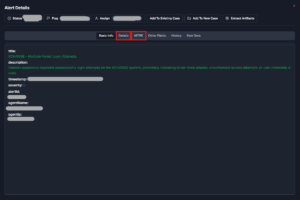
By collecting and correlating security events from multiple sources, teams can identify suspicious patterns that may not be visible when reviewing individual alerts separately. Context from authentication activity, endpoint telemetry, administrative actions, and network events can help explain why an alert was generated and whether it deserves further investigation. Browser activity, endpoint events, authentication logs, privilege changes, and network communications often appear unrelated when viewed in isolation. This becomes particularly important when investigating modern browser-based threats, where seemingly legitimate activity can hide significant risk, as demonstrated by the growing security concerns surrounding browser extensions in enterprise environments. However, when correlated together, they can provide the context necessary to identify suspicious behavior and support more effective investigations.
This helps analysts investigate potential threats by identifying:
- Suspicious activity across multiple systems
- Potentially compromised sessions
- Authentication anomalies
- Related events that form an attack timeline
- High-risk incidents that require escalation
Rather than reviewing isolated alerts, analysts can gain a broader understanding of how activity across the environment connects together.
Turning Detection into Action with Logstail SOAR
Detection is only the first stage of the incident response process. Once a high-confidence detection occurs, security teams must determine how they will investigate, contain, and respond to the event. Manual processes can significantly slow investigations and increase response times, particularly in environments that generate large numbers of alerts. Using Logstail SOAR, organizations can automate many of the repetitive tasks that typically consume analyst time. Rather than manually performing every response action, teams can automate common workflows and focus their efforts on analysis and decision-making.
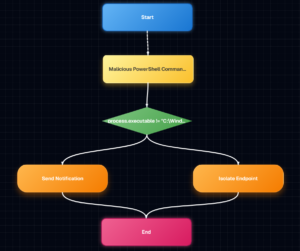
Depending on the nature of the incident, automated workflows can assist security teams by:
- Creating incident tickets automatically
- Escalating alerts based on severity
- Notifying analysts and response teams
- Assigning investigation tasks
- Triggering endpoint isolation actions
- Initiating containment procedures
Automation improves consistency across security operations while helping organizations respond faster to potential threats. The value of rapid investigation and containment becomes especially clear when responding to activity such as PowerShell-based attacks, where delays in response can provide attackers with additional opportunities to expand their access.
Detection Rules Require Continuous Improvement
A detection rule should never be considered permanently complete. As environments change, users adopt new technologies, and attackers develop new techniques, detection content must evolve as well. Security teams that regularly review and improve their detections are better positioned to identify meaningful threats while minimizing unnecessary alerts.
Continuous improvement often involves:
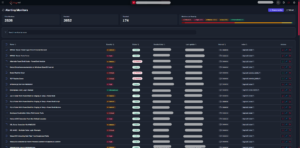
- Reviewing alert performance
- Assessing false-positive rates
- Tuning thresholds and conditions
- Improving contextual enrichment
- Validating coverage against new attack techniques
Over time, even well-designed detections can become less effective if they are not reviewed and adjusted. Continuous tuning helps ensure that alerts remain relevant, actionable, and aligned with organizational priorities. Organizations that invest in detection quality often see improvements across the entire investigation lifecycle, from alert validation and triage to containment and remediation. Continuous improvement is particularly important when dealing with emerging threats and newly disclosed vulnerabilities. As shown in our analysis of CVE-2026-68820, effective detection often depends not only on understanding the vulnerability itself, but also on recognizing the behavior attackers generate before and after exploitation.
Conclusion
Good alerts do not happen by accident. Effective detection rules are carefully designed, continuously refined, and supported by the context analysts need to understand the significance of an event. While generating more alerts may increase visibility, generating better alerts improves investigations, prioritization, and incident response outcomes. The most successful security teams focus on building detections that reduce noise, provide actionable intelligence, and support efficient investigations. The goal is not simply to detect more activity, but to detect the activity that matters most. With centralized visibility, event correlation, investigation support, and automated response capabilities, the Logstail Security Suite helps organizations improve detection quality, support more efficient investigations, and respond more effectively to security incidents.