
December 2, 2025
Black Friday 2025: Beware the Cyber-Hunts — A Deep Dive into the Top Scams & How to Outsmart Them
Introduction
Black Friday used to mean camping outside a store at dawn — now it means booting up your laptop, filling a cart, and praying you’ve snagged the real deal. But behind the hype, the 2025 Black Friday season isn’t just a shopping fiesta — it’s a cyber-hacker’s paradise. As online deals multiply and discounts grow steeper, fraudsters are unleashing a wave of scams: fake stores, phishing traps, AI-powered deepfakes, and sketchy social-media ads — all designed to snatch your money, data, or crypto.
In this post I’ll walk you through the most common scam types to watch out for, show you the red flags that separate legit deals from fraud, and arm you with practical security measures so you can snag bargains — without handing your wallet to a scammer. Because in 2025, skepticism is the new smart discount.
Why Black Friday Is a Hacking Playground
Black Friday isn’t just a massive sales event — it’s peak season for cybercriminals. When millions of people rush online hunting for deals, threat actors see an opportunity buffet. High traffic, distracted shoppers, and aggressive marketing create the perfect storm for phishing attacks, fake online stores, and payment-fraud operations. Hackers know users are more likely to click fast, ignore warning signs, and trust unfamiliar websites if the discount looks legit. They weaponize that urgency with spoofed domains, AI-generated ads, malicious QR codes, and social-engineering tricks designed to steal credentials, financial data, and even entire identities.
From a cybersecurity standpoint, Black Friday is basically open season: larger attack surfaces, weaker user vigilance, and a spike in fraudulent domains registered weeks before the event. It’s no coincidence that every year, security teams report major increases in phishing emails, cloned ecommerce sites, and compromised payment gateways. Where there’s hype and high engagement, there’s always someone trying to exploit it. Staying aware of these tactics is the first step in avoiding the pitfalls.
The Top Black Friday Scam Types to Watch Out For
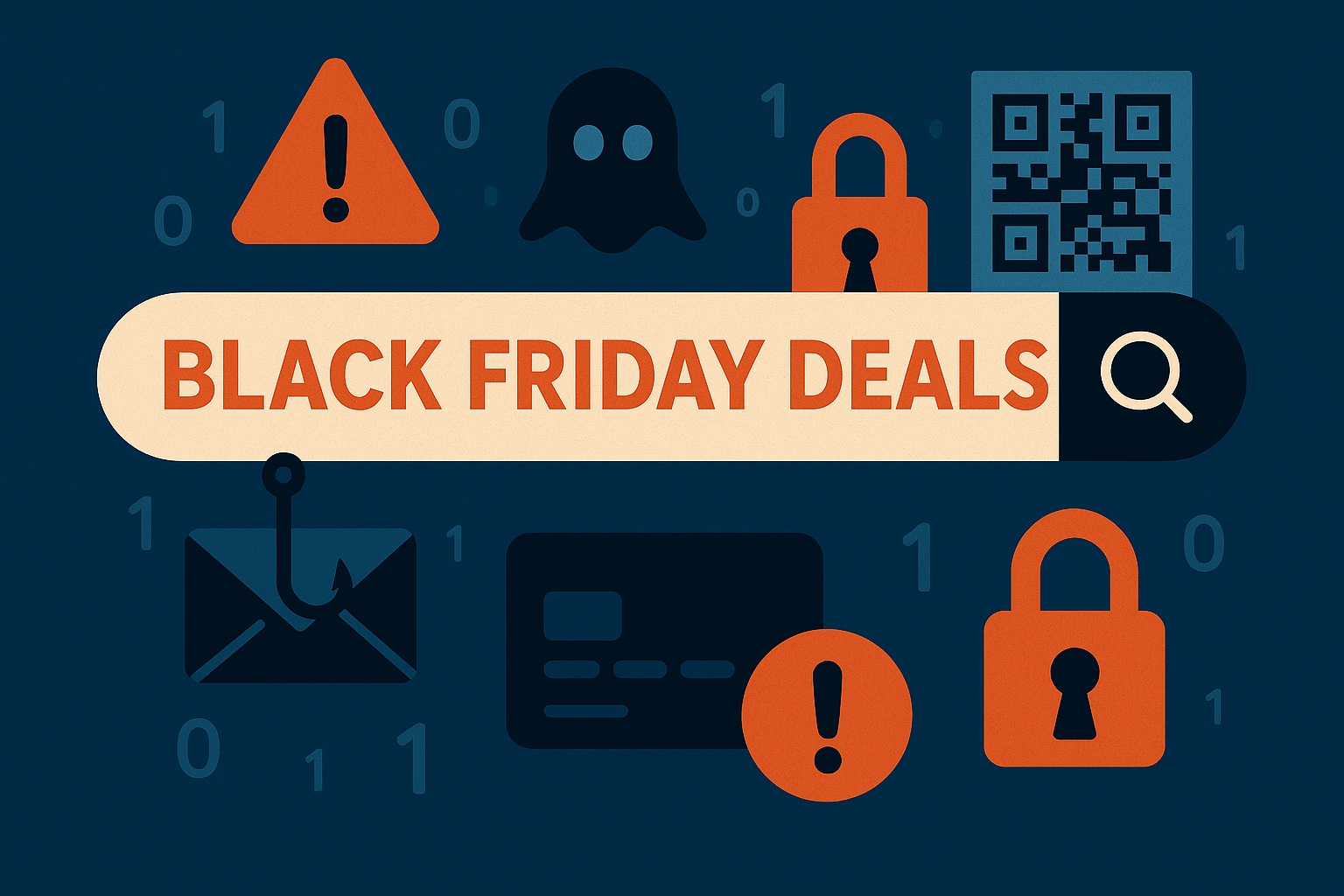
Black Friday attracts every flavor of cyber-scam, and attackers keep upgrading their playbook each year. The most common threat in 2025 is the rise of fake online shopping sites—slick, AI-built storefronts that look legitimate but exist purely to harvest credit-card numbers, passwords, and delivery addresses. These “ghost stores” usually pop up weeks before Black Friday and vanish right after the money hits their accounts.
Right behind them are phishing and smishing campaigns, pushing fraudulent links through email, SMS, WhatsApp, and social platforms. Hackers mimic big retailers like Amazon, Target, or Walmart and blast out messages claiming your order is delayed, your package is lost, or your account needs “verification.” One impulsive tap, and users land on cloned login pages that siphon their credentials.
Then comes QR-code fraud, or “quishing.” Since brands plaster QR codes everywhere during holiday campaigns, attackers do the same—often overlaying malicious codes in stores, posters, or ads. Scanning one can redirect you to malware, fake logins, or payment traps.
Social media is another battlefield. Attackers run fake ads for limited-time deals, boosted by shady ad networks. These ads funnel users to counterfeit product pages or drop-shipping scams where the item either never arrives or is a low-quality imitation. Combined with AI deepfake voices and customer-service chats, the deception is reaching uncanny levels.
Delivery scams also spike—fraudsters send fake “tracking updates” pretending to be DHL, UPS, Royal Mail, or FedEx, urging shoppers to click links to “reschedule” or pay a made-up fee. And of course, the classics remain: counterfeit electronics on third-party marketplaces, sketchy gift-card giveaways, fake coupon portals, cloned charity donation pages, and crypto-wallet payment requests designed to bypass consumer protections.
This mix of technical sophistication and social-engineering psychology makes Black Friday one of the most dangerous online shopping events of the year. Recognizing the patterns is the fastest way to stay ahead of the scams.
How to Spot the Red Flags — A Practical Checklist
Spotting Black Friday scams isn’t about paranoia; it’s about pattern recognition. The easiest giveaways start with the URL. Always inspect the domain before buying—attackers love swapping letters (like “Amaozn”) or adding extra characters to create lookalike sites. A legit store uses a clean, consistent domain name. Pair that with HTTPS, a valid SSL certificate, and a website that doesn’t feel like it was slapped together overnight.
Another quick test is website quality. Typos, blurry product images, missing return policies, or no physical address are instant warning sirens. Real retailers invest in design and transparent contact info; scammers don’t waste time polishing their traps. When you’re unsure, run the domain through a reputation checker or look up the domain age—most fraudulent sites are only a few days or weeks old.
Then there’s the psychological bait: prices that look unreal. If a high-demand gadget is suddenly 70% off while every major platform barely discounts it, you’re likely staring at a scam store or counterfeit listing. Scammers count on impulse buying during Black Friday, so stepping back for even ten seconds can save you a headache.
Payments also tell their own story. Trustworthy shops use credit cards, PayPal, Apple Pay, Google Pay—methods with buyer protection. If a site pushes gift cards, bank transfers, or crypto payments, you’re walking into a one-way street with no refund options.
Finally, lean on social proof. Check reviews, search the brand name with terms like “scam” or “fraud,” and verify social media activity. Fake stores often have silent profiles, generic posts, or comments turned off. When the digital breadcrumbs don’t add up, it’s for a reason.
Learning these signals turns Black Friday from a risk into a controlled environment—because once you see the patterns, scammers lose their edge.
Defensive Measures — What You Should Do to Stay Safe
Staying safe during Black Friday isn’t about running full paranoia mode; it’s about using the same discipline you’d use when hardening a network. Start with the basics: use strong, unique passwords and enable two-factor authentication everywhere. Credential stuffing attacks skyrocket during holiday sales because attackers know people reuse passwords across shopping accounts. A password manager is pretty much mandatory armor at this point.
Stick to trusted retailers and official apps whenever possible. If you’re hunting for deals, go directly to the retailer’s website instead of clicking links from emails or ads. This cuts out most phishing attempts instantly. When it’s time to pay, stick to credit cards or secure digital wallets—they provide fraud protection and are harder for attackers to exploit than sketchy payment methods.
For links, ads, and QR codes, treat them like unknown attachments during a pentest: assume nothing is safe until verified. Hover over links before clicking, scan URLs with trusted security tools, and double-check domain spelling. If a QR code comes from a random poster or social post, think twice—quishing campaigns thrive on quick scans.
Update your devices and browser before shopping. Patches close vulnerabilities that scammers love to exploit, especially against outdated plugins and old mobile OS versions. Add in a solid antivirus or endpoint security tool to give yourself another layer of defense.
And remember: if a deal seems too wild to be real, take a breath and cross-check the price on multiple reputable sites. Attackers rely on impulse; slowing down is a security measure on its own. You don’t need to shop scared—you just need to shop smart.
Why Awareness Matters — The Bigger Picture for 2025
The online-scamming landscape is evolving faster than ever. With more shoppers shifting from storefronts to screens, and fraudsters leveraging automation, AI, and social-engineering en masse, Black Friday isn’t just a one-off threat. It’s part of a broader shift where digital commerce and cyber-threats increasingly overlap. Awareness isn’t a luxury — it’s a core survival skill in this landscape.
Understanding scam tactics and practicing safe shopping is only one side of the coin. The other side is education. That’s where Logstail Academy steps in: its curated learning paths teach secure online behaviour, threat-detection, and how to defend against real-world attack vectors in a live SOC-style environment.
Even if you’re just a shopper, not a security pro, investing a few hours to learn basic digital hygiene through a course like that can dramatically increase your odds of spotting fraud before it hits. If you’re technical — or want to be — it’s a great bridge from awareness to action: giving you tools not only to defend yourself but to help others (friends, family, colleagues) avoid traps too.
As scams become more subtle — deep-fake ads, cloned marketplaces, AI-driven phishing — the people who stay ahead will be those who treat digital literacy like a skill: the kind you sharpen continuously, like patching a system or hardening a network.
Bottom line: Black Friday is a stress test — not just for your wallet, but for your digital instincts. Awareness + education turns that stress test into a training ground where you (and your readers) walk away stronger.